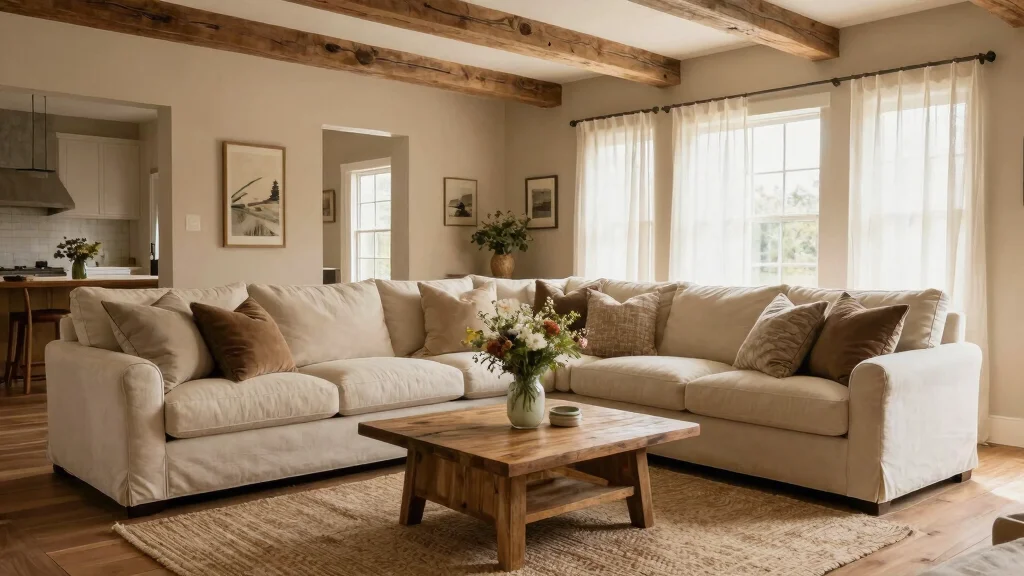
Creating a warm and inviting living room is a dream for many homeowners. As the heart of your home, this space should not only reflect your personal style but also make everyone feel welcomed and cozy. With the changing seasons and trends, you might be craving a fresh look that emphasizes warmth and comfort. That’s why I put together this guide on 12 warm living room paint colors that will transform your space into a haven.
If you love home decor, especially cozy farmhouse aesthetics, this post is for you. Whether you’re a seasoned decorator or just starting out, finding the right paint colors can be overwhelming. My goal is to simplify that process. I’ve rounded up 12 beautiful shades that evoke a sense of comfort and warmth, making your living room feel just right. So, grab a cup of your favorite beverage and let’s dive into these inviting color schemes that will set the tone for your home.
With this guide, you’ll not only discover stunning paint colors but also practical tips on how to choose the best shades for your living room. By the end, you’ll feel equipped to create a space that feels like a warm embrace every time you step inside.
Key Takeaways
– Warm paint colors can significantly impact the ambiance of your living room, making it feel more inviting.
– Cozy living room ideas often involve using natural tones that blend well with farmhouse style.
– Understanding color psychology can help you select inviting color schemes that suit your lifestyle.
– The best paint colors for warmth usually include soft neutrals and earthy tones.
– Current home decor trends favor a mix of traditional and contemporary colors to create comfortable yet stylish spaces.
How To Choose The Right Warm Paint Colors for Your Living Room
When it comes to selecting warm paint colors for your living room, a thoughtful approach can make all the difference. Here are some tips to guide your decision-making process:
1. Consider Natural Light: The amount of natural light your room receives can greatly influence how a paint color looks. Bright rooms may accommodate deeper hues, while darker spaces benefit from lighter shades that reflect available light.
2. Color Psychology: Each color evokes different feelings. For instance, soft yellows promote happiness, while warm greens can create a calming effect. Think about the atmosphere you want to cultivate in your living room.
3. Style Compatibility: Your home’s overall style should inform your paint choice. If you’re going for a cozy farmhouse look, earthy tones or soft pastels can enhance that aesthetic.
4. Test Samples: Always sample paint colors on your walls before making a final decision. Paint swatches can look different in various lighting conditions, so it’s essential to see how they actually appear in your space.
5. Coordinate with Furniture: Consider your existing furniture and decor. Choose a color that complements these elements for a cohesive look throughout your living room.
Pro Tip: Use small patches of paint on the wall to see how they interact with your furnishings and lighting at different times of the day.
How Do Warm Paint Colors Work in a Living Room?
Warm paint colors create a welcoming vibe that is perfect for gathering spaces. Here’s how they achieve that:
– Close-Up Effects: Warm colors tend to advance in space, making rooms appear smaller and cozier. This is great for creating an intimate atmosphere.
– Interactions with Decor: They harmonize beautifully with natural materials, like wood and textiles, enhancing the overall warmth of the room.
– Mood Enhancement: Warm shades can boost your mood, making the space feel lively and inviting. This is especially beneficial when entertaining guests or spending time with family.
Best for: A warm paint palette is ideal for living rooms where comfort is key, particularly in homes that embrace the cozy farmhouse style.
How To Use Warm Paint Colors in Your Living Room
Ready to get started? Here’s how you can effectively use warm paint colors in your living room:
Tools You’ll Need:
– Paint samples
– Paintbrushes and rollers
– Painter’s tape
– Drop cloths
– Ladder
Step 1: Prepare Your Space
✔ Clear furniture away from the walls to create space for painting.
✔ Use drop cloths to protect your floors and furniture.
Step 2: Choose Your Colors
✔ Select your favorite warm paint colors and purchase sample sizes.
✔ Test these colors on the walls in different lighting conditions.
Step 3: Tape Off Edges
✔ Use painter’s tape to outline areas where you’ll be painting, such as baseboards and window frames.
✔ This ensures clean lines for a polished finish.
Step 4: Start Painting
✔ Begin with a brush for edges and corners before using a roller on larger areas.
✔ Apply a second coat if needed after the first coat has dried completely.
Step 5: Finishing Touches
✔ Remove painter’s tape carefully to avoid peeling paint.
✔ Clean your brushes and tools promptly.
⏱ Time: ~3-5 hours, depending on room size | 💡 Tip: Invite a friend to help make the process faster and more enjoyable!
By carefully selecting and applying warm paint colors, your living room can become a cozy retreat that reflects your personal style and welcomes friends and family alike. Enjoy the transformation!
1. Soft Butter Yellow
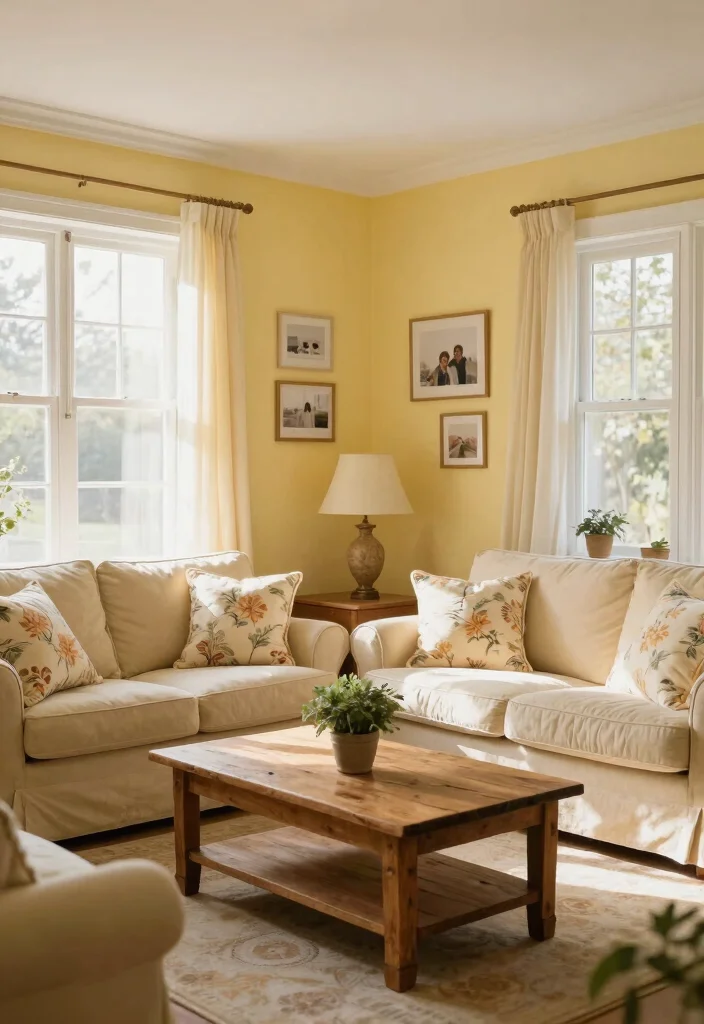
Soft butter yellow brings a sense of warmth and cheer to your living room. This gentle hue brightens spaces without being overpowering, creating a welcoming atmosphere. Its versatility shines through when paired with white trim for a classic touch or rustic wood accents for a cozy feel. Imagine the glow of this color in both natural light and soft lamp light, making your room feel sunny and inviting at any time of day.
To implement this color style effectively, consider using it in smaller areas if you’re unsure about full coverage. This approach allows you to test its impact without committing entirely. Adding budget-friendly accents like greenery or floral patterns can really amplify the cheerful vibe without breaking the bank.
Tips for Soft Butter Yellow:
– Pair with charcoal gray furniture for stylish contrast.
– Use on ceilings or accent walls for a subtle touch.
– Incorporate greenery or floral prints to enhance the brightness.
Embracing this color creates a joyful and uplifting environment, while its soft tones create a harmonious balance with various textures and materials.
2. Earthy Terracotta
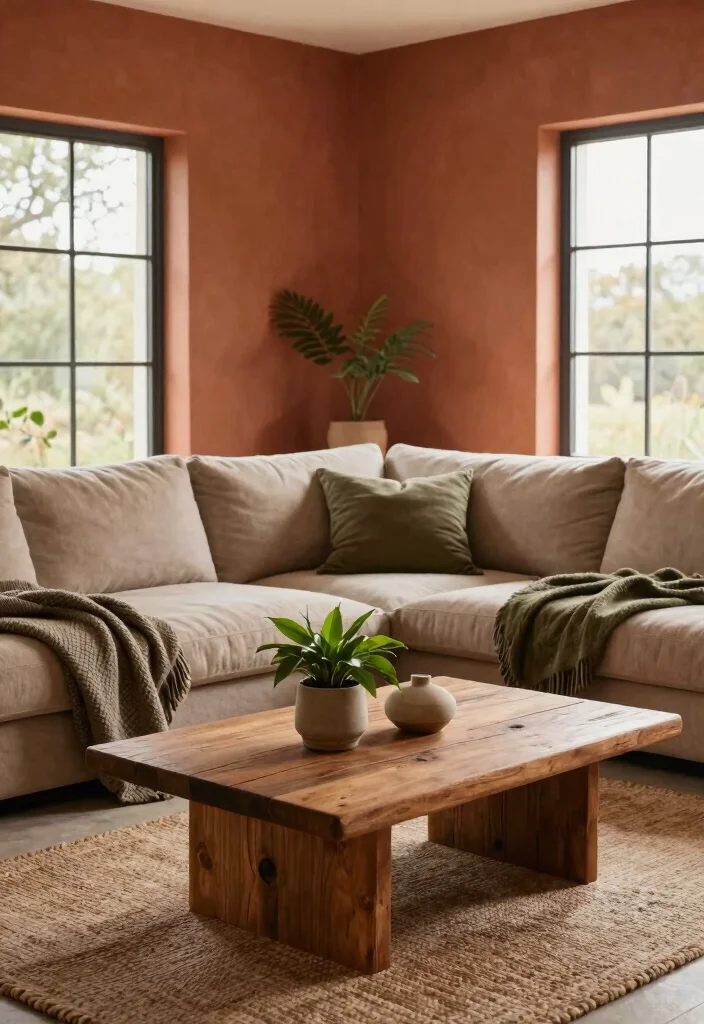
Earthy terracotta evokes a sense of rustic charm and warmth in your living room. Drawing inspiration from natural clay, this color beautifully captures a cozy farmhouse aesthetic. It creates an inviting atmosphere that works well for both accent walls and full-room applications, seamlessly blending with cream, olive green, and soft blues to enhance your decor.
To make the most of this warm hue, consider incorporating wooden furniture to deepen the organic feel. Textured fabrics in throws and cushions add layers of comfort, while art featuring landscapes or earthy tones can tie the room together beautifully. These elements help foster a tranquil environment that feels connected to nature.
Decor Tips with Earthy Terracotta:
– Incorporate wooden furniture for an earthy vibe.
– Use textured throws and cushions for added depth.
– Choose art with landscapes or warm tones to unify the space.
This color choice not only enriches your living room but also enhances the natural beauty of the materials you select.
3. Warm Sage Green
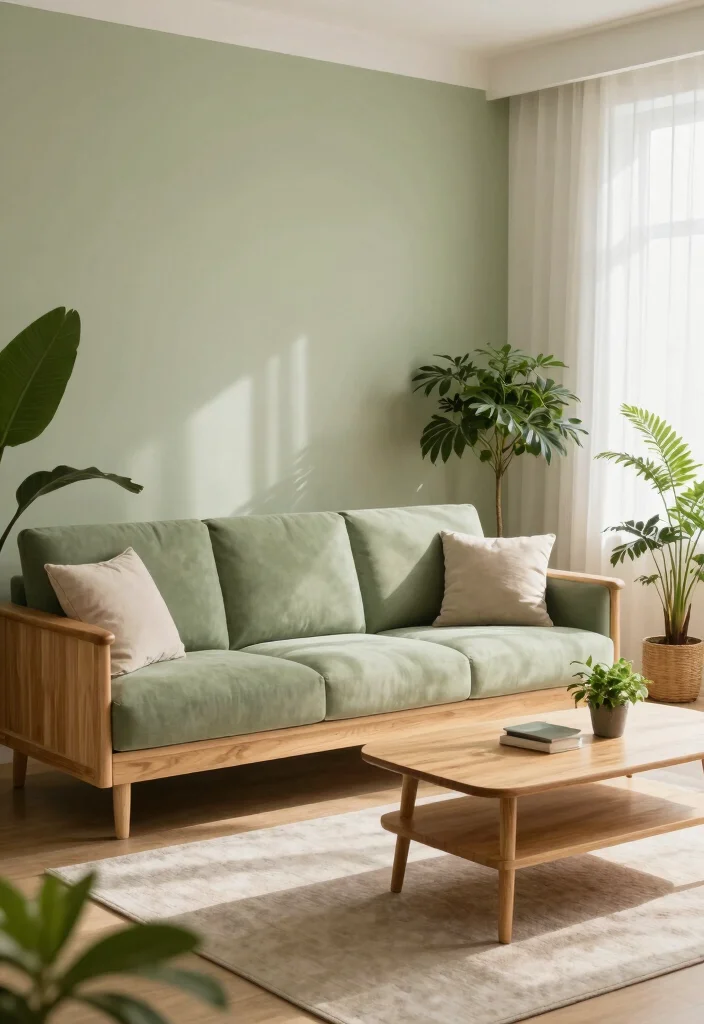
Warm sage green is a wonderful choice for creating a serene living room. This soft, muted hue promotes tranquility while still feeling vibrant and alive. It pairs beautifully with natural wood and metal accents, making it perfect for a farmhouse style. Imagine the freshness of whites and creams alongside this green, or the striking contrast of deeper colors like navy for a sophisticated touch.
To effectively use sage green, consider painting your ceiling or trim in a complementary white to elevate the look. Adding plants enhances its earthy essence, while dark wood furniture introduces an elegant balance to the warmth of this shade. These combinations create a visually appealing and cozy environment.
How to Use Sage Green Effectively:
– Paint your ceiling or trim white for a polished finish.
– Add plants to emphasize its natural qualities.
– Use dark wood furniture for a sophisticated touch.
This color not only brings a sense of calm but also enriches the textures and materials in your space.
4. Creamy White
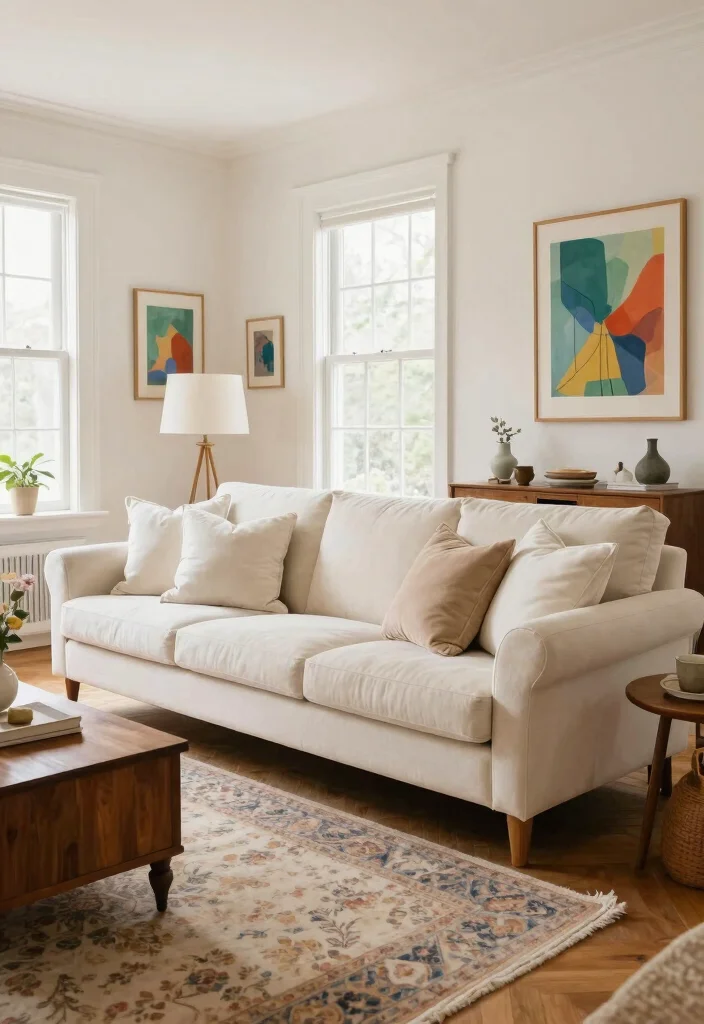
Creamy white is more than just a neutral; it radiates warmth and comfort throughout your living room. This color reflects light beautifully, making even small spaces feel larger while maintaining a cozy atmosphere. In a farmhouse setting, creamy white walls make wooden accents stand out and feel more inviting, especially when paired with textured fabrics like linen or burlap.
For best results, use colorful accessories to inject character into your space, such as vibrant artwork or vintage decor that pops against the soft backdrop. Layering different shades of white creates depth and interest, while soft lighting enhances this inviting hue, ensuring your living room feels both spacious and snug.
Pro Tips for Creamy White Walls:
– Use colorful accessories to add personality.
– Layer various shades of white for visual depth.
– Employ soft lighting to amplify warmth in the room.
This classic choice enhances the overall aesthetic while making your living room feel approachable and welcoming.
5. Dusty Rose
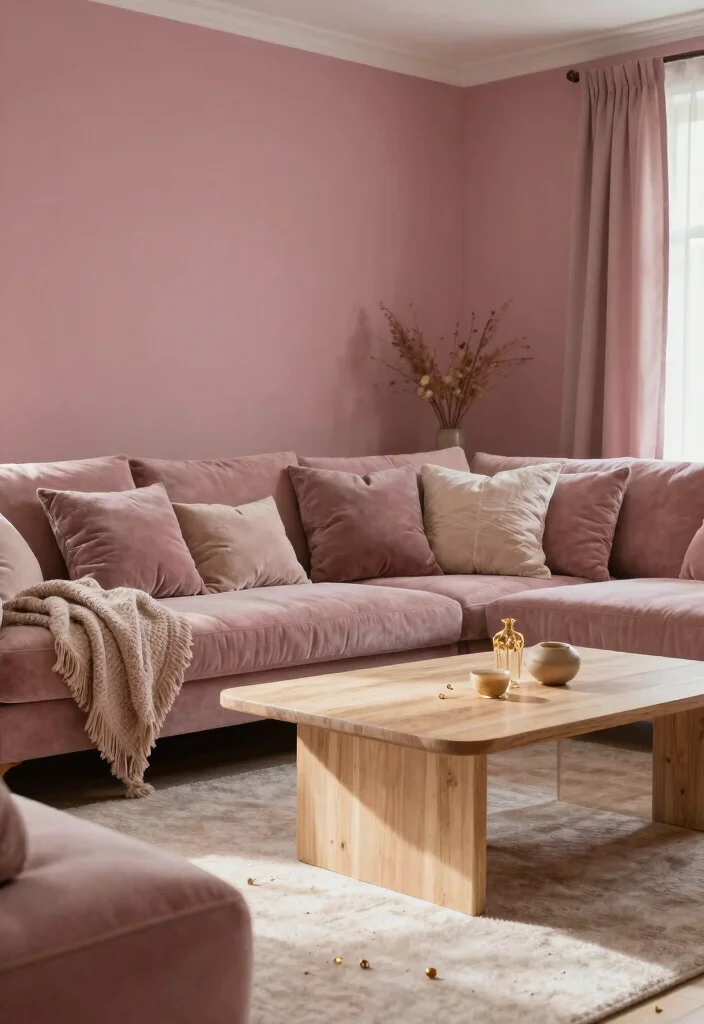
Dusty rose is a delightful option for those seeking a romantic and inviting atmosphere. This gentle hue introduces a touch of softness while ensuring warmth in your living room. Particularly favored in farmhouse decor, dusty rose pairs beautifully with natural materials, dark woods, and neutral tones, allowing for an elegant yet cozy feel.
To bring this color into your space, consider using it as an accent wall while keeping the rest of your walls lighter for balance. Mixing textures, such as plush velvet cushions or woven throws, can enhance visual interest. Adding metallic accents in gold or brass provides a luxurious touch that elevates the overall design.
Tips for Incorporating Dusty Rose:
– Use as an accent wall while keeping other walls lighter.
– Mix different textures like velvet and woven fabrics.
– Layer with gold or brass accessories for a touch of elegance.
This lovely hue not only warms the space but also creates a sophisticated backdrop for various textures and materials.
Dusty rose makes a living room feel warm and romantic without shouting color. Try using it on an accent wall and layer textures with natural materials and dark woods for depth. It’s one of those warm paint colors for living room that quietly invites conversation and comfort.
6. Rich Chocolate Brown
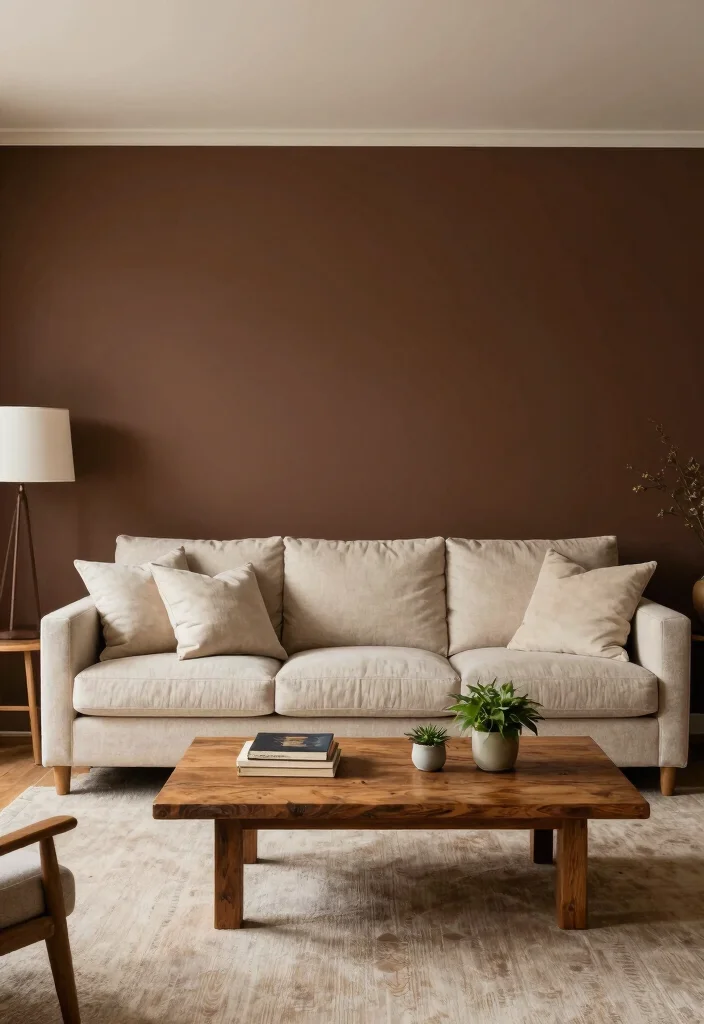
Rich chocolate brown envelops your living room in snug warmth and comfort. This deep color grounds the space, making it feel both elegant and inviting. It pairs beautifully with lighter furniture or decor, creating a striking contrast that enhances the overall aesthetic in a cozy way.
For the best results, consider using chocolate brown for a feature wall while keeping the remaining walls lighter to maintain balance. Lighter fabrics in your couch and curtains brighten the space, while warm lighting can enhance the inviting feel of the brown tones, making your living room a true haven.
Best Practices for Using Chocolate Brown:
– Choose it for a feature wall, keeping others lighter.
– Use lighter fabrics on sofas and curtains for brightness.
– Incorporate warm lighting to enhance the inviting tones.
This rich color not only brings depth but also enhances the textures and materials in your living space.
Fun fact: Deep chocolate brown can make a living room feel up to 15% cozier with the right contrast. Use it on a feature wall and keep the rest light to balance the space. When choosing warm paint colors for living room, this hue shines.
7. Warm Beige
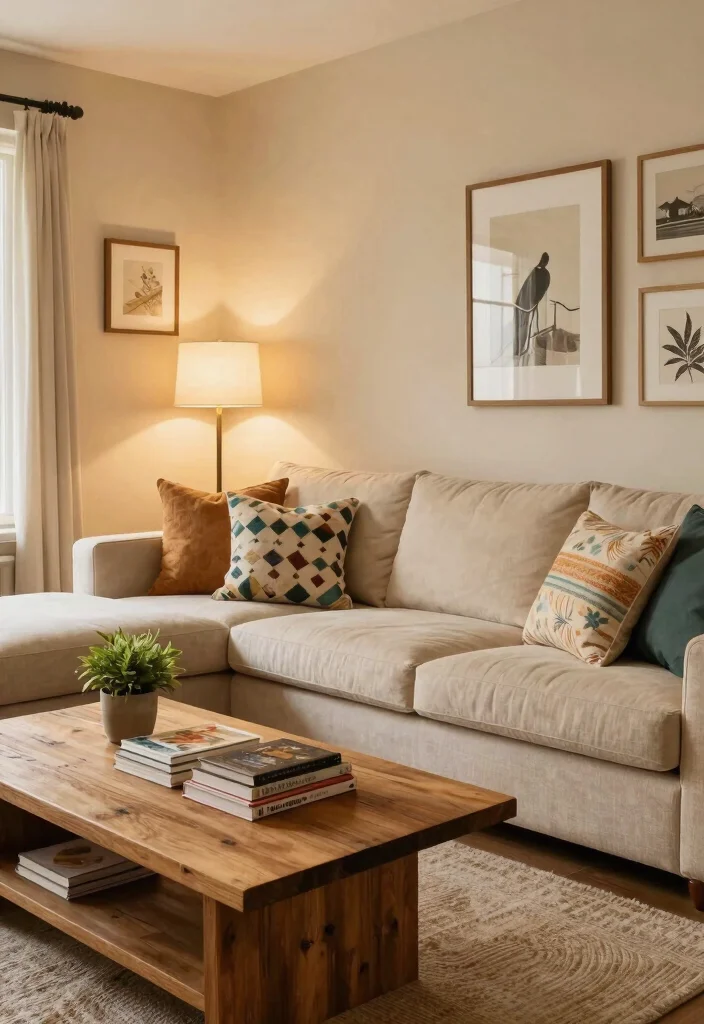
Warm beige is the versatile chameleon of paint colors, effortlessly adapting to any decor style while maintaining sophistication. This hue is perfect for those hesitant to embrace bolder colors, offering a calming backdrop that complements a variety of decor elements. Pair warm beige with bright white or deep navy for a chic contrast that feels inviting.
To maximize the beauty of warm beige, consider layering it with different textures, such as woven fabrics or wooden decor, to create dimension. Colorful artwork or accent pillows can introduce pops of interest, ensuring the overall look remains harmonious and engaging. Metallic elements can also add a touch of elegance to the design.
How to Make the Most of Warm Beige:
– Layer with various textures like woven fabrics.
– Use colorful artwork or pillows for interest.
– Incorporate metallic accents for a touch of elegance.
This adaptable color enhances your living space while beautifully showcasing various textures and materials.
Fun fact: 72% of cozy living rooms use warm beige as a versatile backdrop. It proves warm paint colors for living room truly work with bright white or deep navy, creating instant contrast that feels inviting.
8. Pumpkin Spice
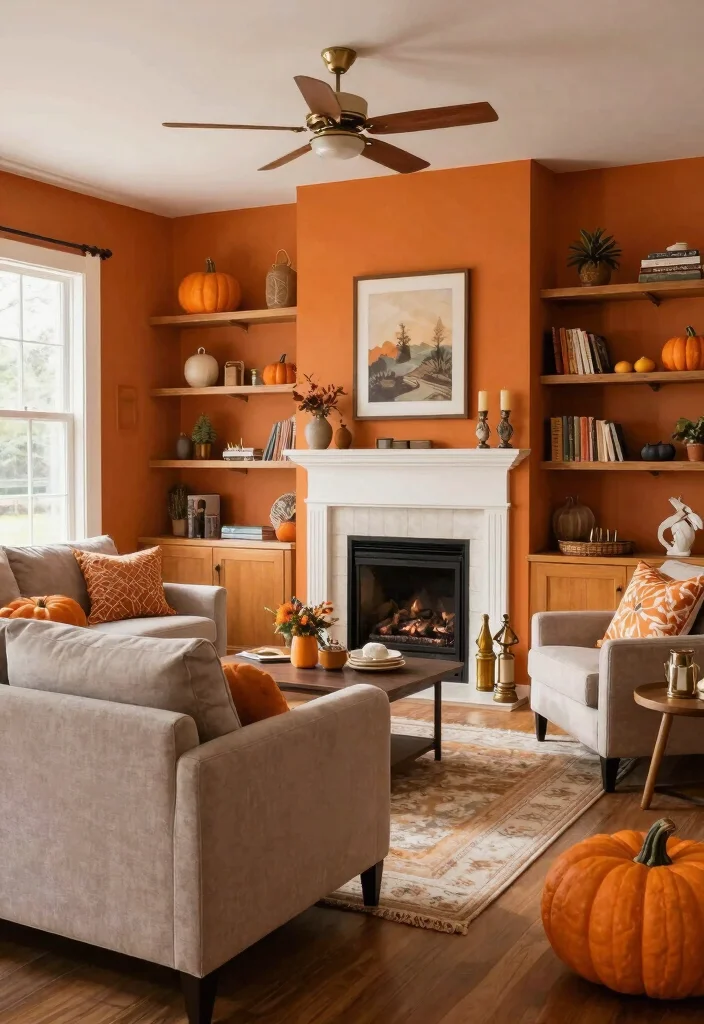
Pumpkin spice is a modern favorite that brings energy and warmth into your living room. This vibrant color adds a trendy flair while still feeling cozy and inviting. It’s perfect for accent walls or as a main color, working harmoniously with various decor styles, including natural wood and textiles.
To create a cohesive look with pumpkin spice, use it sparingly as an accent to prevent overwhelming the space. Combining it with muted greens or blues can achieve a balanced palette that feels refreshing. Seasonal decor and textures can also bring this color to life throughout the year.
Creating a Cohesive Look with Pumpkin Spice:
– Use it as an accent color for a subtle impact.
– Combine with muted greens or blues for balance.
– Incorporate seasonal textures to enliven the color.
This vibrant shade not only energizes the space but also enhances the warmth of the materials you choose.
9. Soft Lavender
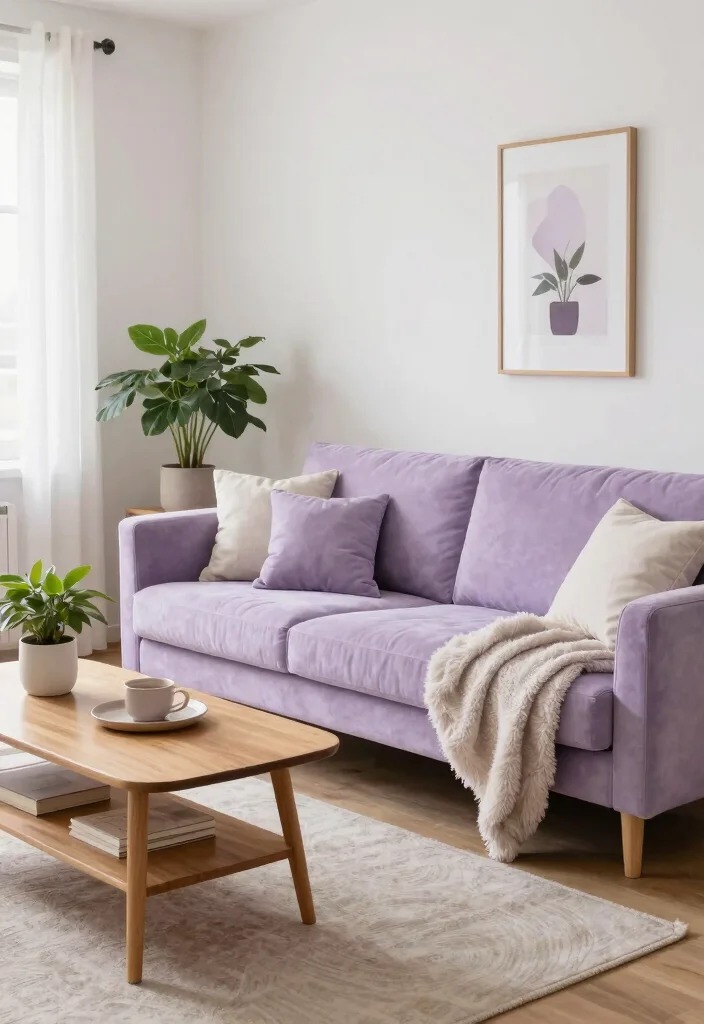
Soft lavender is a unique choice that creates a warm yet refreshing living room atmosphere. This calming color evokes tranquility while remaining inviting. It shines in spaces with abundant natural light, brightening the room without feeling stark, and pairs beautifully with whites, light grays, or deeper purples for a sophisticated look.
To enhance your space with soft lavender, consider painting one wall for a focal point that is not overwhelming. Incorporating textures like soft throws or lavender-hued artwork adds depth and character. Pairing it with lush greenery can create a natural feel that breathes life into your decor.
Enhancing Your Space with Soft Lavender:
– Use on one wall for a balanced focal point.
– Add soft throws or artwork that highlights lavender.
– Combine with greenery for a refreshing vibe.
This gentle hue not only promotes calmness but also enriches the textures and materials throughout your living space.
10. Warm Coral
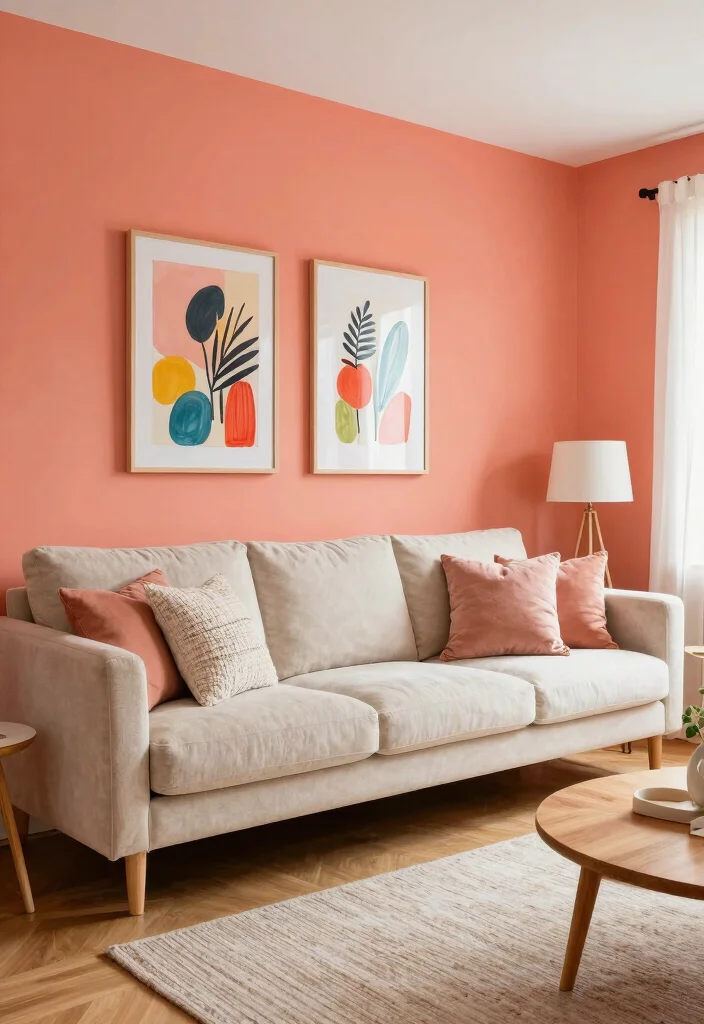
Warm coral brings a modern twist to inviting hues, adding a fresh and lively warmth to your living room. This cheerful color can energize the space while remaining cozy and approachable. Coral beautifully complements soft whites, grays, and hints of teal, making it ideal for accent walls or decor that draws the eye without being harsh.
To effectively use warm coral, consider it as an accent color in accessories like cushions or curtains, injecting life into the room without overwhelming it. Pairing it with light woods creates an airy feel, while warm lighting enhances the coral tones, making them more vibrant and inviting.
Tips for Using Warm Coral:
– Use as an accent in cushions or curtains for vibrancy.
– Combine with light woods for an airy ambiance.
– Consider warm lighting to make coral tones pop.
This lively color choice not only energizes your living room but also complements the textures and materials present in your design.
11. Golden Wheat
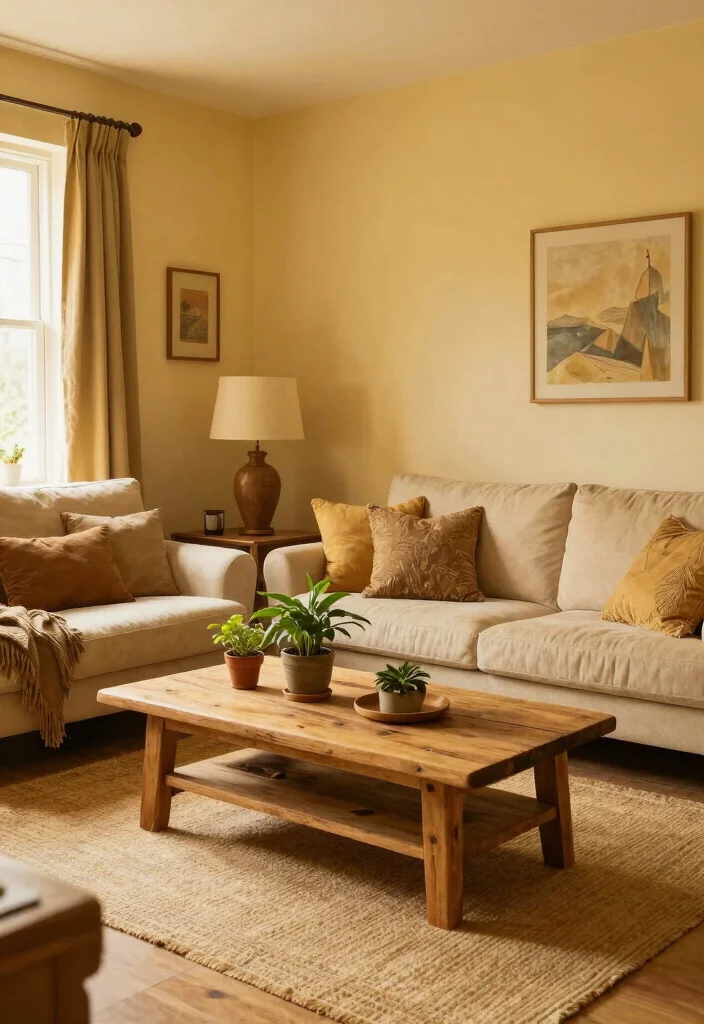
Golden wheat is a beautiful earthy tone that evokes the warmth of late summer days. This color can instantly make a room feel fuller and more inviting, reminiscent of cozy fields and harvest. Ideal for a farmhouse-style living room, it pairs well with both dark and light furnishings, creating a harmonious balance when combined with rich greens or creamy whites.
To incorporate golden wheat into your design, consider using it on all walls for a warm, enveloping feel. Introducing textured fabrics can add depth and coziness, while large plants enhance the natural, earthy look that this color embodies.
Tips for Incorporating Golden Wheat:
– Use on all walls for a warm ambiance.
– Introduce textured fabrics for added comfort.
– Pair with large plants to enhance the natural look.
This rich color not only creates an inviting atmosphere but also enhances the textures and materials in your living space.
12. Charcoal Gray
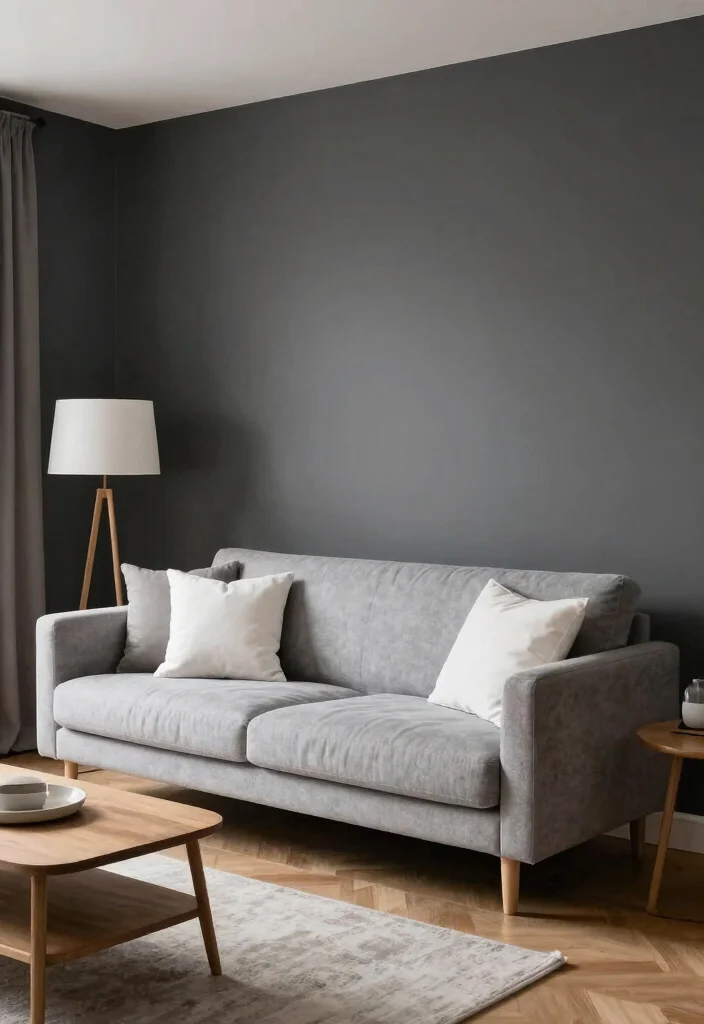
Charcoal gray might seem bold, but it can create an incredibly warm and inviting atmosphere when applied thoughtfully. This deep color adds depth and sophistication, making it an excellent choice for modern farmhouse designs. Pairing charcoal with warm white accents creates a striking contrast, or consider using it alongside mustard yellow for a contemporary twist.
For best results, use charcoal gray as an accent wall while keeping the rest of your space lighter to maintain a balanced feel. Incorporating soft textiles, such as plush rugs and cozy throws, can add warmth, while strategic lighting enhances the warmth within the gray tones, making your living room feel both chic and inviting.
Best Practices for Charcoal Gray:
– Use as an accent wall while keeping others lighter.
– Incorporate soft textiles to add comfort.
– Utilize lighting to enhance warmth in the gray tones.
This color choice not only brings sophistication but also enriches the overall design with its elegant textures and materials.
Conclusion
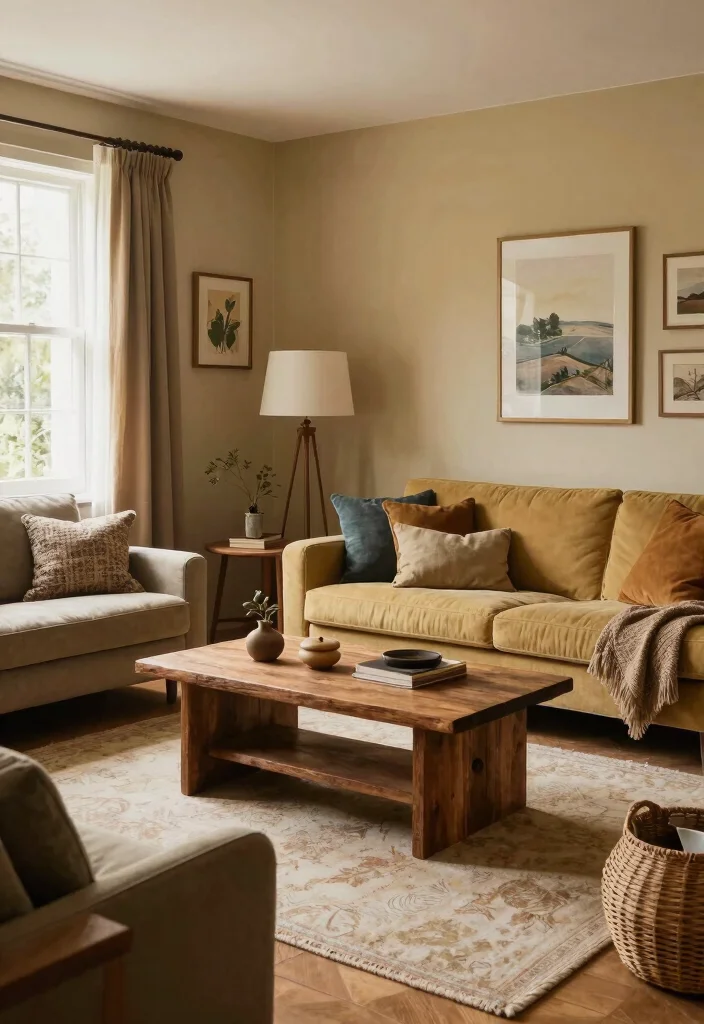
Choosing the right warm paint colors can dramatically change your living room’s atmosphere, making it feel more inviting and cozy. Whether you lean towards soft neutrals or bolder hues, each color offers a unique appeal that can enhance your farmhouse decor.
Embrace these warm tones to create a space that reflects your personality and warmth. So, which color resonates the most with you? Happy decorating!
Note: We aim to provide accurate product links, but some may occasionally expire or become unavailable. If this happens, please search directly on Amazon for the product or a suitable alternative.
This post contains Amazon affiliate links, meaning we may earn a small commission if you purchase through our links, at no extra cost to you.
Frequently Asked Questions
What are the warm paint colors for living room that make spaces feel inviting?
Great question. To get warm paint colors for living room that feel inviting, start with soft neutrals and warm whites with subtle undertones. Think creamy off-whites, sandy beiges, and sun-kissed greiges. For a cozy farmhouse vibe, pair warm neutrals with natural wood and textured textiles. Always test chips under your room’s lighting and compare at morning and evening to see how they shift. This helps you choose the best paint colors for warmth. Use the color as a base and bring in color with accent textiles and metallic accents to create inviting color schemes and plenty of cozy living room ideas.
How can I mix warm paint colors with farmhouse decor to keep the space cozy?
Aim for a dominant warm wall color and lighter trims to create contrast. Pair cream or linen white trims with natural wood tones (oak, pine) and textiles like linen curtains or a jute rug. Introduce warm metals (bronze or brass) and minimal black accents for depth. Keep the palette cohesive by repeating a few key hues across furniture, textiles, and decorative pieces to support cozy living room ideas and a truly inviting color scheme.
What are practical tips to test and apply warm colors without overwhelming the space?
Start with swatches on the wall and build a few sample boards for side-by-side comparisons. Check samples in natural daylight and at night with artificial light to see true undertones. Use the 60-30-10 rule (large wall color, secondary color for larger furniture or pillows, a small accent in décor) to prevent overwhelm. Paint two adjacent walls as a test patch before committing and pair your chosen warm color with cozy textures and wood furniture to ensure a balanced, inviting result.
Which undertones should I look for to ensure warmth and not dullness in a living room?
Look for undertones with a gentle yellow or peach hint rather than cool gray or blue. Shades described as warm neutrals or sunny beiges typically read as inviting in farmhouse settings. Always test multiple undertones on a few wall panels and observe how they shift with different lighting throughout the day to avoid dullness and keep the space vibrant and cozy.
What current home decor trends influence inviting, warm living room color schemes?
Current trends favor earthy, grounded tones paired with natural materials. Expect warm whites, soft terracotta and olive greens, and warm greige shades in cozy farmhouse spaces. Combine these with matte finishes, exposed wood, and plush textiles for texture. Use the 60-30-10 rule to balance walls, furniture, and accents, and layer different textures (linen, wool, rattan) to amplify home decor trends while keeping the space inviting and comfortable. This approach aligns with interior design tips for warm living rooms.
Related Topics
warm paint colors
cozy living room
inviting color schemes
farmhouse style
interior design tips
home decor trends
easy updates
color psychology
rustic charm
living room inspiration
best paint colors
seasonal decor