If you’re planning a panelling project in 2026, you’ll find that the right moulding can make or break your results.
The market’s shifted dramatically toward moisture-resistant, tool-free solutions that save you time and headaches.
I’m going to walk you through five standout options that combine durability with easy installation, plus what factors actually matter when you’re making your choice.
Art3d Peel and Stick Crown Molding Trim (White)

Seamless Application - Peel and stick design ensures hassle-free installation, no tools required Durable Material - Premium PET for long-lasting performance and aesthetic...
If you’re tired of wrestling with traditional crown molding that demands tools, precision cuts, and professional installation, the Art3d Peel and Stick Crown Molding Trim is genuinely built for you. This 30-foot flexible strip uses premium PET material, offering durability without the hassle.
The self-adhesive backing means you simply peel, position, and press onto drywall surfaces. What I appreciate most is its adaptability—you can bend it around corners and curves, making it perfect for unique layouts. And here’s the bonus: it’s fully paintable, so you’re not locked into white. Whether you’re framing a mirror, accenting cabinets, or enhancing doorways, this trim delivers professional-looking results without requiring skills or equipment.
Best For: Homeowners and DIY enthusiasts seeking an effortless, tool-free way to add professional-looking crown molding trim to walls, doors, cabinets, mirrors, and window frames without professional installation.
Pros:
- No tools or professional installation required; simple peel-and-stick application saves time and money
- Flexible design easily accommodates corners, curves, and unique layouts for seamless installation
- Fully paintable in any color, allowing customization to match any home décor style
Cons:
- Limited to drywall surfaces, reducing versatility for other wall types or materials
- Premium PET material may have durability concerns in high-moisture environments like bathrooms
- Adhesive backing performance may degrade over time or with temperature fluctuations, potentially requiring replacement
Peel and Stick Flexible Wall Molding Trim (9.8 Ft)

【Perfect Size – Flexible Coverage for Multiple Surfaces】9.8ft length with 0.4" width and 0.1" thickness, designed for versatile use on walls, tiles, mirrors, windows,...
Are you renting your space or hesitant about permanent wall modifications? This 9.8-foot flexible PVC trim might be your answer. I find the self-adhesive installation genuinely convenient, requiring no nails, drilling, or caulk whatsoever. The grooved back conceals adhesive while delivering a smooth, professional finish along corners and borders.
You’ll appreciate that it’s paintable in white, allowing you to customize it for modern, luxury, or classic décor styles. And here’s what makes it practical: the material resists water, heat, and oil, making it perfect for kitchens and bathrooms. At 0.4 inches wide and 0.1 inches thick, it fits most spaces effortlessly.
Installation takes minutes, and maintenance demands virtually nothing afterward. For renters and DIYers alike, this delivers lasting value.
Best For: Renters, DIY enthusiasts, and homeowners seeking damage-free wall improvements without drilling, nailing, or permanent modifications.
Pros:
- Self-adhesive installation requires no tools, nails, drilling, or caulk, making it ideal for quick, damage-free application
- Waterproof, heat-resistant, and oil-resistant material performs reliably in moisture-prone areas like kitchens and bathrooms
- Paintable white finish allows customization to match various décor styles while maintaining a professional, grooved-back design
Cons:
- Limited width (0.4 inches) may not provide substantial visual impact compared to traditional molding options
- Adhesive-based installation may not be suitable for extremely textured or uneven wall surfaces, potentially affecting longevity
- Only available in three color options (white paintable, matte black, and gold), limiting design flexibility for specific aesthetic preferences
Flexible Quarter Round Molding Trim Peel Stick (118″)

Crown Molding Specifications:Width and height both 9/16 inches. Easily adheres to various smooth surfaces, providing powerful sealing for common gaps. Effectively blocks...
You’re looking for a sealing solution that actually sticks around. This 118-inch flexible quarter round from ESUFEIR handles gaps where walls meet floors, around baseboards, and along staircases with serious staying power. The silicone construction resists moisture, stains, and grime, making cleanup a breeze in kitchens and bathrooms.
Its U-shaped design fits snugly into right angles, and the double-sided adhesive backing bonds beautifully to tile, wood, glass, and metal. Installation takes three straightforward steps: clean your surface, apply the included promoter, then press firmly from bottom to top. Cold weather? Warm it with a hairdryer for 30 seconds to restore stickiness. You’ll block dust, moisture, and unwanted pests while elevating your paneling’s appearance.
Best For: Homeowners and renters seeking a durable, flexible sealing solution for gaps in kitchens, bathrooms, and other areas where walls meet floors, baseboards, or stairs.
Pros:
- Premium silicone construction is hydrophobic, stain-resistant, and easy to clean, making it ideal for moisture-prone areas
- U-shaped design fits perfectly into right angles and bonds securely to multiple surfaces including tile, wood, glass, and metal
- Simple three-step installation process with included adhesive promoter and the ability to restore stickiness in cold weather with a hairdryer
Cons:
- Requires surface preparation including cleaning, drying, and application of adhesive promoter, which adds steps to installation
- 118-inch length may not be sufficient for larger projects requiring multiple strips or extensive coverage
- Performance and longevity depend on proper surface preparation and adhesive application, with potential for peeling if not installed correctly
Storystore Wall Corner Protector Moulding Trim (White)
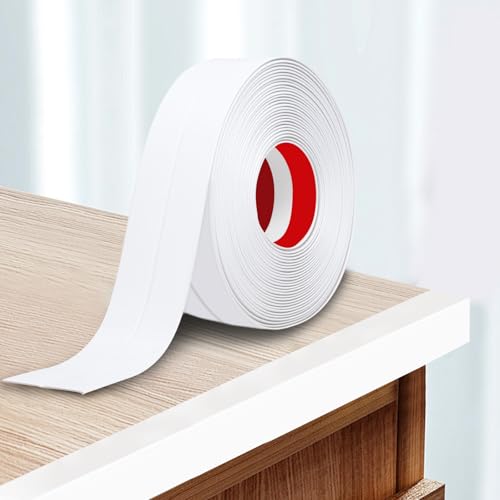
MULTIPLE CORNER USE:Edge protectors adjustable corners can be folded inward or outward with an adjustment range of 90-180 degrees, combining corner protectors, caulking...
The Storystore Wall Corner Protector Moulding Trim works best if you’re juggling safety and style in homes with kids or high-traffic spaces. This peel-and-stick option measures 2.4 inches by 13 feet, giving you solid coverage for multiple corners.
Installation’s straightforward: clean your surface, measure, cut with scissors, and stick it down without any tools. The flexible design adjusts from 90 to 180 degrees, so you’re working with corners that aren’t perfectly square. Water-repellent and stain-resistant material means it’ll handle splashes and spills while maintaining its appearance over time. You can apply it to tile, marble, plastic surfaces, or furniture edges, making it genuinely versatile for protecting those unfriendly corners that catch bumps and impacts.
Best For: Families with young children and high-traffic spaces seeking safe, stylish corner protection without professional installation.
Pros:
- Tool-free installation with strong adhesive backing and flexible design accommodating 90–180° angles
- Water-repellent, stain-resistant material maintains appearance and protects against spills and impacts
- Versatile compatibility with tile, marble, plastic, and furniture surfaces across multiple room applications
Cons:
- Limited to 13-foot length, requiring multiple units for extensive corner coverage
- Adhesive may peel over time in high-moisture or frequently-touched areas
- Adjustment flexibility may result in uneven appearance on irregularly-shaped corners
20FT Peel and Stick Chair Rail Moulding White
If you’re after a no-fuss way to add polished trim without the hassle of nails and tools, this peel-and-stick chair rail moulding hits different. The 20-foot length gives you serious coverage, and at 1.1 inches wide with thermoplastic elastomer construction, it’s flexible enough to handle curves and corners.
The acrylic nano-adhesive backing grips securely on glass, wood, and marble without leaving residue. Installation’s straightforward: cut, peel, and stick. And since it’s waterproof, maintenance means just wiping with a damp cloth. Whether you’re dressing up living rooms, bedrooms, or offices, this trim adapts to your décor while hiding wall imperfections and adding that refined architectural detail you’re after.
Best For: Homeowners and renters seeking an easy, tool-free way to add polished architectural trim to walls, mirrors, and windows without drilling or permanent damage.
Pros:
- No tools required with simple peel-and-stick installation that can be completed in minutes
- Flexible TPE material adapts to curves and corners while waterproof backing resists moisture and cleans easily with a damp cloth
- Residue-free acrylic nano-adhesive adheres securely to multiple surfaces including glass, wood, and marble without damaging walls
Cons:
- Limited to 20 feet of coverage, requiring multiple purchases for larger projects or whole-room applications
- Adhesive performance may diminish over time on textured or poorly prepared surfaces, potentially requiring reapplication
- Thermoplastic elastomer material may not provide the same rigid, permanent aesthetic as traditional hard moulding installations
Factors to Consider When Choosing Moulding for Panelling

When I’m selecting moulding for panelling, I focus on five critical factors that’ll make or break my installation: material quality and durability (which determines how long it’ll look great), flexibility for corner installations (because not every wall meets at a perfect 90 degrees), surface compatibility and adhesion (so the moulding actually stays put), installation ease and the tools I’ll need, and aesthetic customization options that let me match my vision. And honestly, overlooking any of these can lead to frustration down the road, whether that’s dealing with peeling edges, visible gaps, or spending hours wrestling with installation. I’ll walk you through each one so you can make an informed choice that fits both your space and your skill level.
Material Quality And Durability
Durability in moulding for panelling hinges on material quality, and I’ll walk you through what actually matters when you’re making your choice. Premium PVC and PET offer exceptional moisture resistance, which means they’ll hold up beautifully in humid bathrooms and high-traffic kitchens without warping or breaking down. Silicone-based trims are your hydrophobic champions here, resisting stains while staying flexible enough to handle repeated cleaning without tearing.
What I find most practical is choosing flexible, self-adhesive options made from PET, PVC, or silicone. They bend smoothly around corners and edges without cracking. And when you pair water and heat-resistant materials with paintable finishes, you’re investing in something that maintains its appearance through years of cleaning and wear. That’s real durability.
Flexibility For Corner Installations
How much does your moulding need to bend before it breaks? That’s the real question when you’re tackling corners and curves. I’ve found that flexible materials like PET, PVC, and silicone-based options are game-changers because they adapt to irregular angles without kinking or creating gaps.
Narrower profiles and thinner materials bend more easily, though you’ll want to ensure they still cover adequately on both vertical and horizontal surfaces.
Here’s what matters most:
- Peel-and-stick adhesives that stay tacky around rounded edges
- Pre-formed grooves that conceal seams at sharp corners
- Material that maintains its shape while flexing
When you’re installing around door frames or ceiling transitions, bendability prevents the misalignment and lifting that plague rigid mouldings. Choose flexibility, and your corners will thank you.
Surface Compatibility And Adhesion
The adhesive backing on your moulding is only as good as the surface it’s sticking to, and that’s where most installation headaches begin. I can’t stress enough how critical proper surface prep is. You’ll want to ensure your substrate, whether it’s drywall, tile, wood, or metal, is completely dry and clean before application.
Different materials offer varying advantages. PVC and PET provide excellent flexibility for curved installations, while TPE resists moisture particularly well in humid environments. And here’s the thing: some premium options feature nano-adhesive or double-sided backings specifically engineered to withstand high-traffic areas without peeling.
But challenging surfaces sometimes need help. Consider using adhesive promoters on porous substrates to strengthen your bond considerably. If you’re planning to paint afterward, ensure clean application first, preventing coating failure and maintaining that long-term hold.
Installation Ease And Tools
Once you’ve nailed down your adhesive strategy, you’ll find that installation speed separates the good moulding choices from the frustrating ones. Peel-and-stick options eliminate nails and caulk entirely, letting you work tool-free on drywall and smooth surfaces. That’s a game changer for quick projects.
Look for self-adhesive strips with grooved backs or expanded adhesive formulas, which create cleaner seams and stronger bonds without extra fuss. Many flexible, silicone-based trims accommodate curves and corners without demanding complex miter cuts.
Lightweight PVC or TPE materials work beautifully here since you can cut them quickly and reposition them during installation if needed. When comparing options, check thickness (typically 0.1–0.4 inches) and width (around 0.39–0.8 inches), as these dimensions affect how trims sit against existing panels and influence overall ease of placement.
Aesthetic Customization Options Available
Want your panelling moulding to truly reflect your personal style? I’ve found that customization options transform standard installations into distinctive design statements.
Many peel-and-stick mouldings come paintable, letting you match or contrast colors with your existing decor. You’ll typically find white as the standard finish, though matte black and gold options work beautifully for PVC trim if you’re after something bolder.
Flexible profiles deserve attention too. Curved strips, U-shaped caulk options, and quarter-round varieties adapt to corners, edges, and irregular surfaces seamlessly. And here’s what really matters: materials like PET, PVC, and TPE silicone tolerate repainting or sealing, so you can refresh aesthetics after wear or adapt them as your style evolves.
Chair rails and crown molding create defined visual lines that enable proportional customization between wall surfaces and vertical features.
Moisture And Environmental Resistance
How much moisture exposure will your moulding really face? This question shapes your entire material choice. I’d recommend prioritizing PVC and PET peel-and-stick options because they’re inherently water-resistant and handle kitchens and bathrooms beautifully. Silicone-based caulk strips offer hydrophobic, stain-resistant surfaces that resist moisture and simplify cleaning in damp environments.
But here’s what matters most: water-repellent coatings and anti-aging treatments protect against moisture and temperature swings, keeping your moulding looking fresh longer.
For corners and joints where moisture hits unevenly, flexible silicone or vinyl trims maintain adhesion and performance reliably. One critical detail though: self-adhesive trims demand clean, dry surfaces for optimal bonding. Moisture weakens adhesion and reduces durability over time, so prep work before installation genuinely impacts longevity.