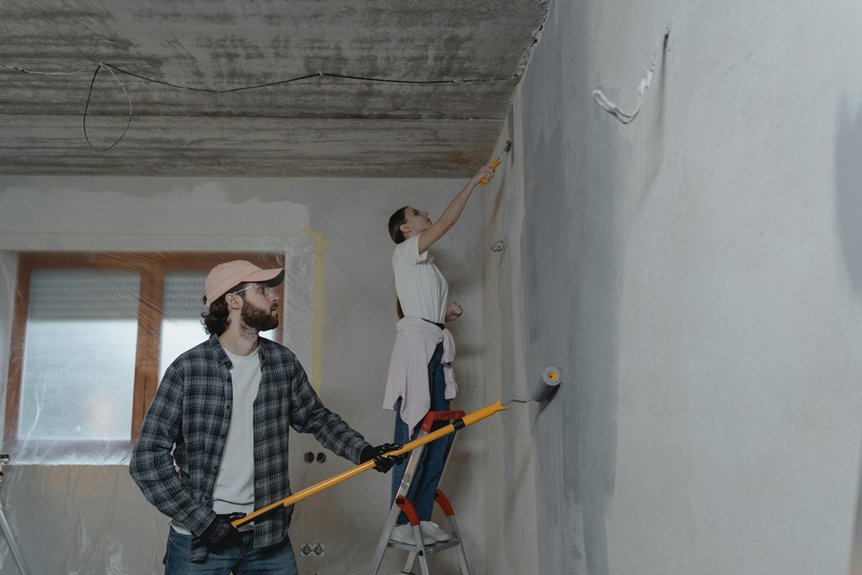
You can use ceiling paint on walls to save money and reduce visible imperfections, especially in high-traffic areas like hallways and bathrooms. Its thicker consistency means fewer coats needed and less splatter, while the flat finish hides wall flaws well. However, you’re limited to white or off-white colors.
I’d recommend testing a small 2-3 square foot section first to check coverage and adhesion. There’s more to consider about when this strategy truly pays off.
Should You Use Ceiling Paint on Walls? When It Makes Sense

Why would you consider using ceiling paint on your walls? I’ve found it makes sense when you want to avoid waste or save money on high-traffic areas. Ceiling paint has thicker consistency, which means fewer coats you’ll need and less splatter during application. However, I discovered that ceiling paint comes in limited colors and flat finishes, which don’t clean as easily as wall paint. Wall paint, being less viscous, works better on vertical surfaces but requires more prep work. I’d recommend testing a small area first before committing. If you decide to mix them, match the sheen so your walls look consistent and unified. This practical approach gives you flexibility while protecting your investment.
How Ceiling Paint Differs From Wall Paint
What’s really going on inside the can? Ceiling paint is thicker than wall paint, which helps it stick to overhead surfaces without dripping. This difference is noticeable every time you paint—the ceiling formula just doesn’t run like regular wall paint does.
The real distinction shows in the finish too. Ceiling paint delivers a flat finish that hides imperfections and bumps you’d normally see. Wall paint, meanwhile, offers various sheens like satin and semi-gloss for easier cleaning and durability.
You’ll also save money with ceiling paint since it costs about 15–20% less than wall paint. However, your color choices are limited—most ceiling paints come in white or off-white. This matters when you’re considering whether ceiling paint works for your wall project.
Why Ceiling Paint’s Thick Consistency Matters on Walls
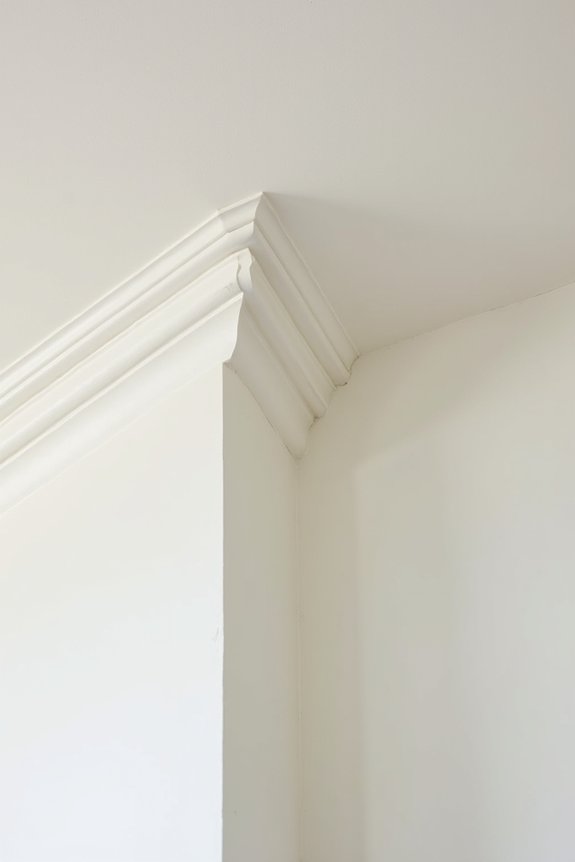
The thick formula that keeps ceiling paint from dripping overhead actually changes how it behaves when you use it on walls. The higher viscosity means the paint won’t run as easily down vertical surfaces, which sounds helpful. However, that same thickness requires you to work harder to spread it evenly. Ceiling paint needs more effort to achieve uniform coverage on walls because it doesn’t flow as naturally as standard wall paint does. You’ll likely need additional coats or primer to reach consistent color. The viscosity does help mask minor wall imperfections, but you’ll still need careful cutting in around corners and edges to prevent texture irregularities from showing up where the paint meets trim.
Best Areas for Ceiling Paint: High-Traffic and Stained Spaces
Where can you actually put ceiling paint on walls and get good results? I’ve found that high-traffic areas like entryways and hallways are ideal spots. These spaces accumulate dust, fingerprints, and scuffs that ceiling paint handles well. The primer-like base it creates hides existing stains and imperfections with fewer coats than standard wall paint requires.
I tested ceiling paint in my kitchen’s high-traffic zone near the sink, and it resisted water marks better than expected. Bathrooms with moisture issues also benefit from ceiling paint’s durable formula. The thick consistency prevents drips on vertical surfaces while maintaining washability.
For maximum effectiveness, choose ceiling paint formulated for walls in satin or eggshell finishes. These sheens boost stain resistance in busy areas. Always test a small section first to confirm the paint performs as needed before committing to full application.
The Color Trade-Off: What to Expect With Ceiling Paint

How much are you willing to compromise on color selection?
When I use ceiling paint on walls, I notice the color options are more limited than standard wall paint. Ceiling paint comes in fewer shades because it’s designed primarily for overhead surfaces. You might find yourself choosing from whites, off-whites, and pale neutrals rather than the rich blues or warm grays you’d prefer.
I’ve discovered that ceiling paint can require extra coats to achieve even color coverage on walls. The thicker formula that prevents drips overhead doesn’t always spread as smoothly on vertical surfaces. If you’re painting a bedroom or living space, I’d recommend testing your chosen color options on a small wall section first. This helps you confirm you’re comfortable with the final appearance before committing to the full project.
Prep Your Walls Before Applying Ceiling Paint
Once you’ve settled on your ceiling paint color—even if it’s not your first choice—getting your walls ready is important. I’ve learned that proper prep work determines whether your project succeeds or struggles. Start by cleaning surfaces thoroughly with a damp cloth to remove dust and grease, which block paint adhesion. Pay special attention to corners where dust settles. Next, consider applying primer-sealer if you’re switching from different paint types. This step improves hide and helps the ceiling paint adhere properly to walls. I’d also recommend testing your ceiling paint on a small, inconspicuous wall area first. This reveals how it’ll look on vertical surfaces versus ceilings, so you can confirm the color works before committing fully.
Rolling and Cutting In: Applying Ceiling Paint Smoothly
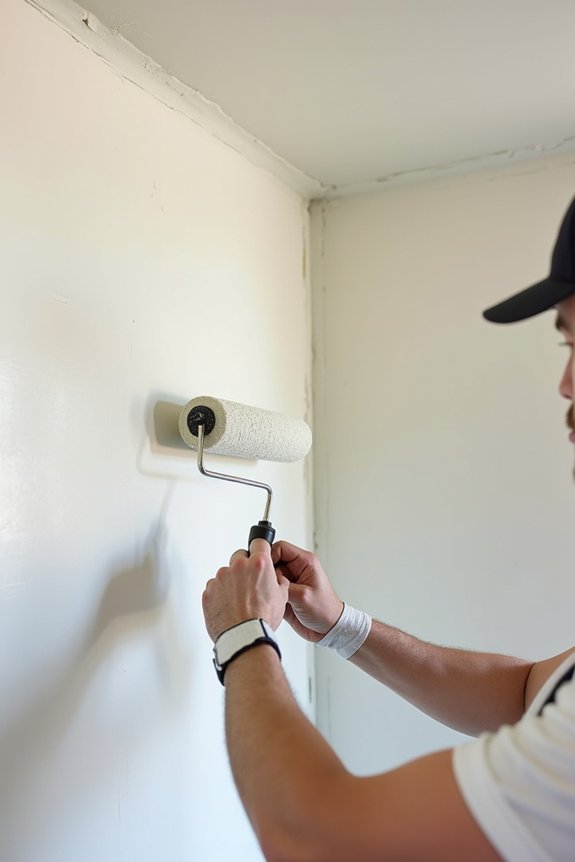
Now that your walls are prepped, you’re ready to start applying the ceiling paint, and I’ve found that the order of your strokes really matters. I always paint the ceiling first using an extension pole with my roller. This prevents drips from landing on fresh wall paint later. Once the ceiling begins setting, I cut in along the wall edges with a sash brush, using a steady, light hand to minimize visible marks.
| Step | Tool | Technique |
|---|---|---|
| Ceiling | Extension pole roller | Smooth, even strokes |
| Wait | Timer | Let paint begin setting |
| Walls | Sash brush | Light, steady hand |
Ceiling paint’s thickness works with you here—it self-levels beautifully and resists drips better than standard wall paint does.
Can You Use Ceiling Paint as a Primer?
Why not use ceiling paint as a primer on your walls? Ceiling paint works well as a base coat, particularly when you’re tackling rough or porous surfaces. Its thicker formula seals imperfections and helps your topcoat stick better, potentially saving you an extra coat of paint.
Ceiling paint’s thicker formula seals imperfections and improves topcoat adhesion, potentially eliminating an extra coat on rough surfaces.
Here’s what makes ceiling paint effective as primer:
- Reduces dripping due to higher viscosity
- Seals porous surfaces for better adhesion
- Smooths imperfections before final coats
- Extends paint supplies without waste
Before committing to your entire wall, test a small section first. Match the sheen between your ceiling paint and final topcoat—typically flat or eggshell works best. You can even mix leftover ceiling paint with wall paint if they share the same sheen, stretching your materials further while maintaining quality results.
Test Before Committing: Small-Section Application
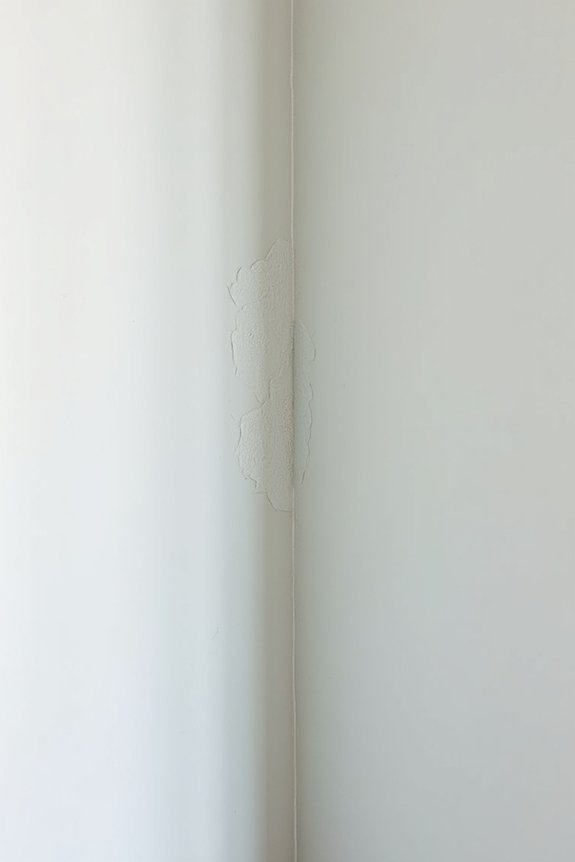
Before I paint an entire wall with ceiling paint, I test a small 2-by-3-foot section first to see how it actually performs on vertical surfaces and whether it drips or leaves roller marks. I watch carefully for how the flat finish looks under my room’s lighting, since ceiling paint reflects light differently than wall paint, and I compare it against my existing wall color to confirm they’ll work together. This test patch also shows me exactly how much coverage I’ll get and whether I’ll need extra coats, which helps me plan my project and budget accurately.
Patch Testing Protocol
you don’t want to paint your entire wall with ceiling paint only to discover halfway through that it doesn’t stick properly or looks streaky under your living room lights.
I always start by testing on a small, inconspicuous wall section using the exact same tools and techniques I’ll use for the full job. Here’s what I monitor:
- Coverage and adhesion – Does the paint stick smoothly without peeling?
- Finish appearance – How does the flat finish look in your actual lighting?
- Drips and pooling – Does it run or bunch up on textured areas?
- Coat consistency – Do I need multiple coats or thinning adjustments?
When my test patch dries as expected, I move forward with confidence. If problems appear, I adjust my approach before committing to the walls.
Assessing Finish Compatibility
Once I’ve confirmed the paint sticks and covers well, I need to check whether the finish itself will work on my walls. The sheen matters because ceiling paint and wall paint often have different finishes. I’ll compare how each reflects light in my space.
| Finish Type | Ceiling Paint | Wall Paint | Light Reflection | Best For |
|---|---|---|---|---|
| Flat | Matte, hides flaws | Matte, hides flaws | Minimal shine | Problem areas |
| Eggshell | Subtle sheen | Subtle sheen | Soft glow | Living rooms |
| Satin | More reflective | More reflective | Noticeable shine | Kitchens |
Testing on my brightest wall section shows me exactly how the finish will look throughout the room. Mismatched sheens create visible lines where ceiling paint meets wall paint, disrupting my design.
Evaluating Coverage Performance
How’s that ceiling paint actually going to look on your wall?
You’ll want to test a small 2–3 square foot area first. I’ve learned this matters because ceiling paint behaves differently on vertical surfaces than I expected. Here’s what I check during my test:
- Coverage quality – Does it hide your wall’s existing color and marks in one or two coats?
- Finish consistency – Does the sheen match your vision, or does it look flat and dull?
- Drip tendency – Watch for runs; ceiling paint’s thicker formula can surprise you.
- Dry time – Note how long it takes and whether cleanup’s easier than standard wall paint.
This small commitment prevents costly full-wall mistakes. I observe how the ceiling paint interacts with your primer and texture, noting any patchy spots before rolling everywhere.
Should You Mix Ceiling and Wall Paint?
Can I mix ceiling and wall paint together? Yes, you can, but there’s an important catch. Both paints must share the same sheen level—whether that’s matte, satin, or gloss—to get a uniform appearance across surfaces.
Testing matters tremendously. Before committing to your entire project, apply your mixture to a small, inconspicuous area first. This confirms compatibility and prevents wasting paint or discovering problems too late.
The real consideration: ceiling paint is thicker and resists splattering, while wall paint typically offers more color and sheen options. When you’re mixing ceiling and wall paint, you’re making a trade-off between these qualities. Understanding this compromise helps you decide whether blending makes sense for your specific project needs.
Long-Term Care: Cleaning and Touching Up Ceiling Paint Walls
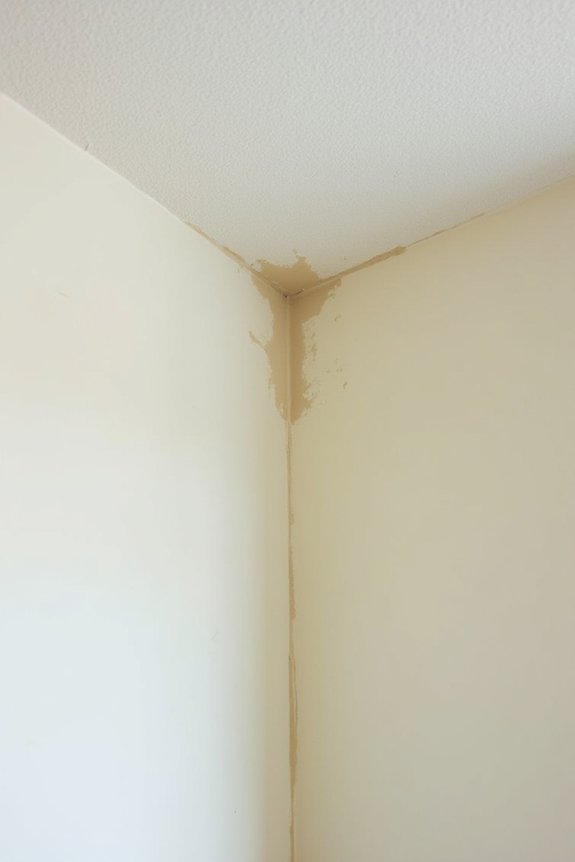
Now that you’ve decided to use ceiling paint on your walls, you’ll want to know how to keep that finish looking fresh for years to come. Long-term maintenance requires thoughtful care and attention to detail.
Long-term maintenance of ceiling paint requires thoughtful care and attention to detail to keep that finish looking fresh for years.
Here’s what I recommend for ceiling paint upkeep:
- Clean surfaces with gentle, non-abrasive cleaners to avoid dulling the finish
- Use the same brand, sheen, and color batch for touch-ups to prevent shade differences
- Choose washable or scrubbable ceiling paint options that withstand regular cleaning
- Inspect walls quarterly for wear spots or damage
When I touch up my ceiling paint walls, I always grab the original paint can. This consistency prevents noticeable patches. Gentle cleaning keeps your walls looking well-maintained, protecting your investment long-term.
When Wall Paint Is the Better Choice
While ceiling paint works fine on walls in a pinch, wall paint offers better durability and performance on surfaces that need regular cleaning—especially in kitchens or bathrooms where you’ll wipe down walls frequently. Wall paints come in finishes like satin and semi-gloss that resist stains and moisture better than ceiling paint’s flat finish, and they’re formulated to handle scuffs without losing their appearance. If you want walls that look polished and stay that way, choosing the right wall paint for your space will improve long-term performance.
Durability and Cleanability Matters
When you’re deciding whether ceiling paint will work on your walls, durability and cleanability should weigh heavily in your decision. I’ve learned that most ceiling paints have flat finishes, which means they won’t hold up well to daily wear and tear like wall paint does.
Here’s what matters most:
- Scuff resistance – Wall paint resists fingerprints and marks better than ceiling paint
- Washability – You can scrub wall paint without damaging it; ceiling paint often deteriorates
- Moisture protection – Bathrooms and kitchens need paint that resists stains and humidity
- Long-term maintenance – Wall paint requires less frequent repainting over time
In high-traffic areas, wall paint’s superior durability and cleanability make it the practical choice. Ceiling paint simply isn’t designed for surfaces you’ll touch and clean regularly.
Finish Quality for Walls
What makes wall paint so much better suited for your walls than ceiling paint? The finish quality matters when you’re creating a space you’ll live in. Wall paint offers superior scrubbability and durability compared to ceiling paint’s flat finish, which shows every fingerprint and dust mark.
| Feature | Wall Paint | Ceiling Paint |
|---|---|---|
| Finish Options | Satin, eggshell, semi-gloss | Primarily flat |
| Cleanability | Highly washable | Limited cleaning ability |
| Durability | Long-lasting, stain-resistant | Chalky, prone to marks |
Wall paint’s satin or eggshell sheens balance aesthetics with practical maintenance. When I painted my hallway with eggshell wall paint instead of flat ceiling paint, I immediately noticed how much easier it became to wipe away scuffs and marks. That’s the finish quality difference that makes your walls livable.