I’ll walk you through lighting your gas fireplace safely.
First, identify your fireplace type—standing pilot, manual valve, or electronic ignition—and check that your gas supply’s on by testing another appliance.
Next, prepare your pilot light if needed, then ignite it using your control knob and ignition button.
Adjust the flame height with your control knob to your preference, and set your thermostat for steady warmth.
Finally, turn everything off by rotating the knob to OFF and let it cool completely.
Additional details about safety checks and troubleshooting are available if you need them.
Step 1: Identify Your Fireplace Type and Check the Gas Supply
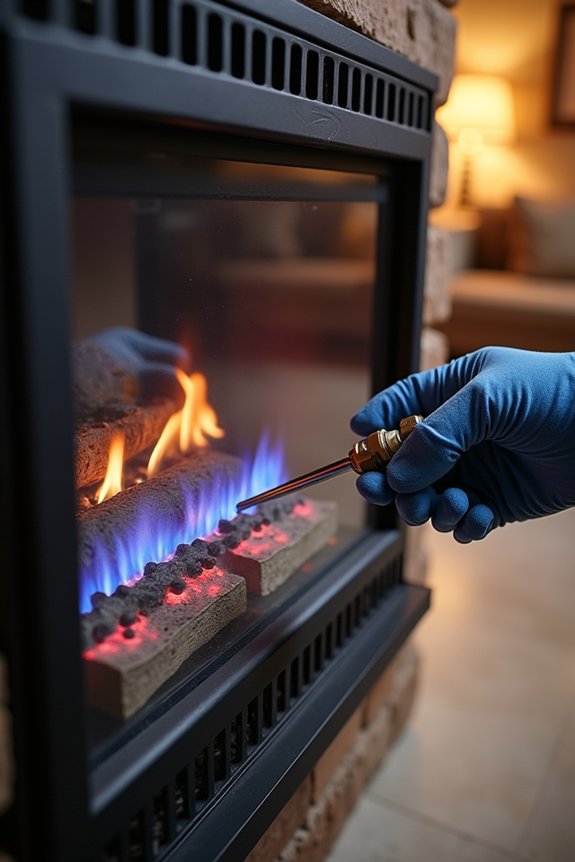
Before you strike a match or press any ignition button, you’ll want to figure out what type of gas fireplace you’re actually working with. I’ve found three main types: standing pilot, manual valve, and electronic ignition. Each works differently, so identifying yours matters.
Next, locate your gas valve near the fireplace—check the floor, wall, or behind a panel. Once you’ve found it, verify your gas supply is actually on by checking other appliances like your stove or water heater. If they’re working, gas is flowing.
Don’t skip safety here. If you smell gas, stop immediately and call a professional. Also, crack a window or door for proper ventilation before attempting ignition. These steps protect you and your home.
Step 2: Prepare Your Pilot Light (Electronic Models: Skip to Step 3)
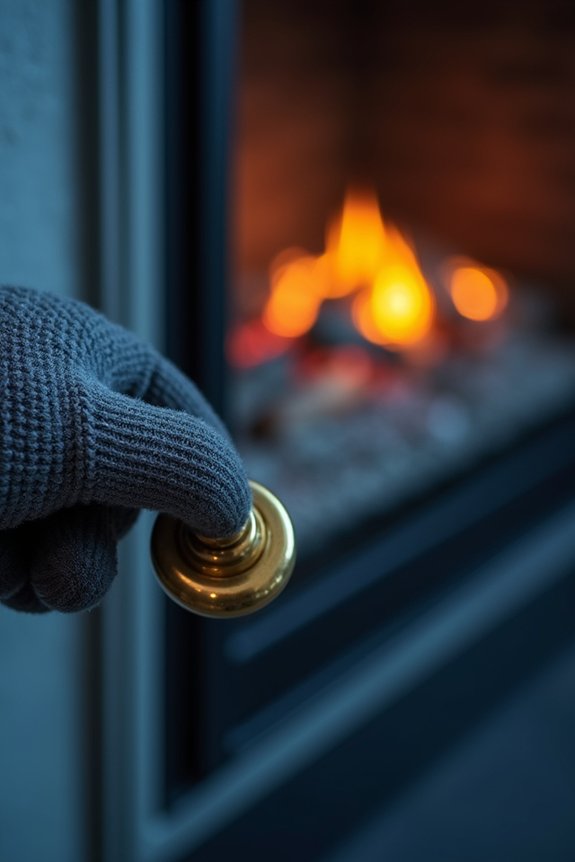
Now that you’ve confirmed your gas supply is on, the next step depends on which fireplace model you’re working with. If you have a standing pilot light, set the control knob to Pilot and press the ignition button to get it going. If you own an electronic model, skip this entire step and go to Step 3 instead.
Before you proceed, make sure your remote control or wall switch is ready. Check that ventilation in your room is adequate—this prevents dangerous gas buildup. Crack a window slightly for safety. Watch for any gas leak safety concerns. If you smell anything off, shut the gas valve immediately and call a professional.
Step 3: Light Your Fireplace
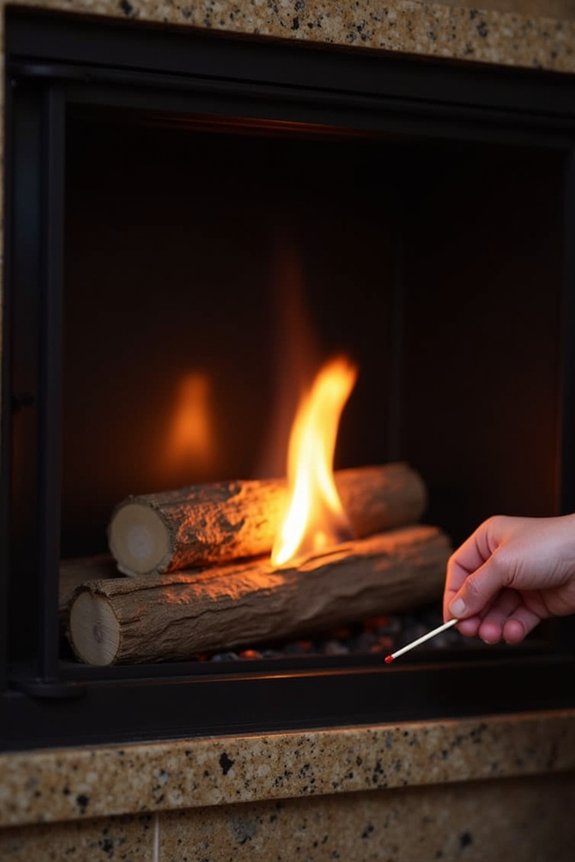
With your pilot light ready or your electronic system prepared, you’re set to light your fireplace. For manual systems, I press the igniter button while holding the control knob on PILOT for about 30 seconds. You’ll see a small flame appear near the burner. For electronic ignition, I simply turn the gas valve On and push the button or use my remote. The system ignites automatically without a pilot light, which I’ve found convenient.
Once ignition happens, I rotate the control knob to adjust the flame height and heat level I want. I watch the main burners carefully to confirm they’re all lighting properly. If flames don’t appear after a few minutes, I wait for gas to clear, allow for good ventilation, and try the lighting procedure again.
Step 4: Adjust Your Flame and Thermostat
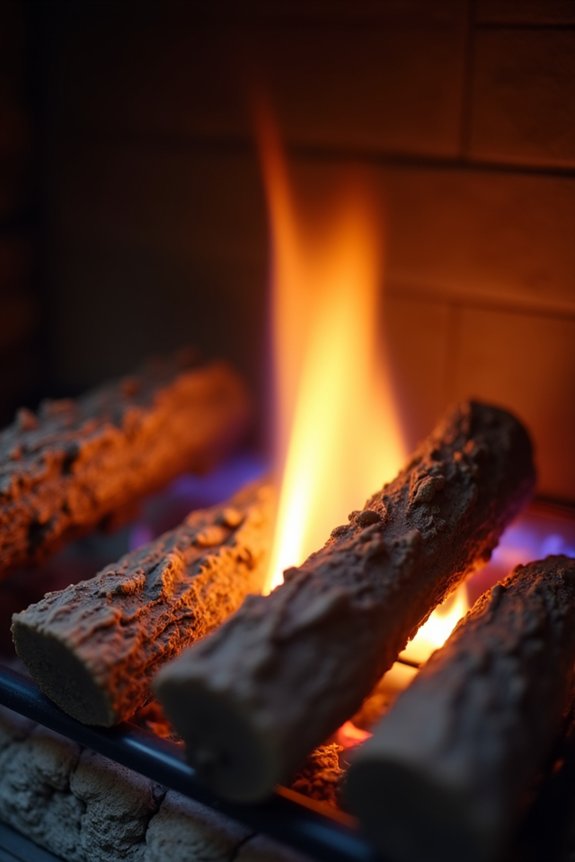
Once your fireplace’s flames are igniting properly, you’ll want to fine-tune them to get just the right look and warmth for your space. Adjusting the gas valve and flame height using your remote control or ignition button makes a real difference in comfort and ambiance.
Here’s what to do:
- Use the control knob to adjust flame height until it matches your preference
- Set your thermostat to maintain steady room temperature automatically
- Choose your desired flame color if your model offers that option
- Check that flame distribution is even across the logs, reseating them if needed
Monitor your heat output regularly. If you notice flickering or yellow tips, the pilot light might need adjustment. A properly tuned fireplace keeps your home warm while running efficiently.
Step 5: Turn Off Your Fireplace Safely
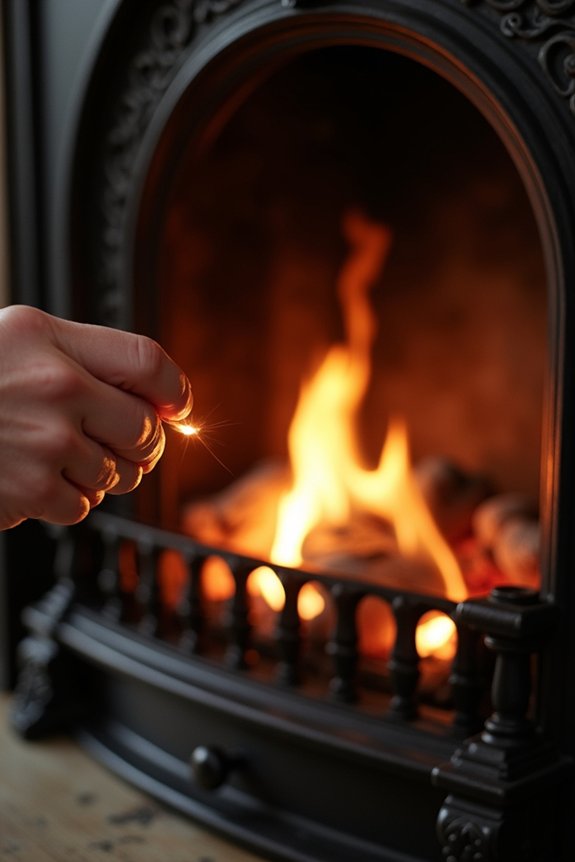
How do you know when it’s time to shut down your fireplace? When you’re ready to turn it off, I rotate the gas control knob to the OFF position. This stops the gas valve immediately. Next, I select the OFF or PILOT setting on the ignition button, depending on my model’s instructions. I never touch the hold knob or flame until everything cools completely—this prevents burns. After shutdown, I inspect around the fireplace for any signs of a gas leak. I also check that ventilation remains clear and unobstructed. Before leaving, I keep the surrounding area dry and free from combustibles. Following this safety shutoff procedure consistently keeps my home secure. If I ever notice unusual smells or issues, I contact a professional right away.