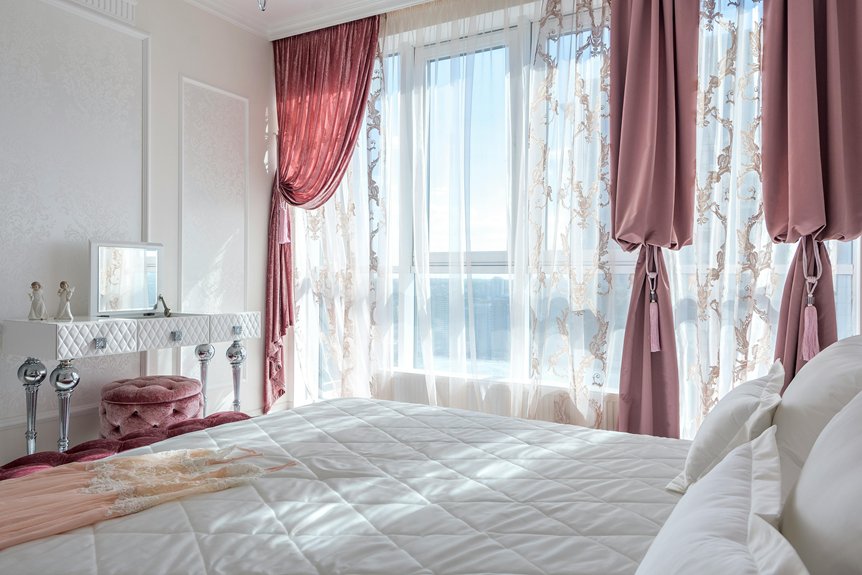
Your curtains should be 1.5 to 3 times wider than your window, depending on how full you want them to look. I’d recommend starting with 2 times your window width for a polished, professional appearance.
If you’re mounting outside the frame, add 3 to 6 inches on each side.
Round up your measurements to the nearest half-inch so everything hangs evenly.
The specific width you’ll need depends on your window size, mounting style, and fabric type—but there’s a formula that makes it simple.
How Wide Should Your Curtains Be? The Quick Answer
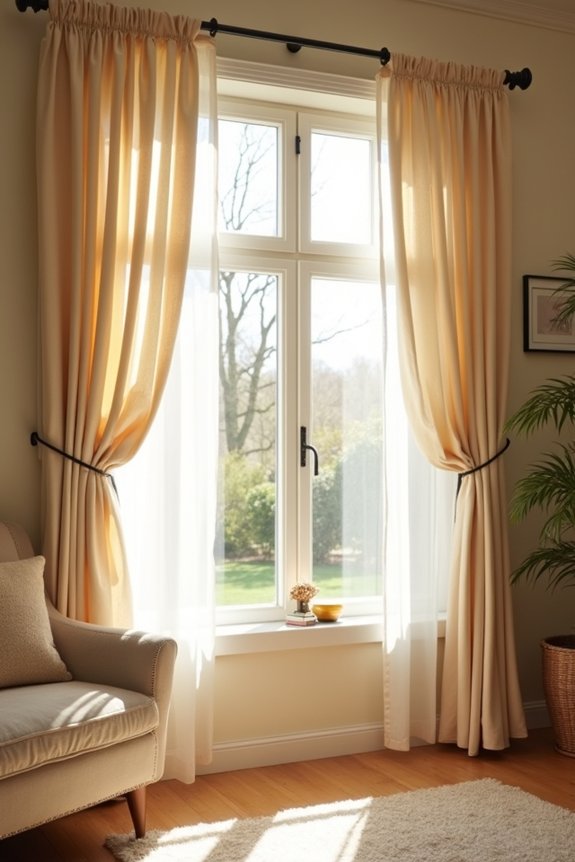
How do you know if your curtains will actually look full and polished instead of skimpy and stretched? I’ve learned that standard fullness requires your total curtain width to be 1.5 to 2 times your window width. For a 36-inch window, I aim for about 72 inches of finished fabric. A 48-inch window typically needs 72 to 120 inches depending on how full I want the look.
The curtain rod placement matters too. When I mount outside the window frame, I add 3 to 6 inches on each side, which creates better coverage and proportion. Grommet and rod-pocket styles work well with 2× fullness for that polished appearance.
Understanding your window width and choosing appropriate fullness affects how your curtains hang and drape.
Why the Width Matters: What Fullness Does
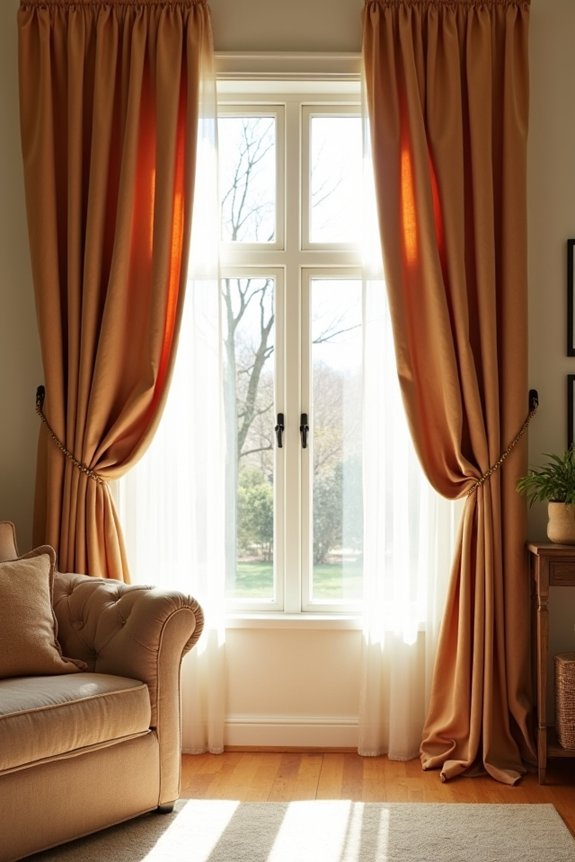
Why does curtain fullness matter so much? I’ve learned that curtain width affects how your windows look and function. Fullness—measured as a multiplier of your window width—impacts everything from light control to visual appeal.
Here’s what I discovered matters most:
- Fuller curtains (2×–3× multiplier) block more light and heat
- Adequate width creates a professional, intentional appearance
- Proper coverage eliminates gap light around the window frame
- Wider curtain panels visually enlarge your space
- The multiplier you choose depends on your fabric and style
For my 36-inch window, I chose 2× fullness, requiring 72 inches of finished width across my curtain panels. Extending the rod beyond the window frame helped achieve that fuller look I wanted. That multiplier influenced how polished everything looked.
Measuring Your Window Width First (The Foundation)
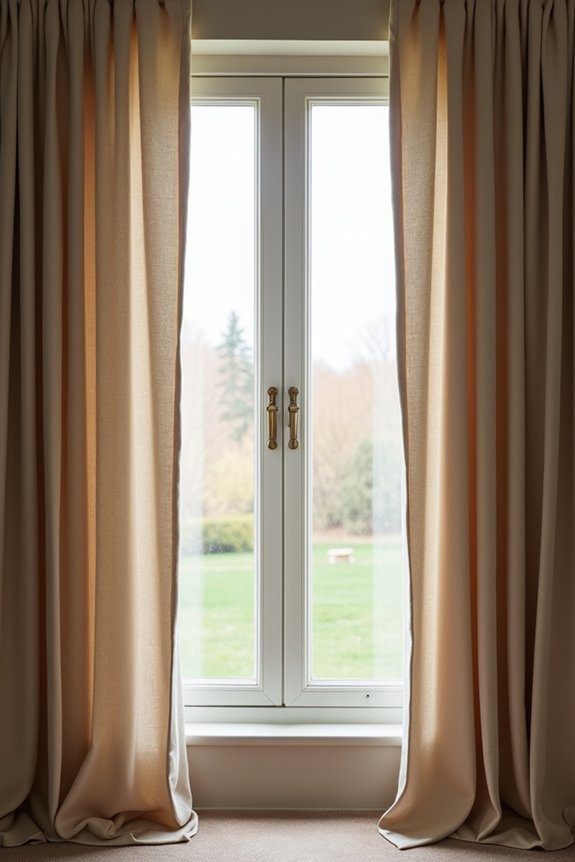
Before you can figure out how much fabric you’ll need, there’s one essential step: measuring your window width accurately. This matters more than you’d think.
Grab a measuring tape and measure from one outer edge of your window frame to the other. This gives you your starting point for everything that follows. Write down this number—it’s your window width foundation.
Next, decide between inside-mount and outside-mount installation. Inside-mount means your rod length equals your window width exactly. Outside-mount requires adding 3–6 inches on each side, which gives you more coverage and visual width.
Once you know your window width, you’re ready to calculate how much total fabric width you need for proper curtain fullness and determine your panel width requirements.
Choosing Your Fullness Multiplier (Standard, Deluxe, Ultra)
Once you’ve measured your window width, the next critical decision is selecting your fullness multiplier—the number you’ll multiply your window measurement by to get your total panel width. You’ll typically choose between standard fullness (2×), deluxe fullness (2.5×), or ultra-fullness (3×), and I’ll show you how each one creates a different look and feel in your space. The right choice depends on your curtain type and how full and luxurious you want those drapes to hang, so let’s break down what each multiplier actually means for your finished curtains.
Standard Fullness Guidelines
How do you know if your curtains will look right when they’re hung? Standard fullness gives you that balanced, polished appearance most people want in their homes.
Standard fullness uses a 2x multiplier for your curtain width calculation. Here’s what I mean:
- Measure your window width accurately
- Multiply that measurement by 2
- This creates your total panel width needed
- Round up to the nearest half inch for proper coverage
- Works well with rod pocket and pleat styles
When I hung curtains in my bedroom using standard fullness guidelines, they draped nicely without looking skimpy or overdone. This multiplier gives you enough gather for a tailored look while keeping things practical. You’ll get coverage that feels welcoming without overwhelming your space.
Deluxe And Ultra Options
If you want your curtains to look more luxurious and dramatically draped, you’ve got two upgraded options beyond standard fullness. Deluxe fullness uses a 2.5 multiplier, creating a sumptuous drape that enhances your room’s elegance. Ultra fullness pushes further with a 3× multiplier, delivering the most dramatic, luxe coverage available.
Here’s how I calculate curtain width for these options. For a 36″ window width, deluxe fullness requires about 90″ finished width, while ultra fullness needs roughly 108″. When determining panel quantity, I multiply the window width by your chosen fullness multiplier, then divide by the number of panels planned.
Your drape style matters too. Grommet and pinch pleated curtains handle these higher multipliers beautifully, creating professional-looking folds. Consider your space’s scale and lighting before committing to ultra fullness—it requires adequate room and will significantly impact your interior.
Matching Multipliers To Panels
The fullness multiplier you choose fundamentally shapes how your curtains’ll look and function in your space. I’ve found that matching your multiplier to your specific panel type produces better results in achieving the drape you want.
Here’s what I consider when selecting my curtain width multiplier:
- Rod pocket curtains work well with standard 2x fullness for a classic appearance
- Grommet panels benefit from deluxe 2.5x multipliers for elegant movement
- Pinch-pleat curtains typically align with 2x window width for traditional styling
- Ultra-fullness at 3x creates dramatic folds suitable for formal rooms
- Your room’s purpose influences which multiplier serves you best
I always round my curtain width measurements up to the next half inch per panel. This prevents gaps when curtains close and provides adequate coverage. Matching your fullness multiplier to your panel type produces professional-looking results every time.
Inside Mount vs. Outside Mount: What Changes
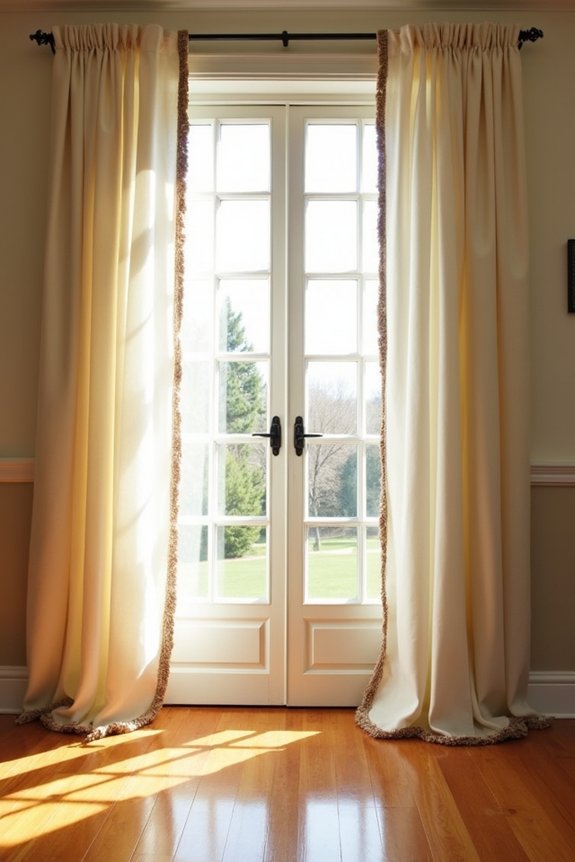
I’ll walk you through how your mounting choice changes everything about measuring your curtains, because where you place that rod actually determines your starting width. If you’re doing an inside mount, I measure right inside the window frame itself—that’s your true width, nothing added. But with an outside mount, I add 3 to 6 inches on each side of the window, so a 30-inch window suddenly becomes about 36 inches for the rod, and that extra space affects how much light you can block and how full your curtains look.
Measurement Starting Points Differ
Where you decide to hang your curtain rod—inside or outside your window frame—changes everything about how you’ll measure for width.
Your measurement starting point directly affects your curtain width and rod width calculations. Here’s what differs:
- Inside mount: Measure between the inner edges of your window frame for the rod width
- Outside mount: Measure from outside the trim, adding 3–6 inches on each side
- Rod width equals curtain width for inside mounts at approximately your window width
- Outside mounts require extra length to achieve fullness and minimize light gaps
- A 30-inch window needs a 30-inch inside rod but roughly 36 inches for outside mounting
Getting your measurement starting point right produces proper fullness and professional-looking coverage. Double-check your reference points before ordering.
Rod Placement Affects Width
How you position your curtain rod fundamentally changes your width measurements and the final look of your windows. Outside-mount rod placement creates a noticeably fuller appearance compared to inside mounting. When you extend your rod 3–6 inches beyond the window frame on each side, you’re adding real width to your curtains’ coverage. This extension matters because it allows your drapes to frame the window while reducing light gaps along the edges. Your measurements shift significantly based on this choice. Inside mounts require precise window width calculations, but outside mounts demand you add those extra inches intentionally. The result is that your curtains look richer, your window appears larger, and you achieve the fullness that improves a room’s overall appearance.
Calculating Your Total Fabric Width
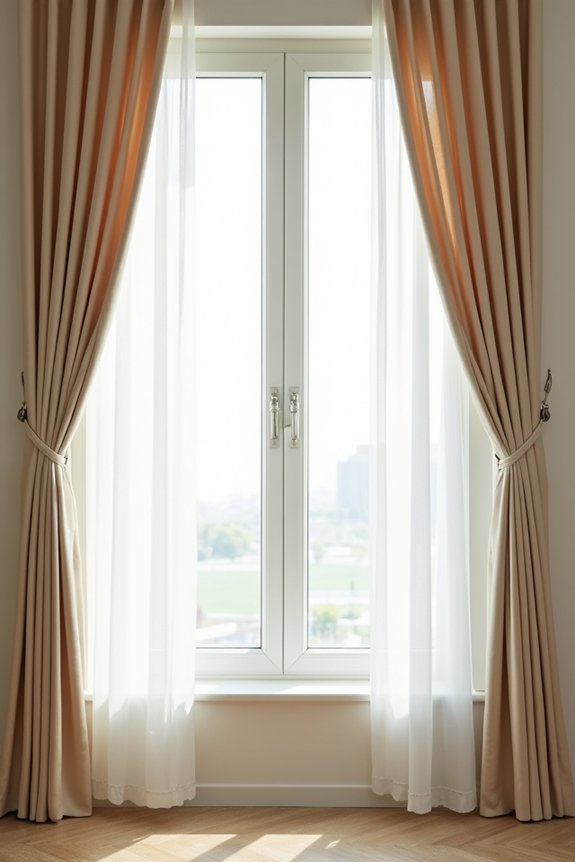
Once you’ve measured your window width, multiply that number by your fullness factor to create properly draped curtains.
Here’s how to break down the process:
- Standard fullness ranges from 1.5× to 3× your window width
- Common multipliers of 2× to 2.5× work well for most homes
- Rod pocket, grommet, and pinch-pleat styles each need specific multipliers applied
- Multiple panels require dividing your total fabric width equally
- Round up to the nearest half inch for adequate coverage
When calculating living room curtains at 60 inches wide with a 2.5× multiplier, you need 150 inches total. Splitting that between two panels means 75 inches each—enough fabric for fullness that properly frames the window.
Standard Panel Widths and How Many Panels You Need
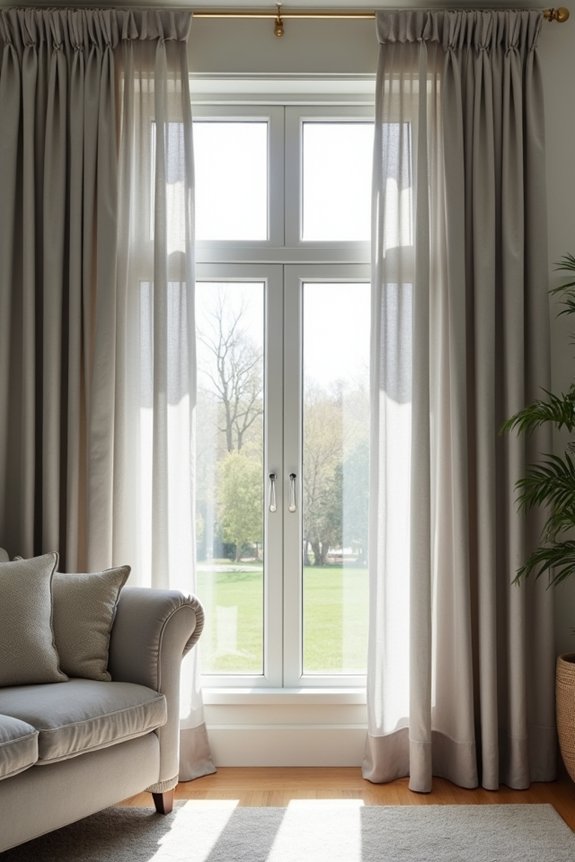
The real question isn’t just how wide your curtains should be—it’s how many panels you’ll actually need to achieve that width. Determining your number of panels depends on your window width and desired standard fullness. Most fabrics come in standard widths, so you’ll divide your total panel width by the fabric width to find how many panels you need.
| Window Width | Standard Fullness | Total Panel Width | Per-Panel Width | Number of Panels |
|---|---|---|---|---|
| 36″ | 1.5x | 54″ | 27″ | 1 panel |
| 48″ | 2x | 96″ | 48″ | 2 panels |
| 60″ | 2.25x | 135″ | 68″ | 2 panels |
| 72″ | 2.5x | 180″ | 90″ | 3 panels |
| 84″ | 2x | 168″ | 84″ | 2 panels |
Round your per-panel width up for adequate coverage overlap.
How Curtain Style Affects Your Width: Grommet, Rod Pocket, and Pinch Pleat
I’ve noticed that different curtain styles need different amounts of fabric, and understanding these differences will help you get the look you want. Grommet curtains require about 2x your window width because the fabric slides freely on the rod, while pinch pleat drapes work differently—a pair of 48-inch panels actually covers only about 36 inches of window because the pleats and overlaps take up space. Knowing which style you prefer means you’ll calculate your panel widths correctly from the start, so you won’t end up with curtains that look either too skinny or wastefully bunched up.
Grommet Panel Fullness Requirements
How much fabric do you really need for grommet curtains? I’ve found that grommet panels require a finished width about 2 times your window width to achieve that full, polished look you’re after.
Here’s what I recommend considering:
- Calculate your window width first
- Multiply by 2 for standard fullness
- Account for the grommet holes themselves
- Consider whether you want deluxe fullness at 2.5×
- Measure twice before ordering fabric
When I hung grommet panels in my living room, using 2× the window width gave my space a fuller appearance. The coverage looked deliberate and gathered beautifully when I opened them. Starting with this measurement gives you that professional appearance without overthinking the process. You’ll feel confident knowing your panels will drape properly and frame your windows just right.
Pinch Pleat Coverage Calculations
Pinch pleated drapes work differently than grommet panels because their fullness gets sewn right into the fabric instead of hanging loose. The standard multiplier for pinch pleat is 2×, meaning you’ll multiply your window width by two to get your total fabric width needed.
For example: if your window measures 60 inches wide, you’d need 120 inches of total fabric width. Since most panels come in 48-inch widths, you’d divide 120 by 48, which gives you 2.5 panels. Round up to three panels for proper coverage and overlap.
With pinch pleat, all that fullness gets structured into the fabric itself, creating those signature pleats. This sewn-in fullness allows your drapes to hang properly and provide adequate window coverage.
Fabric Weight and Heading Type: Do They Change Your Width?
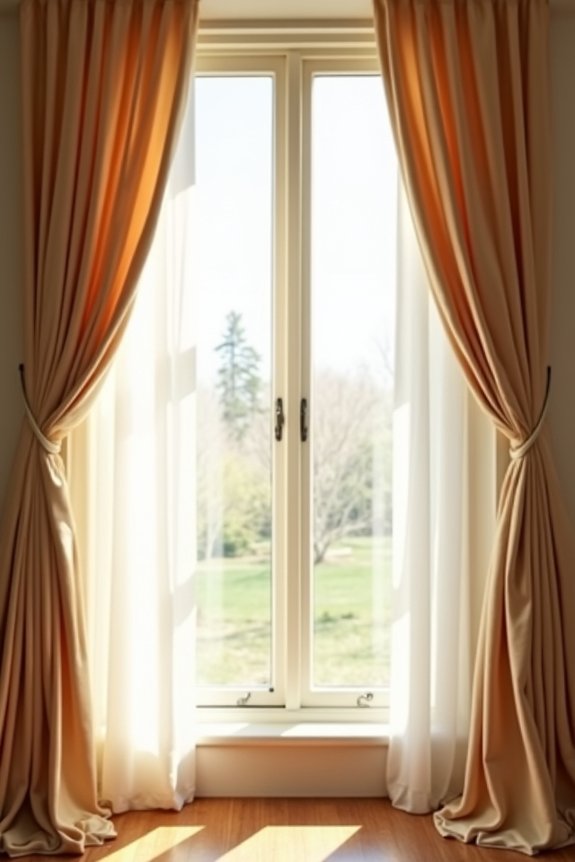
- Rod-pocket curtains require 2× to 2.5× window width for clean draping
- Grommet styles need similar width ratios to hang properly
- Pinch-pleated drapes use sewn fullness, so a 48-inch panel covers roughly 36 inches
- Heavier fabrics need less width because they naturally collapse with good proportions
- Lightweight materials require extra width to achieve that full, gathered look
Your heading type determines how fabric hangs. Understanding your fabric weight alongside your chosen style removes guesswork and gets your windows looking exactly as you want them.
How Far Should Your Curtains Extend on the Rod?
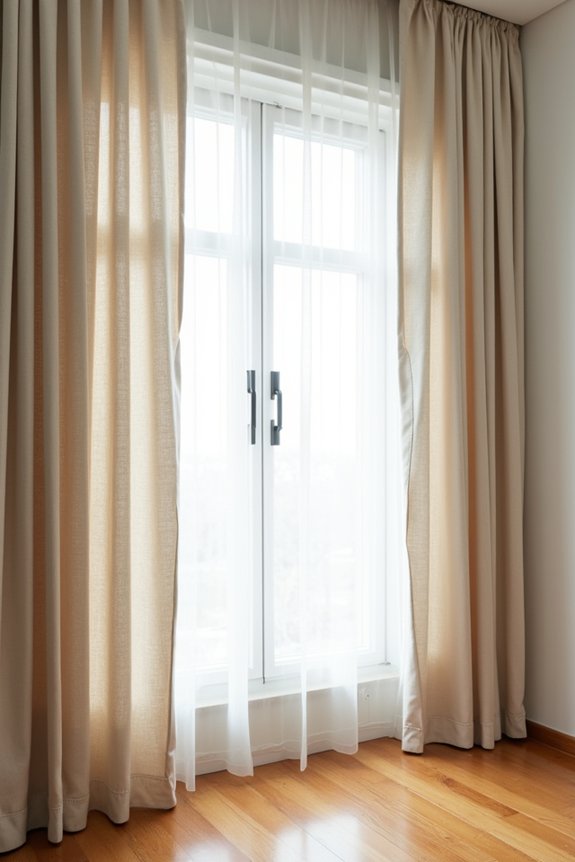
Now that you’ve figured out your fabric weight and heading type, I want to show you how far your curtains should actually extend on the rod, because this is where many people make costly mistakes. The distance your rod extends beyond your window frame and how much fabric you pile onto that rod will directly impact whether your curtains look full and luxurious or thin and skimpy. Let me walk you through the specific measurements that’ll give you the polished look you’re after.
Rod Extension Beyond Frame
How much should your curtain rod actually extend past your window frame? Getting this right makes a real difference in your window treatment. When you’re doing an outside-mount installation, you’ll want to extend your curtain rod beyond the frame strategically.
Here’s what works:
- Extend 3–6 inches on each side for a fuller look
- Use 3–4 inches per side in smaller spaces
- Add 6–8 inches total to your window width measurement
- Mount wider than just the frame for better coverage
- Apply the same extension principles when mounting higher
This approach reduces light gaps and creates visual balance. Extending your rod width properly makes your windows feel larger and your curtains drape well. The key is thinking beyond just covering the frame itself.
Overlap and Coverage Guidelines
When you’re hanging curtains, the width of your panels on the rod matters just as much as where you mount that rod. Achieving proper panel coverage requires understanding how your curtain width relates to your window width.
| Coverage Type | Curtain Width | Result |
|---|---|---|
| Standard Fullness | 1.5–2× window width | Balanced, polished look |
| Pair of Panels | 2–3× window width | Minimal side gaps |
| Outside Mount | Rod extends 3–6″ beyond frame | Maximum light control |
For a pair of panels, plan total width to cover roughly two to three times your window width. This keeps the panels overlapping at the center, preventing light from streaming through. When you position panels wider on the rod, you minimize gaps at the sides. Outside mounts enhance this effect, letting you achieve fuller panel coverage and a more intentional appearance.
Rounding Up Your Measurements So Everything Fits
Once you’ve got your window width and chosen your fullness factor, there’s one step that matters: rounding up your measurements.
Here’s why:
- Round to the nearest half-inch for each panel to guarantee adequate width
- Account for overlap when calculating total fabric width across your window
- Plan extra coverage so grommet or rod-pocket curtains hang properly without gaps
- Add returns on each side for a polished, professional appearance
- Build in buffer room to handle shrinkage and keep fullness looking intentional
When I measured my 60-inch window and multiplied by 2.5× fullness factor, I got 150 inches. I rounded up to 152 inches—enough for two 76-inch panels. This approach guaranteed my curtain width covered everything properly. You’re investing in fabric anyway; rounding up means those panels drape exactly as intended, creating the gathered look you want.
Window Size Guidelines: Quick Lookup Table
What’s the fastest way to figure out your curtain width without doing all the math yourself? I’ve created a quick reference guide that removes guesswork from measurement guidelines. For standard fullness, I multiply my window width by 1.5 to 2. Grommet curtains need about 2× your window width for proper coverage. Pinch-pleated drapes also work well at 2× the window width. When I outside-mount my rod, I add 3–6 inches on each side for a fuller appearance. Remember, your total panel width combines all fabric widths together, not per panel. This straightforward approach helps you get accurate measurements the first time.
Five Measurement Mistakes (And How to Fix Them)
I’ve seen plenty of people grab their measuring tape and come away with curtains that don’t quite fit right, and most of the time it’s because they’ve made one of five common mistakes.
Here’s what I want you to avoid:
- Forgetting the fullness factor when calculating your total curtain width—multiply window width by 1.5–3 for proper drape
- Skipping rod extension planning, which means missing out on that 3–6 inch buffer on each side
- Confusing panel count with actual coverage; a single 60-inch panel won’t cover a 60-inch window fully
- Neglecting measurement rounding, which causes uneven overlaps between panels
- Installing rods without accounting for outside mount placement versus inside mount specifications
Round measurements up to the nearest half inch per panel. Add those essential inches beyond your window’s edges. Account for your fullness factor early. These steps will help your curtains hang properly.
What to Do If Your Curtains Look Too Narrow or Too Full
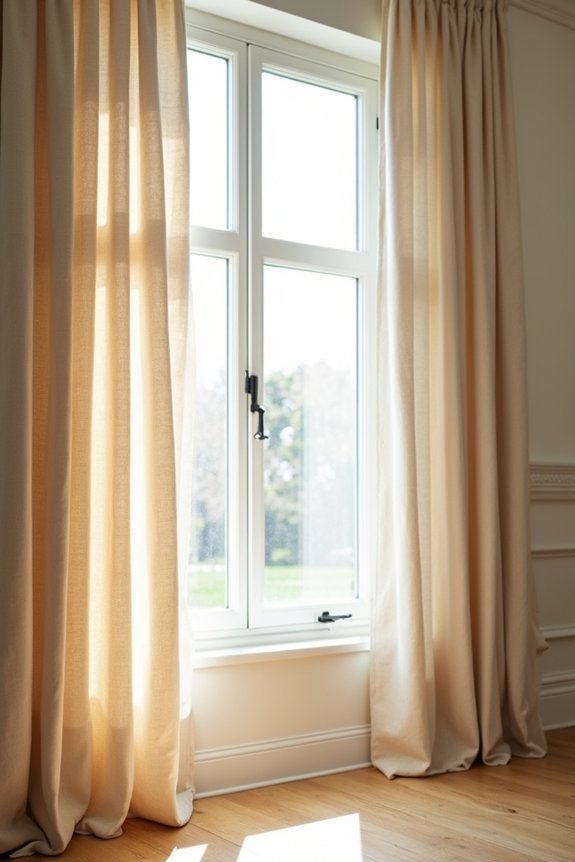
Have you hung your new curtains only to find they’re either skimpy and gaping at the sides or bunching up like they’ve got nowhere to go?
I’ve been there, and here’s what I’ve learned: if your curtains look too narrow, increase your fullness multiplier to 2× to 2.5× your window width for standard fullness. Extend your rod 3–6 inches beyond the frame on each side to eliminate light gaps. When curtains feel too full instead, dial back that fullness multiplier toward 1.5× for a tailored look.
The key is balancing your curtain width with proper rod extension. Small windows work best with shorter lengths and panels sized specifically for your window width plus margin. This adjustment prevents excessive bulk while maintaining the coverage you want.