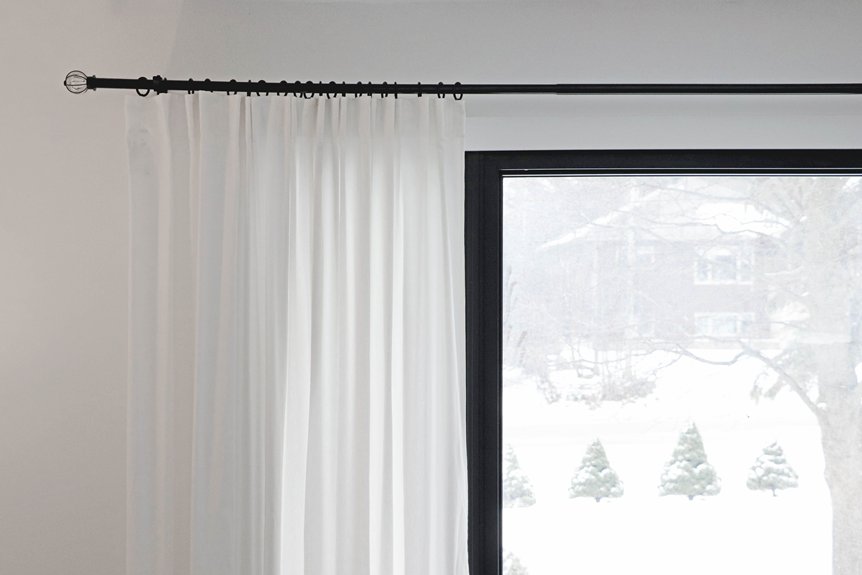
I’ll help you place curtain holdbacks right the first time. Start by measuring from your floor to about one-third up your window—that’s typically where I mount them for balance. Mark both sides at identical heights using a level for symmetry. Locate wall studs with a stud finder, or use heavy-duty anchors if studs aren’t convenient. Mount your holdbacks 2-3 inches outside the window frame, then hang your curtains and adjust the drape by hand until both sides look balanced. There’s quite a bit more to know about preventing sagging and fine-tuning your setup.
Measure Your Window and Determine Holdback Height
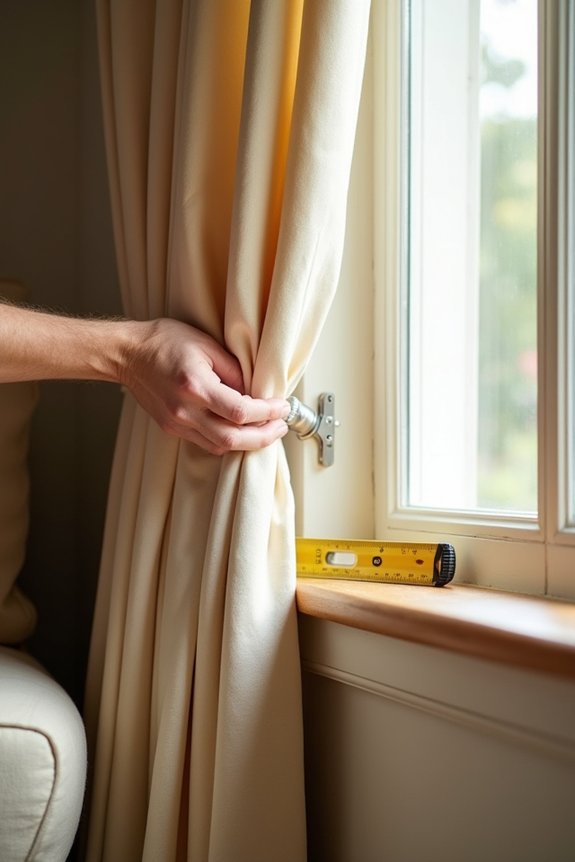
Before you install anything, you’ll need to figure out where your holdbacks should go, and that starts with understanding your window’s dimensions. I measure from floor to ceiling first, then work backward. For an 84-inch panel, I place hardware around 28 inches from the floor—roughly one-third up. This standard mounting height works for most rooms and creates a balanced look.
Next, I measure the distance from my window to where I want the holdback positioned. This controls how much glass shows and how the fabric drapes. For symmetry, I mark both sides at identical heights using a level. Before securing anything, I locate studs with a stud finder. This prevents your holdbacks from shifting under the fabric’s weight. Getting these window measurements right prevents frustrating reinstallation later.
Choose Your Holdback Style and Desired Drape Angle
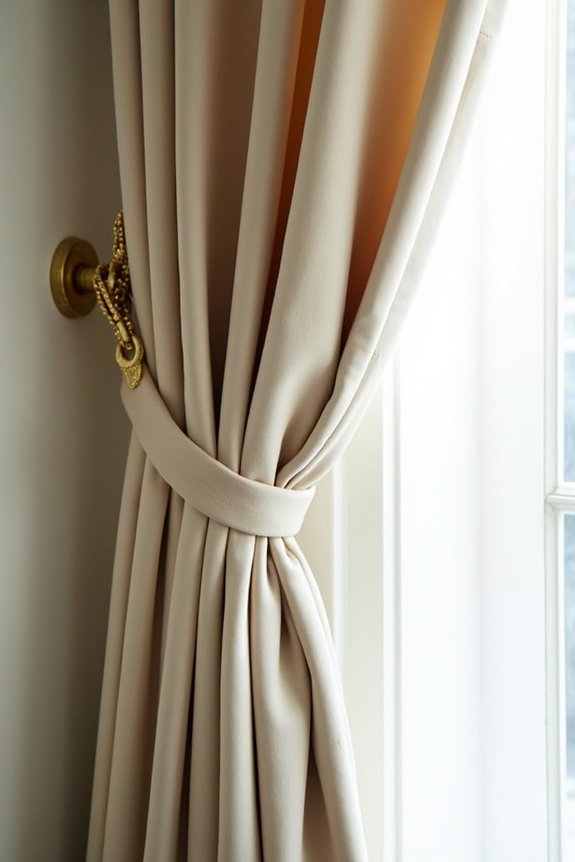
I’ve found that picking the right holdback style really comes down to the look you’re going for and how your curtains actually hang. If you’ve got heavier fabric like velvet or linen, you’ll need sturdier holdbacks that can support the weight without sagging, whereas lighter materials like cotton or sheers give you more flexibility with delicate designs. Your drape angle matters too—pulling the fabric closer to the window frame creates a sleek, tailored appearance, while letting it sweep outward adds that softer, more romantic feel.
Style Preferences and Aesthetics
Where you place your holdbacks shapes how your curtains look and feel in a room. Your holdback height influences the overall silhouette control and formal appearance you’re creating. Placing holdbacks about one-third up from the bottom creates a balanced, elegant look, while higher placements offer more formality. Consider whether you want a relaxed sweep or structured appearance.
Your mounting position should sit 3–4 inches from the window frame for neat stacking. Coordinate the finish with existing hardware for visual consistency. When choosing your silhouette control, adjusting heights on taller windows can make them appear more elongated. Visual references like Pinterest boards help confirm your choices match your aesthetic goals before committing.
Fabric Weight and Drape Characteristics
The fabric you’ve chosen for your curtains plays a significant role in where and how you’ll place your holdbacks. Heavier fabrics like velvet demand sturdier holdbacks mounted closer to the window, preventing sagging and maintaining your drape characteristics. Lighter sheers work well with smaller projections of just 2–3 inches, creating that soft, flowing look.
Your holdback placement directly affects material tension and overall appearance. Mount holdbacks about one-third up from the curtain’s bottom—this position balances your desired drape angle while avoiding excessive strain. When you position holdbacks in line with the fabric’s natural fall, you’re respecting the material’s integrity and achieving cleaner creases. This thoughtful approach to fabric weight keeps your curtains hanging properly for years.
Prep Your Space and Remove the Curtain Rod
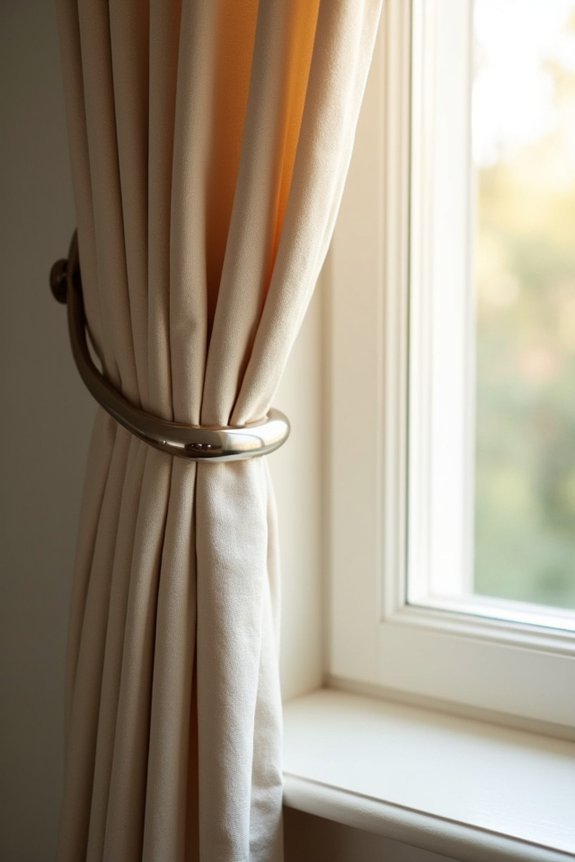
Before you can install your holdbacks, you’ll need to remove your curtain rod from the wall—and honestly, this simple step makes everything easier. When I prep space for curtain holdbacks, I always take down the rod first. This gives me clear access to mark precise positions without obstruction. With the rod removed, I can locate wall studs accurately and plan secure anchoring, which matters especially with heavier fabrics. I’ve learned that removing the rod prevents accidental damage to my drapery during the measurement and marking process. I also get a clean baseline for planning the exact height and alignment I want. Taking fifteen minutes for this prep work upfront saves me from frustration and results in a proper installation.
Mark Holdback Positions on the Wall
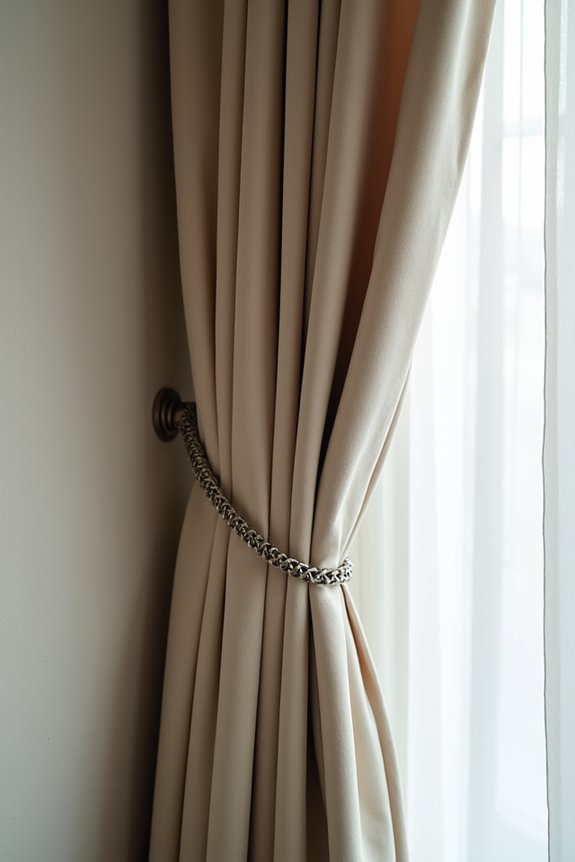
I’ll measure from the floor up to where I want each holdback to sit, making sure both sides match perfectly so my curtains look balanced when they’re pulled to the sides. Using a tape measure and a pencil, I mark the exact height on the wall—I typically place holdbacks about two-thirds of the way up the window for the best appearance and function. Once I’ve marked one side, I measure that same distance on the other side to guarantee symmetry, which contributes to how professional the final result appears.
Measuring From The Floor
How do you know where to actually place those holdbacks on your wall? Start by measuring up from the floor to your desired holding height. For an 84-inch drapery panel, I measure 28 inches from the floor—this marks your installation height. Now here’s where symmetry becomes important: measure that same distance on the opposite side of your window. I use a level to guarantee both sides align perfectly, creating that balanced look you’re after.
Once you’ve marked both positions, locate wall studs with a stud finder for secure mounting. If studs aren’t conveniently placed, quality wall anchors work well for supporting your fabric’s weight. These floor measurements guarantee professional-looking results every time.
Ensuring Symmetrical Placement
The key to successful holdback placement is marking those positions with precision, creating a mirror image on both sides of your window. I align each holdback with the rod’s midpoint, measuring equal distances from the window edge. This symmetrical placement gives your curtains a polished appearance.
Here’s my process: I use a level to verify each holdback line is perfectly horizontal. Tilted holdbacks are immediately noticeable and detract from the overall look. I measure from the floor to confirm my chosen mounting height—typically around 28 inches for standard 84-inch panels. Then I translate those exact measurements to both sides.
This alignment approach ensures your curtains hang properly and your space looks deliberate and complete.
Find Wall Studs and Select Your Anchors
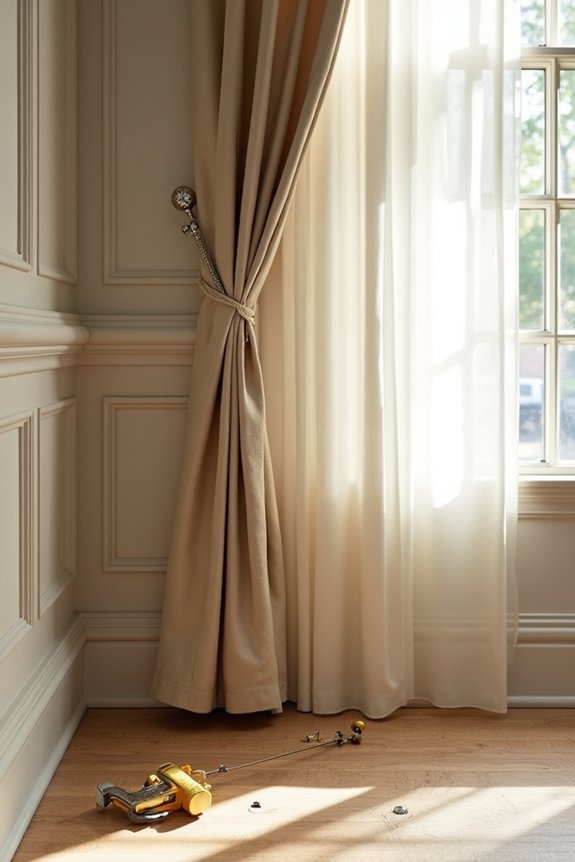
Before you drill any holes, locate the wall studs behind your drywall using a stud finder—this matters because studs provide the strongest, most reliable anchor points for your holdbacks. Studs offer solid support for secure holdbacks that won’t shift over time. If studs aren’t conveniently positioned, heavy-duty anchors work well for drywall mounting. Choose anchors rated for your fabric weight, particularly if you’re hanging heavier drapes. I recommend toggle bolts or expanding anchors for maximum strength. Mark stud locations with a pencil, then position your holdback brackets about 2 to 3 inches outside the window frame. Determine mounting height by measuring one-third up from the curtain’s bottom. This combination of proper studs and quality anchors keeps your holdbacks secure and functional for years.
Install Anchors and Mount the Holdbacks
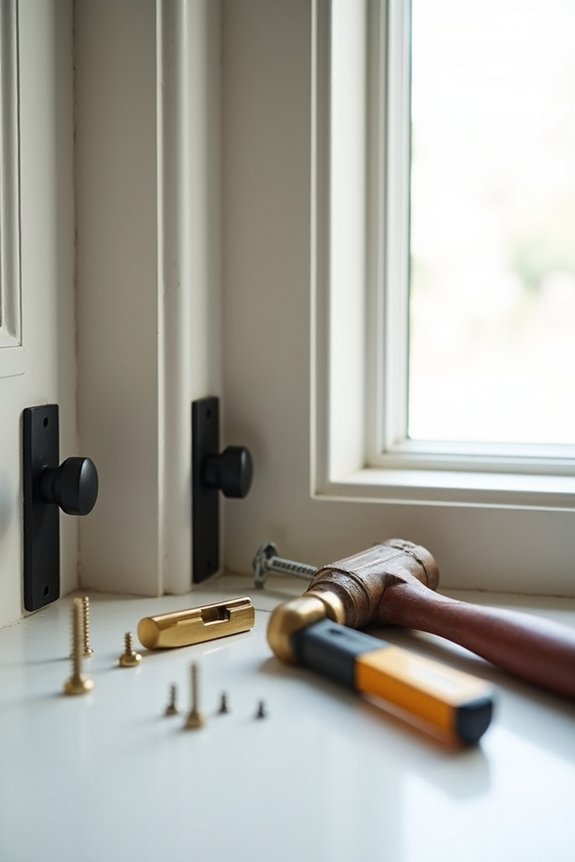
Now that you’ve found your studs and chosen the right anchors, it’s time to put them in place. Mark your screw locations by holding each holdback against the rod and tracing through the holes with a pencil. Then drill starter holes slightly larger than your screws to make insertion easier.
When mounting the anchors, check that they protrude enough to properly support your fabric’s weight. This prevents sagging that will cause problems later. Use your level to verify that both sides align perfectly—symmetry matters here.
Once your anchors are secure, reinstall the rod and curtains carefully. Test the open position to confirm your holdbacks keep fabric neatly away from the glass without blocking light or views.
Hang Curtains and Adjust Your Drape
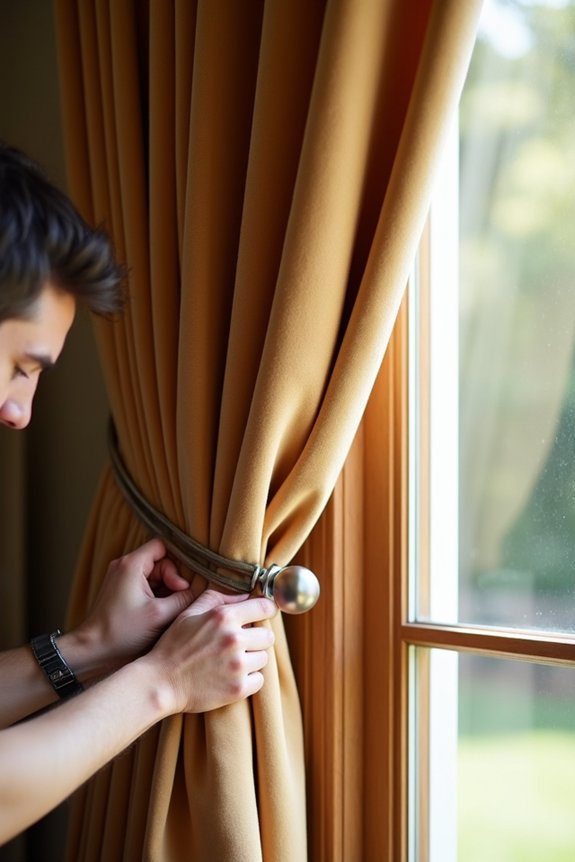
How do you know where to position your holdbacks for the best look? Hanging your curtains first is important. Slip the curtain rod through the panels and secure it in the brackets you’ve already installed. Now comes the drape adjustment—pull your fabric to the sides and gently position it against your mounted curtain holdbacks. This is where fabric weight considerations matter most. Heavier materials need firmer securing holdbacks to prevent sagging throughout the day. Adjust the folds by hand, creating even bunches on each side. Step back and check that both sides look symmetrical. Window treatment installation isn’t complete until you’re satisfied with how your panels frame the window. Take time to fine-tune the positioning until everything feels balanced and secure.
Troubleshoot Sagging or Misaligned Holdbacks
Once you’ve hung your curtains and adjusted the drape, you might notice that your holdbacks aren’t performing quite like you’d hoped. Sagging or misalignment happens more often than you’d think, and addressing it quickly keeps your curtains looking sharp.
Here’s what I check first:
- Locate studs using a stud finder; mount into studs whenever possible
- Use heavy-duty wall anchors if studs aren’t available where you need them
- Verify your holdbacks’ weight rating matches your fabric’s actual weight
I also make sure both holdbacks sit level at identical heights, positioned 2–3 inches outside the window frame. This spacing prevents fabric from pressing against glass. If sagging persists despite proper installation, I upgrade to sturdier iron or wood hardware. Re-tighten screws periodically—heavy fabrics gradually loosen everything over time.