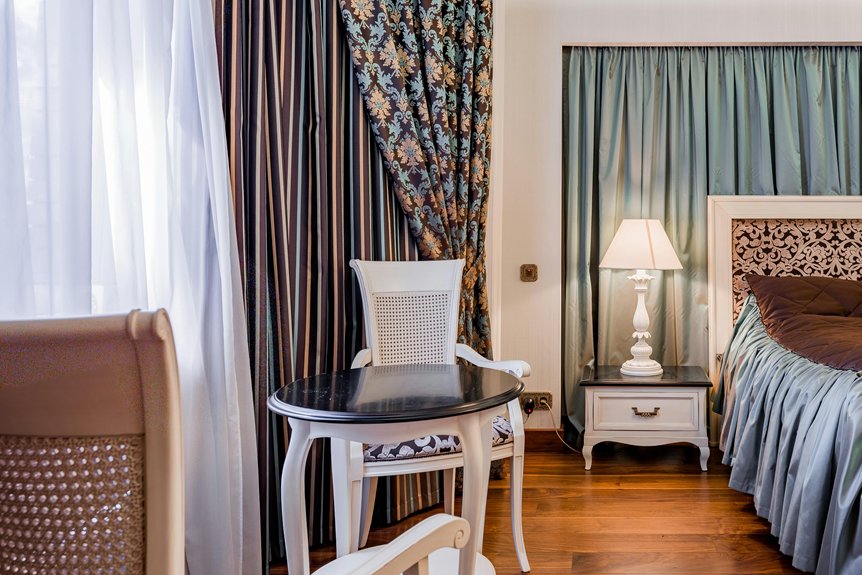
For ceiling-to-floor styling, curtains that either kiss the floor with 1–2 inches or float ½ inch above it work best—avoid puddling. Kissing length offers a polished, elegant appearance while performing well in everyday use, whereas floating length suits active households with children or pets where snagging poses a concern.
Mount your rod 4–6 inches above the window frame, measure from there to the floor, then subtract accordingly.
Your room type and lifestyle should guide this choice, and the details matter significantly.
Should Curtains Touch the Floor? When and Why
Why does curtain length matter so much? The right curtain length affects how your windows look and function. Curtain length influences everything from visual appeal to daily upkeep.
Break length, where curtains kiss the floor with 1 to 2 inches of fabric, creates a polished, complete look. Float length hovers about ½ inch above the floor for a crisp, modern appearance that’s easier to maintain. Puddle length adds 2 to 6 inches pooling on the floor for a luxurious effect, but demands more cleaning.
When you’re deciding how high to hang curtains, consider your lifestyle. In high-traffic areas or homes with pets and kids, float or break length works better. These options minimize snagging and simplify maintenance, letting you enjoy floor-length curtains without constant worry.
Float, Break, Puddle: The Three Lengths Explained
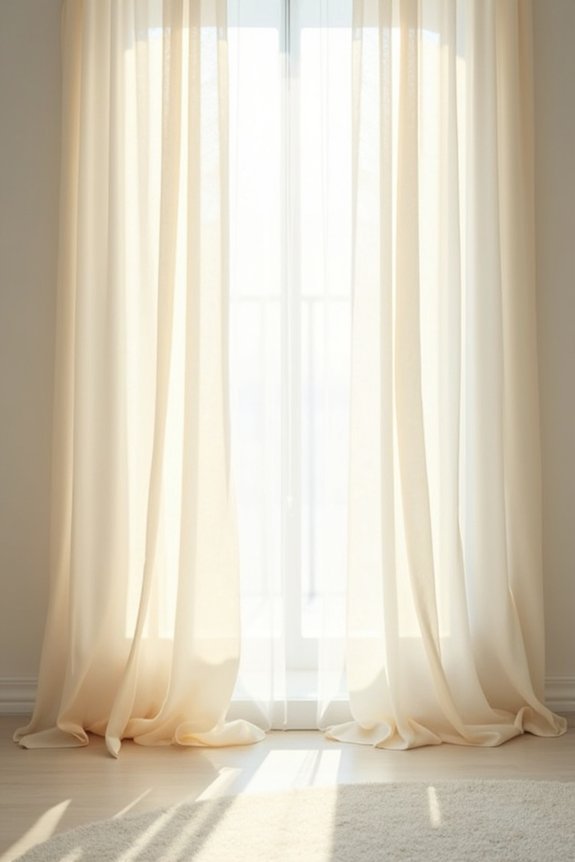
When I’m helping clients choose their curtain length, I’ve found that understanding the three main styles—float, break, and puddle—really affects how a room comes together. Float length sits about ½ inch above the floor and keeps things looking clean and modern, which I always recommend for busy households where kids and pets move around. Break and puddle lengths, on the other hand, create that elegant, grounded feel by having fabric touch or pool on the floor, though they work best in formal spaces where you can keep them maintained.
Float Length Fundamentals
How you hang your curtains—whether they kiss the floor, float above it, or pool onto it—affects how your room looks and functions. Float length is a practical choice for a clean, intentional aesthetic. This curtain hem style means your panels hang about ½ inch above the floor, creating that crisp, modern look.
To achieve this floor clearance with your window treatments, measure from your rod-to-floor distance, then subtract ½ inch for your final curtain measurement. This simple adjustment prevents dust collection and tripping hazards while maintaining visual sophistication. Float length works well in busy households, offering the polished appearance of full-length curtains without the practical drawbacks. It’s the balance between elegance and everyday functionality.
Break Length Elegance
While float length keeps your curtains hovering just above the floor, break length takes a step forward by letting your panels actually touch down. This measurement creates the polished look many homeowners prefer.
Here’s what makes break length work:
- Measure from your rod height to the floor, then add 1–2 inches for that elegant kiss against the ground
- The fabric weight matters—heavier materials and linings boost insulation and light control without dragging
- Uneven floors aren’t a problem since break length accommodates slight variations naturally
Break-length curtains balance form and function well. They’re floor-length without the puddle, fitting most rooms seamlessly. You’ll get a refined appearance while still opening and closing them easily. This option works for anyone wanting a more polished look with practical results.
Puddle Length Luxury
If you’ve ever walked into a grand hotel lobby or formal dining room and felt impressed by floor-to-ceiling elegance, you’ve likely witnessed puddle-length curtains in action. Puddle length adds 2 to 6 inches of extra fabric that pools on the floor, creating a draped effect.
| Aspect | Best For | Measurement | Fabric Weight | Maintenance |
|---|---|---|---|---|
| Puddle Length | Master bedrooms, dining rooms | Rod to floor + 2-6 inches | Heavier fabrics work best | Frequent cleaning needed |
| Floor Coverage | Formal spaces | Precise measurement critical | Lighter fabrics may wear unevenly | Regular upkeep required |
| Visual Impact | Elegant interiors | Add inches carefully | Quality matters significantly | Worth the effort |
| Practicality | Low-traffic areas | Measure from rod down | Prevents uneven pooling | Ongoing care essential |
| Grandeur Effect | Luxurious rooms | Extra inches create drama | Heavier drapes hold shape | Professional cleaning recommended |
This style disguises floor irregularities while bringing formal spaces to life with sophisticated drapery.
Choosing the Right Length for Your Room Type
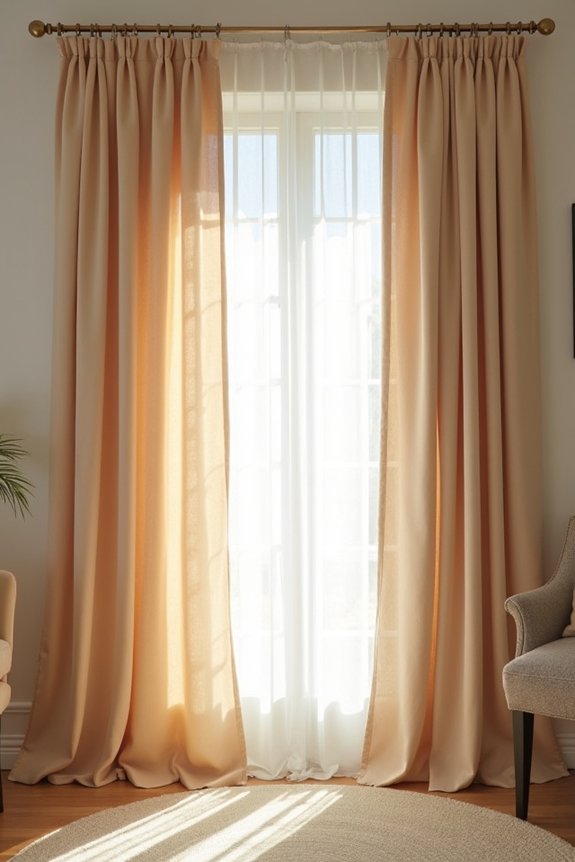
I’ve found that picking the right curtain length really depends on what happens in your room day to day. If you’ve got kids, pets, or lots of foot traffic like I do in my living room, float-length curtains that stay ½ inch above the floor work best because they won’t get caught or dirty as easily. But if your bedroom or formal dining room stays calm and quiet, you can go with break-length or puddle-length for a more formal appearance without worrying about damage.
Room-Specific Floor Guidelines
How do you know which curtain length works best for your space? Matching curtain length to your room type is important for achieving the ceiling-to-floor styling you’re after.
- Living and master bedrooms benefit from floor-length or kiss-length curtains that hover ½ inch above the floor, creating an expansive look that visually raises your ceilings.
- High-traffic rooms work better with float-length curtains—about ½ inch above the floor—reducing snagging and making maintenance easier for busy families.
- Formal spaces can handle puddle-length curtains, though I’d avoid this in kids’ rooms where frequent cleaning’s necessary.
For maximum impact, I mount my rods 4–6 inches above the window frame and extend them 8–12 inches beyond each side.
Activity Level Considerations
Your room’s activity level should shape your curtain length decision more than aesthetics alone. In high-traffic rooms like kitchens and bathrooms, I recommend float length—about ½ inch above the floor—to keep curtains tidy and prevent snagging. This practical choice protects your investment from constant wear.
Living rooms, where you gather with family, often suit break length or kiss length, where curtains gently touch the floor. These options provide elegance without daily maintenance struggles.
Puddle length, extending 2–6 inches beyond the floor, creates a luxurious appearance but demands more cleaning and isn’t realistic in active spaces. I’ve found floor-length curtains work best when your room’s pace is slower.
Consider your daily habits. If you’re constantly moving through a space, float length keeps things manageable while maintaining style.
How to Measure Your Curtains for the Perfect Fit
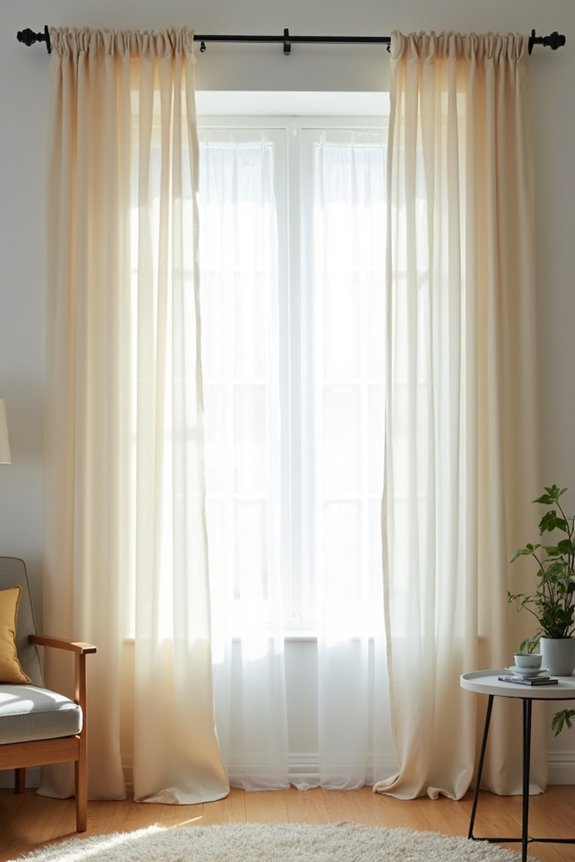
Getting the right curtain length matters more than you’d think, and it all starts with proper measurement. Taking time upfront saves frustration later.
Here’s what I do:
- Hang your rod 4–6 inches above the window frame to establish proper rod height
- Measure from rod to floor, then adjust based on your desired curtain length style
- Add the appropriate fabric amount: 0.5 inches for kiss length, 0–1 inch for float, 1–2 inches for break length, or 2–6 inches for puddle length
When you measure from rod to floor accurately, you’ll know exactly how much fabric you need. I always double-check my measurements because even small mistakes affect whether your curtains touch the floor properly. Getting this right means your windows look deliberate and well-finished.
Why Fabric Type Changes Everything
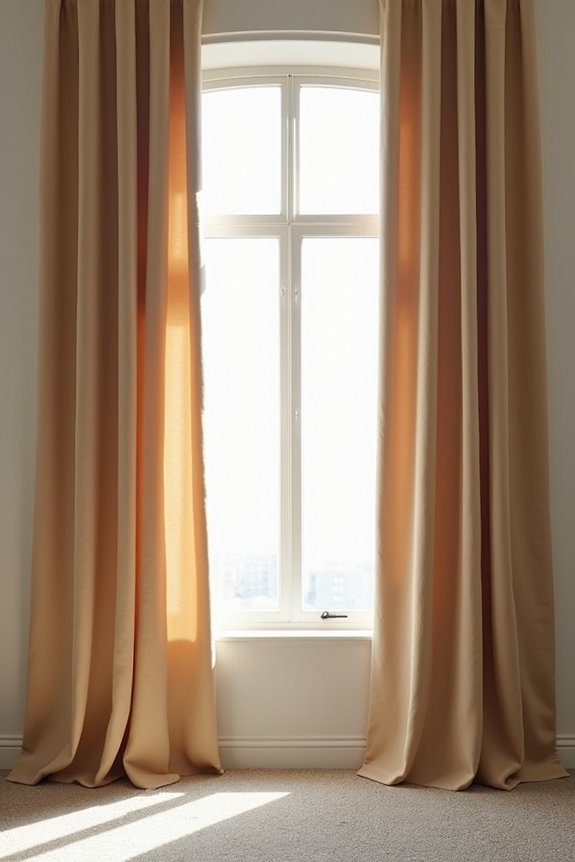
Did you realize that the fabric you choose actually affects how long your curtains stay the perfect length? I’ve learned this lesson the hard way. Natural fibers like linen and cotton are hygroscopic, meaning they absorb moisture from humidity and can shrink unexpectedly. This fabric relaxation changes your curtain length over time, turning that intentional floor puddle into an awkward gap.
Synthetic fabrics, however, resist humidity shrinkage and maintain consistent hang. Heavier fabrics like velvet need extra weight at the hem to prevent sagging. When planning your ceiling-to-floor styling, consider fabric type impact carefully. For natural fibers, I recommend cutting slightly longer initially or hemming after installation. Understanding how your fabric behaves keeps your curtain length exactly where you want it.
Matching Curtain Length to Your Daily Routine
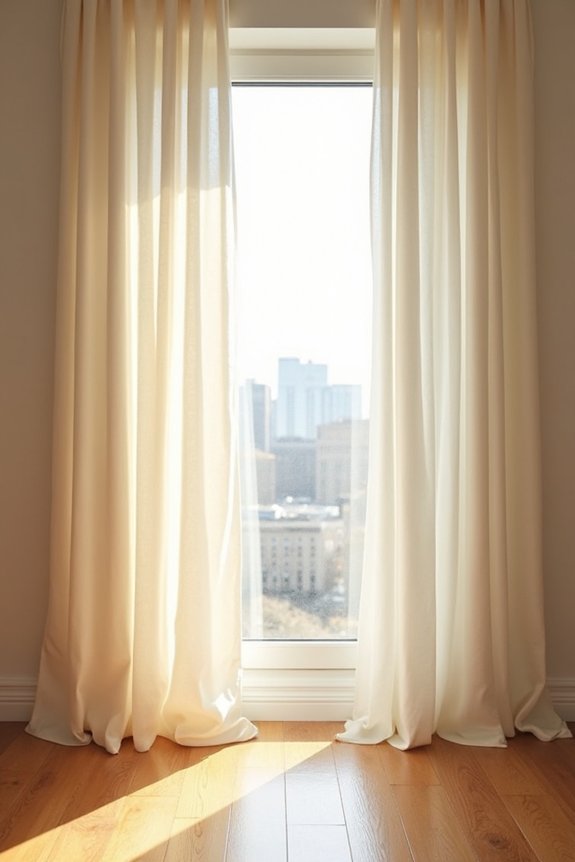
Once you’ve settled on the right fabric and understand how it’ll behave in your home, the next step is picking a curtain length that actually works with how you live. Your daily routine shapes which option serves you best.
- Active households with kids or pets: Choose float length, keeping panels ½ inch above the floor. This protects against tripping and reduces wear.
- Minimal foot traffic areas: Kiss length works well, where fabric barely touches the floor. Precise length measurement matters here to prevent snagging.
- Avoid puddle length in busy spaces—it requires constant maintenance.
For ceiling-to-floor styling, mount your rod 4–6 inches above the window frame. This height placement, combined with the right curtain length measurement, creates the polished look you’re after. Your lifestyle deserves curtains that work *with* you, not against you.
Curtains Too Long or Too Short? How to Fix Fitting Issues
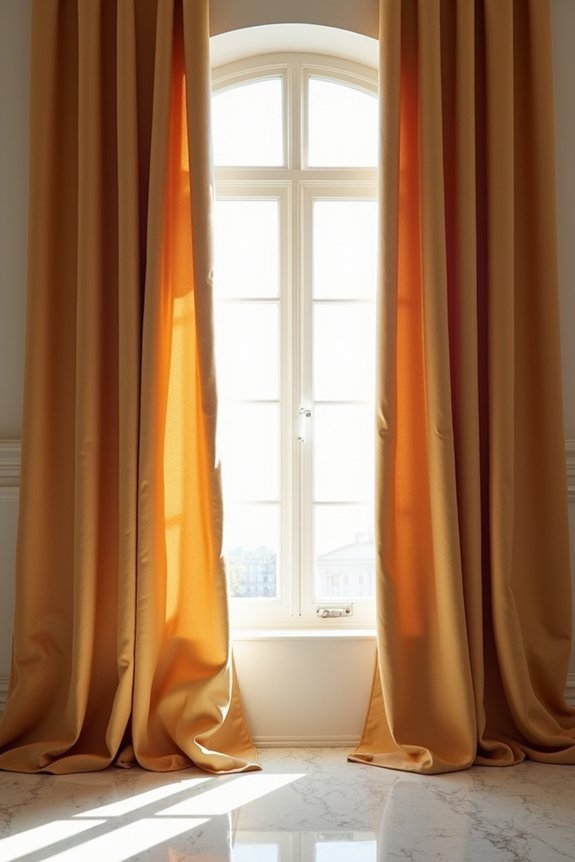
What’s the best way to know if your curtains are actually the right length? Measure from your curtain rod height to the floor. Floor-length curtains should kiss the floor or hover just ½ inch above it.
| Issue | Solution |
|---|---|
| Too Long | Professional hemming preserves weight and hang |
| Puddle-Length | Trim excess fabric carefully |
| Short Curtains | Add decorative trim or replace panels |
| Uneven Hang | Adjust high-and-wide installation (4–6 inches above frame, 8–12 inches beyond sides) |
When I installed my curtain rod higher and wider, the fabric reached the floor beautifully. If your curtains are too short, decorative fabric bands work well. For alterations, professionals handle the job better than DIY attempts. Getting your curtains length right improves your room’s appearance.