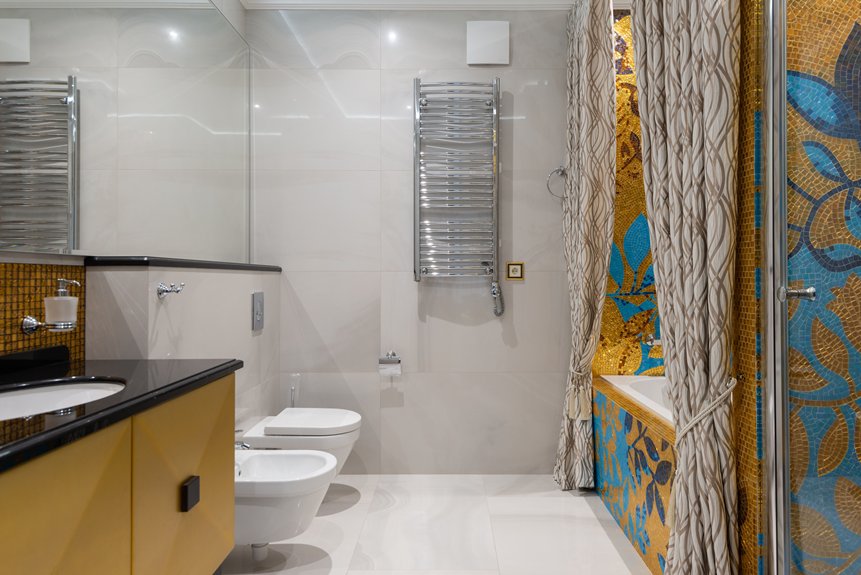
The standard shower curtain size is 72 x 72 inches, and it works for about 85% of American bathrooms. I’d recommend measuring your tub opening wall-to-wall, then adding 12 inches for proper overlap that stops water from splashing onto your floor. If your space is tighter, 70 x 72 inches fits snugly. For taller ceilings, try 72 x 84 inches. The key is getting both measurements right—width across and rod-to-floor distance—so your curtain hangs properly without pooling.
What Is a Standard Shower Curtain Size?

Ever wondered why most shower curtains you find in stores seem to be the same size? The standard shower curtain size is 72 x 72 inches, and it’s the most common choice for practical reasons. This standard dimension works because most 60 inch tub-shower combos need adequate coverage, and a 72-inch curtain provides the overlap that’s useful. When installing a bathroom setup, the 72 x 72 inches option fits well in most spaces. About 85% of standard American bathrooms work with this size, which means choosing it aligns with what works for the majority. This shower curtain size has become the reliable standard for most households.
Common Shower Curtain Sizes: 70×72, 72×72, and Beyond
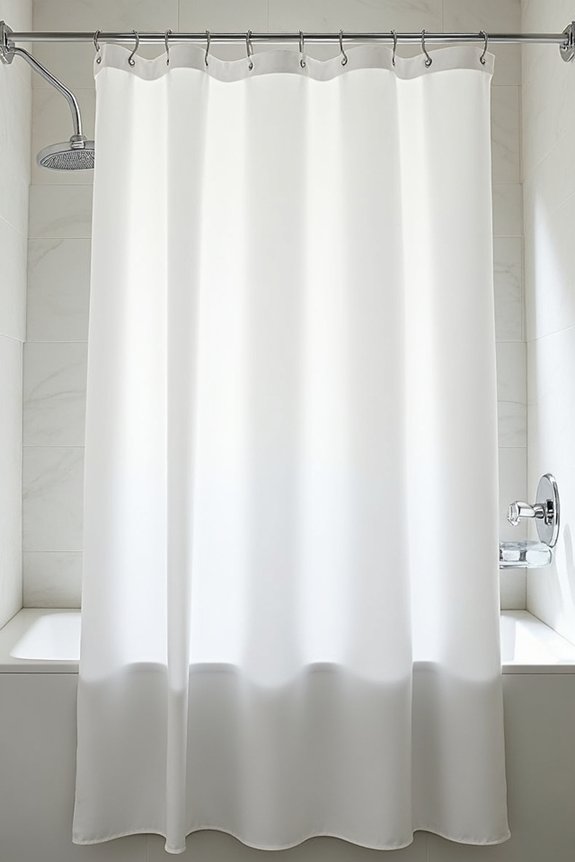
While the 72 x 72 inch standard works well for most bathrooms, shower curtain sizes come in several options to fit different setups. The 70×72 option offers slightly narrower coverage, working well when your space runs a bit tighter. If you’re installing a 72×72 curtain, you’re matching what most people choose for their tub-shower combos.
For stall showers, 54 x 78 inches fits nicely in compact spaces. Wider stalls need something bigger—up to 108 x 72 inches—to prevent water from escaping around the sides.
When measuring a curved rod, you’ll need 6 to 12 inches extra width beyond your shower opening. This extra fabric lets the curtain reach outward properly. Understanding these shower curtain sizes helps you find exactly what works for your bathroom setup.
Why Width Matters: Measuring Wall to Wall
I’ve found that measuring your shower space correctly is important, and I’ll walk you through exactly how I do it. First, I measure straight across from one wall to the other, then I add 12 inches to that number—this gives you 6 inches of overlap on each side, which stops water from splashing onto your bathroom floor. When you hang your curtain at this width, you’ll get that nice, relaxed drape that looks intentional and keeps everything contained.
Wall-To-Wall Measurement Basics
How do you know if your shower curtain will actually cover your tub or shower stall? The answer starts with measuring your shower area from wall to wall. Taking this measurement is the first step. Once you know your wall-to-wall distance, add 12 inches for a relaxed look when the curtain’s closed. This gives you the width you need.
Standard widths come in 72 inches and 84 inches. Choose whichever option is closest to your measurement plus those 12 inches. For example, if your shower area measures 60 inches wide, adding 12 inches gives you 72 inches—perfect for standard overlap coverage. This overlap keeps water contained and your bathroom dry.
Adding The Twelve Inches
Why do you need those extra 12 inches? When I measured my bathroom wall-to-wall, I realized I needed to add 12 inches beyond that measurement for proper coverage and appearance.
This 12-inch add-on creates a relaxed, draped look instead of a stretched-tight appearance. It also prevents water from splashing onto your bathroom floor. For a standard 60-inch opening, a 72-inch curtain works well—that’s the wall-to-wall measurement plus the extra space.
Using this curtain size guide prevents gaps where water escapes. Your shower curtain width should feel generous, not minimal. That adjustment matters in both function and bathroom aesthetics.
Achieving Relaxed Closure Appearance
The key to that polished, intentional look you see in well-designed bathrooms comes down to one simple principle: your shower curtain needs breathing room. I’ve discovered that achieving a relaxed closure appearance requires understanding how shower curtain width and curtain overlap work together. When you measure wall-to-wall and add 12 inches, you’re creating space for the fabric to drape naturally instead of pulling tight. For standard setups, aim for a 6-inch overlap per side. If you’re using a curved rod, plan for 24 inches total overlap so your curtain accommodates the outward reach properly. Most tub-shower combos work well with a 72-inch wide curtain, giving you balanced coverage that feels complete and welcoming.
How to Find the Right Length for Your Shower
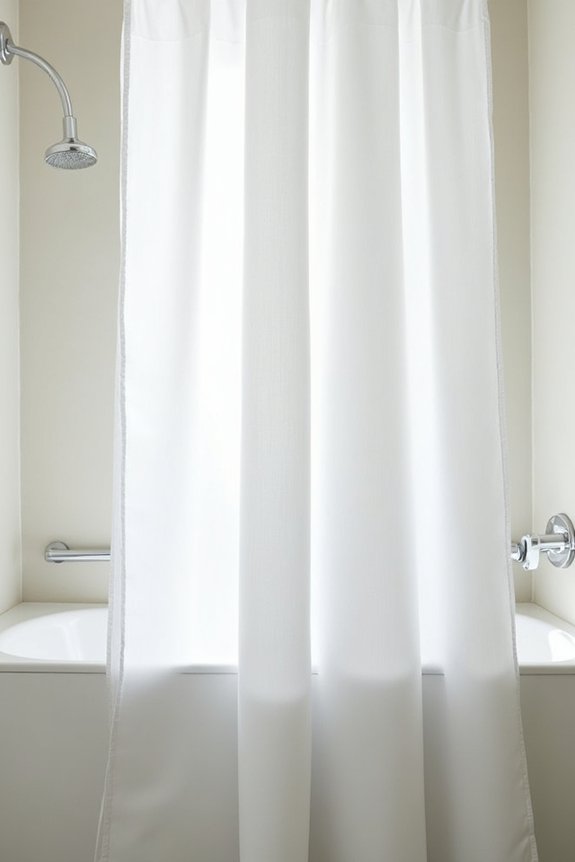
To get your shower curtain length just right, measure straight from your rod down to the floor, then subtract 8–10 inches so the curtain hangs properly without pooling or dragging. Standard lengths work well for most setups—72 inches handles regular showers nicely, while 84 inches works better for taller spaces, and 78 inches is suitable for stall showers if you need something in between. The hanging hardware affects your choice too, so account for those rings or clips before finalizing your length decision.
Measuring Rod-to-Floor Distance
How you measure from your shower rod to the floor determines whether your curtain’ll hang properly or puddle on the tub rim. Getting this rod-to-floor distance right prevents water splash from escaping your shower area.
Most standard setups use a 72 inches curtain length, which works well for typical bathrooms. However, you should measure your own space because ceilings vary. When you hang your liner, subtract 8–10 inches from that measurement to keep fabric off the floor.
| Setup Type | Recommended Length |
|---|---|
| Standard shower | 72 inches |
| Ceiling height | 84 inches |
| With liner | 62–64 inches |
| Curved rod | Adjust 2–4 inches |
| Above tub clearance | 12 inches minimum |
Taking time to measure carefully saves frustration and water damage later.
Accounting for Hanging Hardware
Now that you’ve measured your rod-to-floor distance, account for the hardware that actually holds your curtain up, because the rings, hooks, or clips you choose will affect how long your curtain needs to be. Your hanging hardware creates space between the shower rod and the curtain’s top, so subtract 8–10 inches from your rod-to-floor measurement to find the right curtain length. This adjustment keeps your curtain from dragging on the floor or pooling in water. When I installed my bathroom curtain, I factored in my clip-style hardware and subtracted exactly 9 inches, resulting in a fit that sits 1–2 inches above my tub edge. This calculation helps you determine the correct curtain length for your specific hardware choice.
Standard Length Options Available
Once you’ve accounted for your hardware, you’ll find that shower curtain length comes in predictable sizes that match most bathrooms. The standard shower curtain length is 72 inches, which works well for typical tub setups with 12 inches of clearance from the floor. If your bathroom has higher ceilings or a raised rod, the 84 inches option provides better coverage without pooling water on your floor.
For stall showers, 78 inches fits nicely. When measuring your own tub size and rod height, subtract 8–10 inches from your rod-to-floor measurement if you’re using a hanging liner. This prevents your curtain from dragging on wet floors while maintaining a clean, finished appearance in your bathroom.
Step-by-Step: Measuring Your Shower Space
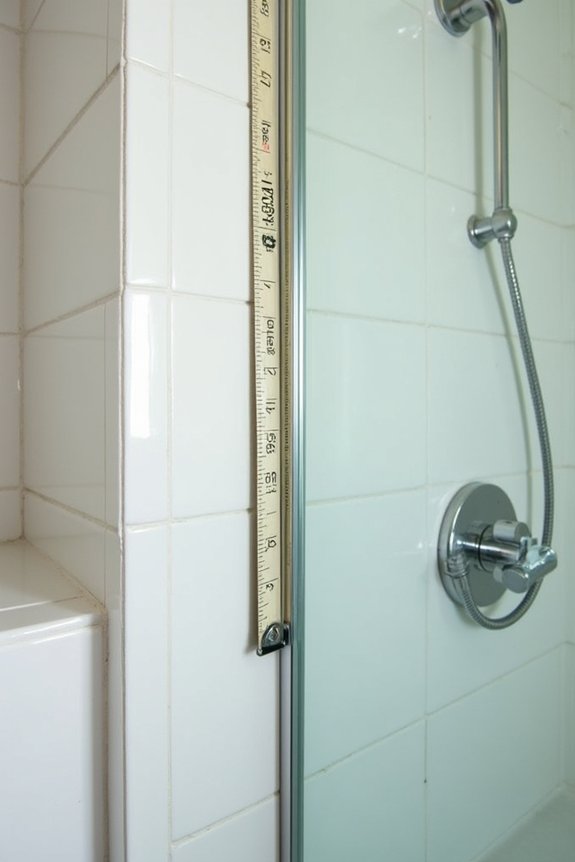
Measuring Your Shower Space
Before you buy a shower curtain, measure your shower space carefully. Getting this right prevents returns and frustration. Start by measuring your shower opening width, then check your curtain length from the rod to the tub floor. You’ll need a tape measure and about five minutes.
| Measurement | What to Measure | Why It Matters |
|---|---|---|
| Width | Distance across tub opening | Determines if standard size fits |
| Length | Rod height to floor | Prevents water splash |
| Rod Type | Straight or curved | Curved needs 6–12 extra inches |
Measure twice to avoid mistakes. For most standard setups, the 72 x 72 inches size works well. When I measured my bathroom, I discovered my curved rod needed extra width, so I chose a 108-inch option instead. Taking time upfront means you’ll get a curtain that fits correctly.
The 12-Inch Rule: Why Width Matters for Drape
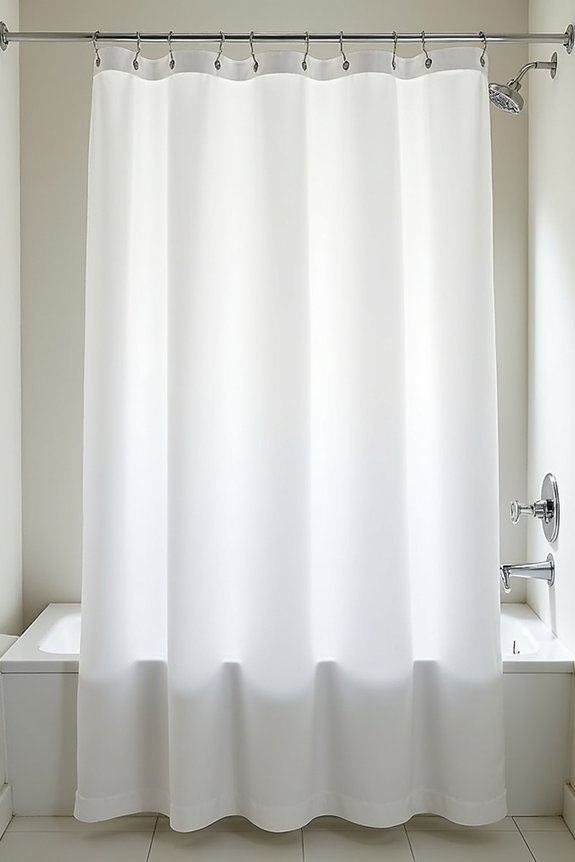
You’ve measured your shower space, and now you’re ready to pick the right width—and that’s where the 12-inch rule comes in. This straightforward guideline helps you achieve the full, elegant drape you’re looking for. Here’s how it works: take your wall-to-wall measurement and add 12 inches total. This extra width creates the overlap you need for proper coverage and containment. For example, if your shower opening is 60 inches, you’d want a 72-inch curtain. That overlap matters because it prevents water from splashing onto your bathroom floor. Standard curtain sizes like 72 inches work well for most households, while 84 inches suits taller setups. The right width allows your shower curtain to hang properly while protecting your space effectively.
Leaving Room at the Floor: The 8–10 Inch Rule Explained
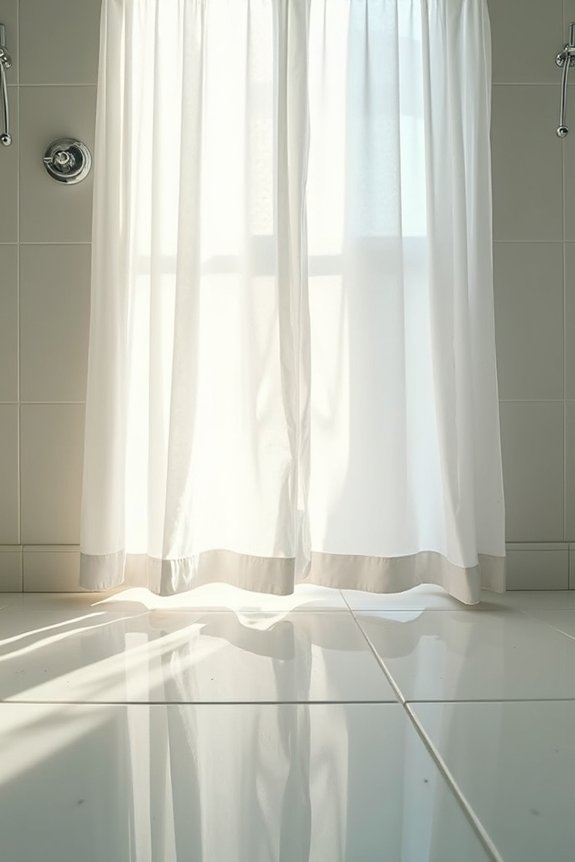
I’ve learned that getting the floor clearance right makes a real difference in how your shower curtain functions and looks, so let me walk you through why leaving 8–10 inches between the curtain’s hem and your floor matters. When I measure from the rod to the floor and then subtract those inches, I’m protecting my curtain from water damage, mold, and that worn-out frayed look that happens when fabric sits wet on tile. Understanding how to measure correctly and balance both safety and appearance will help you pick the right curtain length the first time.
Why Floor Clearance Matters
When I first hung a shower curtain that dragged along the floor, I noticed it quickly became water-logged, wrinkled, and prone to mold growth in those lower folds. That’s when I learned why floor clearance matters.
Proper rod-to-floor measurements prevent serious problems. By subtracting 8–10 inches from your measurement, you create the ideal curtain length that stops just above the floor. This simple adjustment protects your bathroom investment.
| Problem | Cause | Solution |
|---|---|---|
| Mold growth | Standing water | 2-inch clearance |
| Fabric wear | Floor friction | Water splash prevention |
| Binding | Excess fabric | Proper measurement |
This clearance aids drainage, prevents moisture damage, and improves how smoothly your curtain moves. You’re creating a healthier bathroom environment that lasts longer.
Measuring The Correct Distance
How do you know exactly where to cut or order your shower curtain? I measure from my rod to the floor, then I subtract 8–10 inches. This simple trick keeps my curtain from dragging and pooling on the bathroom floor.
Here’s what I do: I measure the rod-to-floor distance carefully. If my measurement is 72 inches, I subtract 8–10 inches to get a hanging length of 62–64 inches. Standard sizes like 72 or 84 inches work well when I apply this rule.
If your rod sits higher than normal, you’ll subtract more to maintain proper clearance. I aim for about 12 inches above the floor near the tub. This prevents water seepage and protects my shower curtain from unnecessary wear. Getting this measurement right matters.
Safety And Aesthetic Balance
Now that you’ve got your measurement down, let’s talk about why that 8–10 inch rule matters so much. This deduction isn’t arbitrary—it’s about protecting your bathroom and yourself. When I first installed my shower curtain, I ignored this guideline and watched mold creep along the bottom within weeks. That’s because curtains pooling on the floor trap moisture, creating ideal conditions for mildew growth.
The 8–10 inch deduction also prevents tripping hazards and maintains water containment effectively. Your rod-to-floor measurement guides this calculation. Those hanging rings add about 1–1.3 inches of height, so the 8–10 inch deduction accounts for this reality. The result? A shower curtain length that looks intentional and clean while keeping water where it belongs—inside your tub. This balance between safety and appearance is important in a functional bathroom.
Shower Curtain Sizes by Bathroom Type
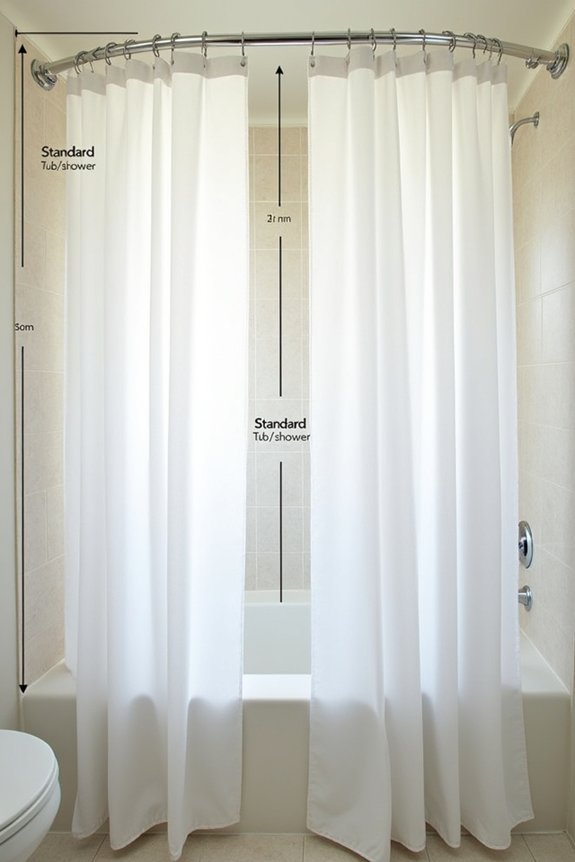
Different bathrooms need different curtain sizes, and picking the right one matters more than you’d think. I’ve learned that matching your curtain to your bathroom type prevents water from splashing onto your floor.
Here’s what works for different spaces:
- Standard 72 x 72 inches fits most full-size bathtubs
- Shower stall curtains measure 54 x 78 inches for compact spaces
- Extra long 72 x 84 inches suits higher ceilings and walk-in showers
- Curved rod overlap requires 6–12 inches extra width for proper coverage
- Extra wide 108 x 72 inches works for spacious walk-in openings
I discovered that a standard 72 x 72 curtain works great for typical bathrooms, but my guest bathroom needed the smaller stall size. When you choose the right shower curtain size for your space, everything functions better and looks well-considered.
Standard vs. Extra-Long Shower Curtains: When to Size Up
When should you choose an extra-long shower curtain instead of sticking with the standard 72 x 72 size? I’d measure your rod-to-floor distance and subtract 8–10 inches. If that calculation leaves you short, sizing up to 72 x 84 inches makes sense. Extra-long curtains work well when you have higher ceilings or taller shower enclosures that demand fuller coverage. Standard vs. extra-long really comes down to your specific bathroom setup. The extra length prevents water from splashing onto your floor, which is particularly helpful in larger stalls. Your shower curtain size choice impacts both function and comfort.
Curved Rods and Wide Spaces: Non-Standard Solutions
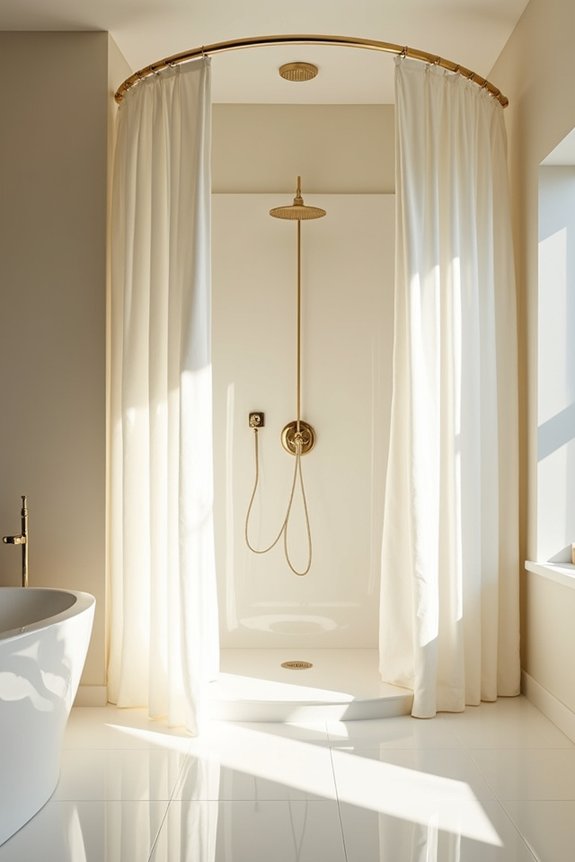
What if your bathroom doesn’t fit the standard mold? Curved rods and wide spaces need special attention. You’ll want extra-wide curtains like 108 x 72 inches for larger openings. Here’s what I recommend:
- Plan for 6–12 inches extra width beyond your shower opening
- Add about 12 inches of measurement overlap on each side
- Consider wraparound options for non-standard shower spaces
- Measure twice before purchasing your curtain
- Account for the rod’s outward curve when calculating width
Curved rods create a spacious look, but they require proper sizing. When I measured my wider bathroom, I realized standard 72 x 72 curtains wouldn’t work. Taking time to measure correctly prevents frustration and allows your curtain to hang properly in your unique space.
Common Sizing Mistakes and How to Avoid Them
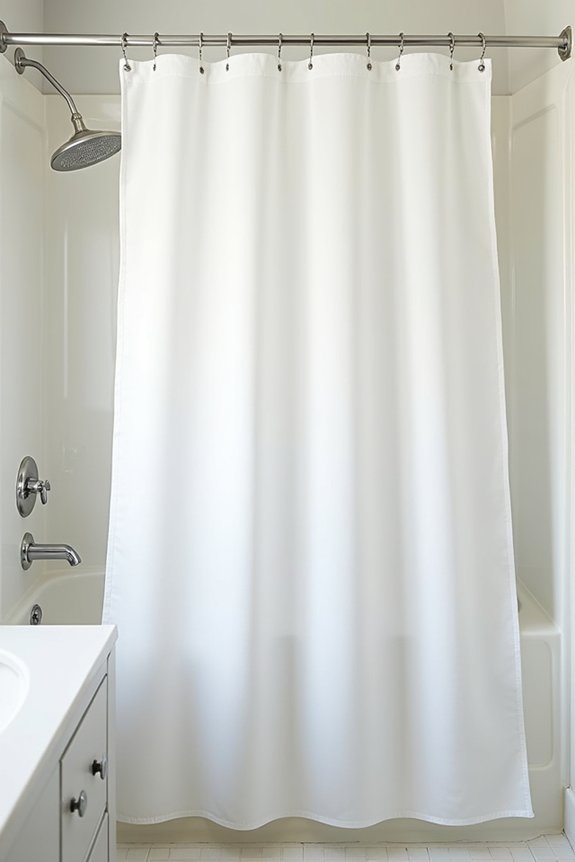
I’ve found that the two biggest mistakes I see people make when buying shower curtains are forgetting to account for the overlap and not measuring the distance from the rod to your tub floor. When you ignore that overlap measurement, water sneaks out the sides because your curtain doesn’t extend far enough on each side—you’ll want at least 6 to 12 extra inches per side to keep your bathroom dry. The second problem happens when folks measure from the rod down but forget to add that essential 12 inches to their shower width, which means the curtain either hangs too short or doesn’t provide enough coverage to actually contain splashes.
Ignoring The Overlap Measurement
Many people overlook one of the most important measurements when choosing a shower curtain: the overlap. I learned this the hard way when water leaked past my new curtain because I didn’t account for proper coverage. Here’s what you should know:
- Add 12 inches to your shower opening width for adequate overlap
- Curved rods need 6–12 inches extra for outward reach
- Stall showers require careful overlap planning, not just standard 72-inch widths
- Overlap prevents water from escaping onto your bathroom floor
- Proper curtain width depends on your specific shower opening, not assumptions
For a 60-inch tub, I use a 72-inch-wide curtain. This gives me the overlap I need on both sides. Getting this measurement right saves you frustration and keeps your bathroom dry.
Miscalculating Rod-To-Floor Distance
They’ll measure from the rod to the floor, find it’s 72 inches, and buy a standard 72-inch curtain without thinking twice. I’ve seen this mistake happen countless times, and it creates real problems.
Here’s what I learned: your curtain length depends on more than just your rod-to-floor distance. You need to account for hanging height and floor clearance. If you’re using rings or hooks, they add about 1.3 inches of height, which changes your actual measurement. For standard 72–76 inch hanging heights, aim for 1–2 inches above the floor.
With a hanging liner, subtract 8–10 inches from your rod-to-floor distance. This prevents your curtain from dragging. Following these steps keeps proper floor clearance and delivers a professional hang every time.
Shower Curtain Liners: Size and Setup Essentials
What’s the difference between a shower curtain and a liner? A liner is the waterproof layer protecting your bathroom, while the curtain is the decorative outer piece. Matching them properly prevents water damage and extends their lifespan.
When selecting your shower curtain liner size, consider these essentials:
- Match your standard curtain width for seamless coverage
- Choose 72×72 inches for most bathtubs
- Use 54×78 inches for stall shower dimensions
- Add 6–12 inches extra width for curved rod clearance
- Replace liners annually to prevent mold
Buy liners slightly larger than your curtain for maximum overlap. This approach keeps water contained effectively. Your bathroom stays protected when liner and curtain work together as a team, with splash containment handled properly.
Matching Buttonholes to Rings: A Quick Accessory Guide

Once you’ve picked out your shower curtain, you’ll notice small holes running down both sides—those are buttonholes, and they’re what hold your curtain to the rings on your rod.
Matching these holes to the right roller rings is important. Your curtain panel length determines how many buttonholes you’ll have: a 72-inch panel has 12 holes, while an 84-inch panel has 15 holes. When you’re selecting roller rings, choose ones that fit smoothly through these buttonholes so your curtain glides easily.
If you’re adding a liner for extra privacy, align the liner with your curtain size. You can attach the liner through the same buttonholes or adjacent ones. This coordination keeps everything functioning properly and looking cohesive on your rod.
Hanging Height: Clearing the Tub Rim While Preventing Floor Pooling
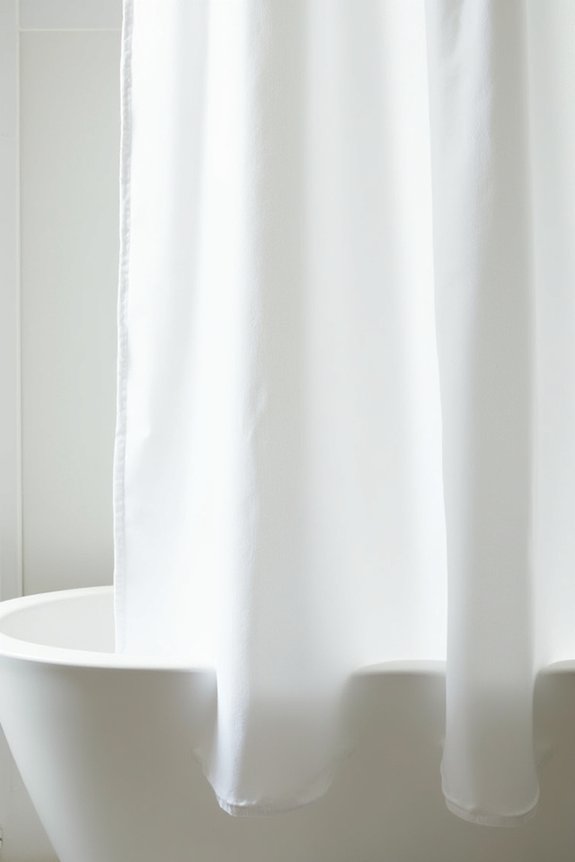
How high should your shower curtain hang? Getting this right matters for both function and aesthetics.
Here’s what I follow for proper hanging:
- Measure from your rod to the floor
- Aim for the bottom hem 1–2 inches above the floor or tub rim
- Standard rod heights range from 72–76 inches
- Adjust your rod if pooling occurs
- Subtract 8–10 inches when using a hanging liner
Your rod-to-floor measurement is your starting point. When I hang curtains, I check that tub rim clearance sits perfectly, preventing water from escaping while keeping fabric off wet surfaces. This prevents mildew and damage. Curtain pooling prevention means adjusting either your rod height or selecting a shorter shower curtain length. This balance eliminates frustration and extends your curtain’s life.
Getting Help: Resources for Custom or Uncertain Measurements
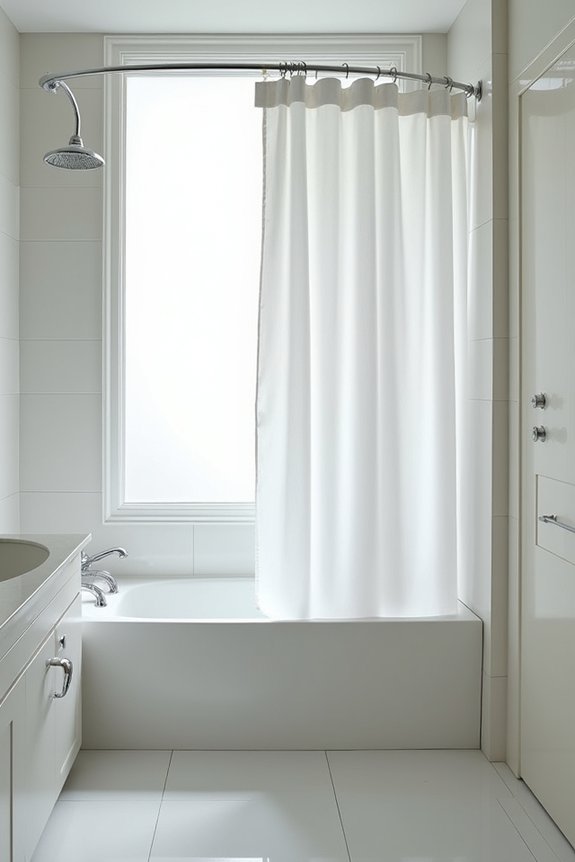
Sometimes your bathroom doesn’t fit the standard mold, and that’s when I reach out for backup. I’ve learned that measuring twice saves frustration later. When I’m unsure about custom sizing, I consult fabric stores or shower specialists who understand curtain width requirements and overlap calculations. They’ve helped me add those 12 inches for proper overlap on tricky installations.
| Resource | Best For |
|---|---|
| Fabric stores | Custom sizing advice |
| Shower specialists | Curved rod measurements |
| Online calculators | Quick width estimates |
| Bathroom designers | Complex layouts |
| Manufacturer hotlines | Material-specific questions |
I’ve discovered that most professionals measure your actual space and account for your specific setup. They keep your curtain from hanging improperly or pooling. Don’t hesitate reaching out—getting expert input on measuring saves money and prevents costly mistakes.