I’d paint trim first for sharper edges and less masking tape hassle.
You’ll apply primer and paint to your trim, let it dry completely, then roll your walls right up close to it—about an inch away.
This gives you crisp, clean lines without excessive tape, and you’ll spend way less time prepping.
Walls-first works too if you’re willing to invest extra time in detailed finishing afterward.
The method you choose depends on how much cleanup patience you’ve got.
Trim-First: Sharper Edges and Faster Cleanup
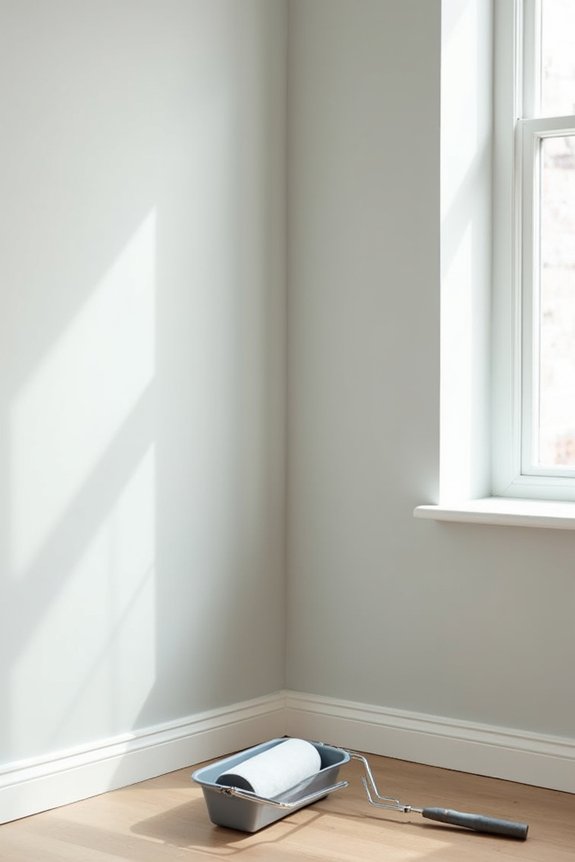
Why should you tackle trim before walls? I’ve found that painting trim first gives you crisp, clean edges without all the masking tape headaches. When you paint your baseboards, door frames, and crown molding first, you’re working with a clear canvas. Any paint drips or splatters land on bare drywall, where they’re easily covered by your wall paint later.
The cleanup difference is notable. I use fewer brush changes and spend less time taping around detailed woodwork. Once your trim dries, it becomes your guide for cutting in wall edges perfectly straight. You’ll notice fewer touch-ups needed on walls because that dried trim line keeps everything aligned. This approach makes your entire painting day faster and more manageable.
Walls-First: Reducing Tape Lines and Splatter Risk
What if you flipped the script and painted your walls first instead? I’ve found that the walls-first approach offers real advantages, especially for splatter reduction. When you roll large wall areas away from trim, you’re naturally moving paint away from edges. This means fewer tape lines mar your final finish.
You’ll spend less time masking since you’re not taping around trim during initial wall application. However, here’s the trade-off: you’ll likely need touching up where wall paint overlaps trim. Many professionals cut in wall edges after rolling to refine boundaries and sharpen lines against trim.
It’s a practical method if you’re willing to invest time in refinement work afterward. The walls-first strategy works best when you’re comfortable with meticulous detail work during the finishing stage.
How Do Edge Quality and Cleanup Time Differ Between Methods?
When I paint trim first, I notice my edge lines stay sharp and clean because I’m cutting directly onto bare wall, then rolling right up to that crisp line without second-guessing myself. You’ll find you need way less tape and masking this way—I typically use painter’s tape only where trim meets the ceiling or floor, cutting my prep time from 45 minutes down to about 15 minutes per room. The trade-off is that painting walls first means you’re spending extra time taping off all your trim, then carefully cleaning paint drips off those edges afterward, which honestly takes up more of your cleanup time than painting trim first would.
Edge Sharpness and Precision
If you’ve ever stepped back from a freshly painted room only to notice fuzzy lines where your trim meets the wall, you’ll understand why edge quality matters so much. I’ve found that the trim-first approach delivers noticeably sharper edges because you cut in along the trim line before rolling walls. This sequence lets you establish a clean, precise boundary right away. When I paint walls afterward, I use an overlapping wet-edge technique with my brush near the trim, which maintains that crisp line without relying heavily on masking tape. The real benefit? This method cuts your masking and tape reduction significantly. Any accidental wall paint that lands on trim gets cleaned up during final touch-ups, preserving that professional finish you’re after.
Masking and Tape Requirements
The trim-first approach cuts your masking work in half. When I paint trim first, I create a clean line before rolling walls, which means I need far less tape around edges. This saves time during setup and cleanup.
What works best:
- Skip tape entirely on trim if you’re confident with edging—I’ve done this successfully using an angled brush for clean lines.
- Apply tape only to ceilings and floors if using the trim-first method, reducing overall masking by roughly 60 percent compared to walls-first.
- Remove any tape immediately after drying to prevent pulling paint from edges.
With walls-first painting, I’m masking extensively around trim and ceilings, which creates more cleanup work. The trim-first method simply demands less preparation overall.
Touch-Up Effort and Timing
How much touch-up work you’ll actually need depends heavily on which method you choose, and this difference matters more than most painters expect. When I paint trim first, I accept that wall paint will inevitably contact the fresh trim during rolling. I’ve learned that allowing full drying time—typically 2-4 hours between coats—minimizes smudging risks considerably. With the trim-first approach, I spend maybe 30 minutes on targeted touch-ups using a small brush along boundaries. Conversely, walls-first demands immediate cleanup of splatter, which feels rushed. I’ve discovered that trim-first ultimately saves me time because edges stay sharper with less feathering required later. The key is patience: don’t rush those drying times, and your touch-up effort shrinks dramatically.
The Pro Painting Order: Ceiling, Trim, Walls
I’ve found that painting ceilings first, then trim, then walls works well in practice. When you follow this order, you’re working with gravity and drips instead of against them—the trim acts as a natural stopping point for any ceiling drips, and the walls catch what the trim misses. Let me show you exactly how professionals execute this sequence and why the right tools matter just as much as the order itself.
Why Sequential Order Matters
Why does the order you paint matter so much? When you follow a sequential order, you’re setting yourself up for success. Here’s what I’ve learned:
- Prevents costly mistakes – Painting trim first means wall paint covers minor edging errors, saving you touch-up time later.
- Maintains clean lines – Rolling walls close to trim creates wet-edge continuity, so your edging stays crisp without lap marks.
- Reduces masking hassle – You’ll spend less time taping and more time painting when you work trim-to-walls strategically.
I’ve watched this sequential order produce polished finishes from sloppy projects. The trim dries first, then rollers approach the boundary, and finally brushing sharpens everything. This rhythm isn’t just tradition—it’s efficiency and quality working together. Countless painters have discovered this method works.
Professional Standard Techniques
When you’re ready to paint like a pro, you’ll want to follow the ceiling-trim-walls sequence, and I’ll tell you exactly why this order works so well. I paint trim first because it lets me establish a wet edge across my surfaces. I roll the trim, then brush it to sharpen lines before the paint dries. This approach cuts down on masking time markedly, which saves me hours on each project.
After the trim dries completely, I roll the walls up to that trimmed boundary. Once both surfaces set, I do final touch-ups at the edges. This method reduces mistakes and gives me crisp, well-defined lines without excessive rework. You’ll notice the difference immediately—cleaner progressions and professional results.
Tools and Execution Methods
Now that you understand why the ceiling-trim-walls sequence works, let’s talk about how you’ll actually execute it with the right tools and techniques. Having everything prepped saves time and frustration on the job.
- Invest in quality brushes for trim work—a 2-inch angled brush gives you precision when cutting-in along edges without excessive masking tape.
- Use painter’s tape strategically—apply it to walls before trim painting, then remove it before rolling walls to prevent paint seepage.
- Keep a damp cloth nearby—wipe brush edges immediately to maintain clean lines while working.
When I paint trim first, I skip heavy masking, which reduces my setup time considerably. This practical approach keeps you moving forward efficiently without compromising those crisp edges professionals expect.
Prep and Primer: The Foundation for Painting Trim First
The work you do before you ever open a paint can determines whether your finish lasts five years or fifteen.
I start with de-glossing glossy surfaces using 120-grit sandpaper. This roughens the finish so primer actually grabs hold. Next, I apply a bonding primer like STIX, which improves how paint adheres to trim.
For damaged spots, I’ve learned to use hard-setting spackle, sand it smooth, then prime again. This prevents paint from peeling later.
Here’s my biggest mistake: I once tried primer-and-paint-together products to save time. They failed. Separate primer and topcoat work far better because each layer bonds properly.
Taking these prep steps seriously means your trim painting investment actually sticks around.
Painting Trim Without Tape: Technique Over Tools
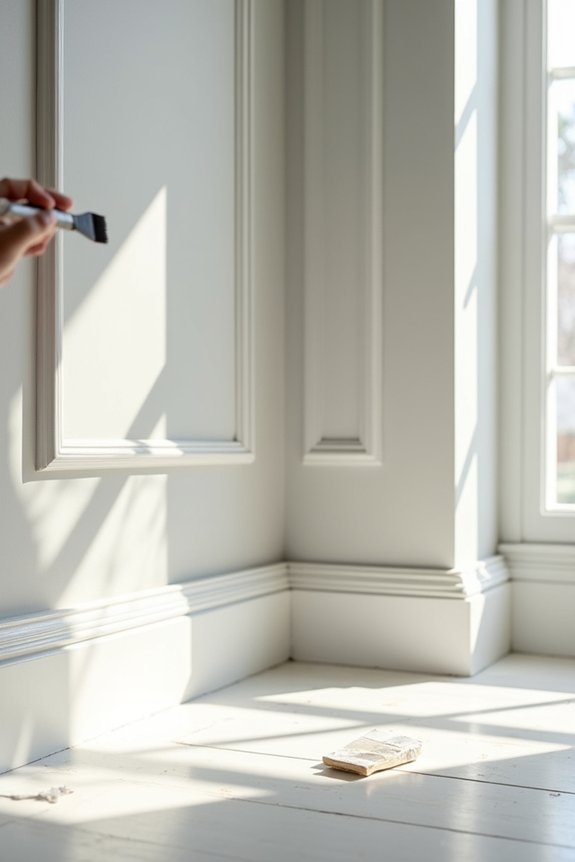
How do you get a razor-sharp paint line without reaching for the painter’s tape? I’ve found that skipping tape entirely works when you commit to proper technique. You’ll join experienced pros who rely on quality brushes and careful edge work instead.
Here’s my tape-free technique for crisp trim:
- Use a straight-cut brush with firm bristles to establish clean lines along your trim edges
- Apply trim paint with a roller for large areas, then tip out with a brush for parallel strokes
- Practice cutting-in by holding your brush at a slight angle, letting bristles do the precision work
After trim dries completely, I roll walls close to the trim. Then I refine boundaries with my brush. This approach prevents wall splatter on fresh trim and minimizes touch-ups later.
Rolling Walls Close to Trim: Minimizing the Cut-In

Once you’ve got your trim painted with sharp edges, rolling the walls comes next, and I’ve learned that getting the roller close to that trim line actually saves you time and effort. I roll within about an inch of the trim boundary, leaving a narrow strip for my brush to handle. This approach minimizes the cut-in work considerably.
| Rolling Tip | Benefit |
|---|---|
| Roll near trim | Reduces brush work |
| Leave 1-inch strip | Allows clean finishing |
| Control overlap | Prevents lap marks |
| Use straight-cut brush | Creates crisp edges |
| Let paint dry | Avoids smudging |
The key’s controlling that overlap so you don’t create uneven edges. After the wall dries completely, I refine the wall-to-trim line with my straight-cut brush for definition. You’ll find this method keeps boundaries sharp while simplifying your entire painting process.
Paint Compatibility: Mixing Trim and Wall Finishes

Why does paint compatibility matter when you’re working with both trim and walls? It’s the foundation that keeps your project looking polished and maintains proper adhesion.
Paint compatibility is the foundation that keeps your project looking polished and maintains proper adhesion between trim and walls.
I’ve learned that mixing finishes thoughtfully prevents problems down the road:
- Latex over latex works seamlessly—you’ll skip sanding between coats and enjoy better adhesion without extra prep work.
- Oil-based paint underneath latex causes problems—you must degloss or sand first, or adhesion fails completely.
- Finish choice affects visibility—semi-gloss trim shows edges differently than satin walls, so plan accordingly.
When I paint trim first with quality primer like STIX, then roll walls nearby, the latex covers small trim areas naturally. This approach maximizes adhesion while keeping your finishes compatible and your edges crisp. You’re building something that’ll last.
Drying Between Coats: When to Cut In and Touch Up
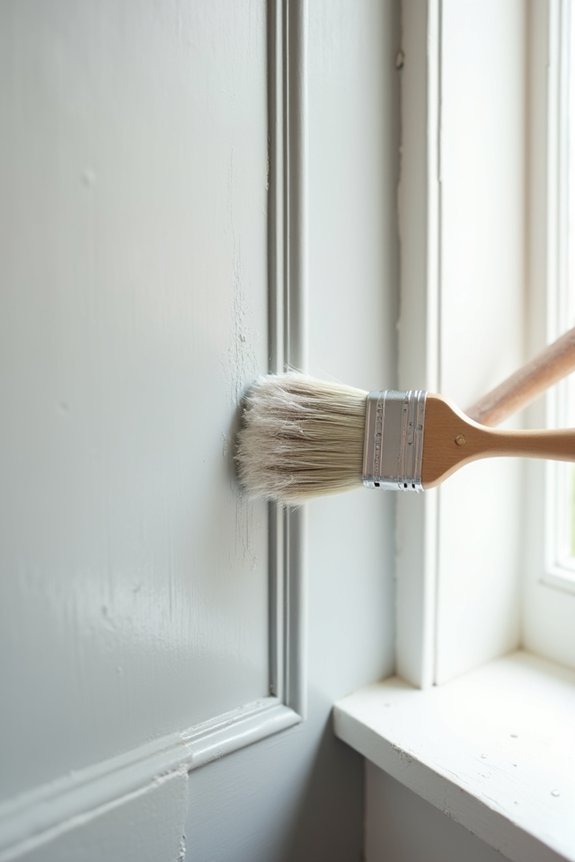
When you’re painting both trim and walls, timing your touch-ups makes the difference between a polished finish and a patchy one. You’ll want to wait those 2–4 hours between coats on your walls, but here’s what I do: I cut in along the trim while the wall paint is still wet enough to blend smoothly, which keeps that edge from looking harsh or uneven. Then, after everything dries completely, I go back and touch up any spots where the trim and wall meet, since working on dried paint gives me better control and prevents me from accidentally dragging wet paint where it shouldn’t go.
Timing Trim Touch-Ups
How long should you actually wait before touching up your trim or painting the walls next to it? Patience here matters between a polished finish and frustration.
- Wait the full drying time – Typically 2–4 hours for latex paint before you touch up trim or roll adjacent walls
- Touch up trim first – After the wall coat dries, check the boundary and fix any misalignment on the trim before the wall fully cures
- Avoid overworking edges – Don’t lick your brush near the trim line between coats; let it cure completely before re-taping or final touch-ups
Rushing these steps causes header bleed and smudged lines. When you let trim first dry properly, you’ll preserve that sharp, professional edge you’re working toward.
Wall Drying Before Cutting
The moment your wall paint feels dry to the touch isn’t actually the moment you should grab your brush and start cutting in along the trim. I’ve learned this the hard way—rushing ahead before proper drying leads to smudging and frustration. Most paints need 2–4 hours between coats, depending on humidity and product type. When I wait this full window before cutting in, I get cleaner lines where walls meet trim. If the paint still feels tacky, I resist overworking it, as this causes texture drag that ruins my crisp edges. Allowing walls to fully dry protects against transferring fresh trim paint onto damp surfaces. This patient approach, whether you paint trim first or walls, improves your results.
Choosing Trim-First or Walls-First for Your Room

Which approach you choose—painting trim first or walls first—affects your final results and the time you’ll spend masking and cleaning up afterward.
The trim-first method works best for most rooms. Here’s why I recommend it:
- You’ll cut in along the trim before rolling walls, which gives you crisper edges and reduces masking time significantly
- Your finished trim stays protected from wall paint splatters, meaning fewer touch-ups later
- You’ll shorten your overall project timeline by minimizing tape and cleanup work
When I paint walls first instead, I always end up with accidental splatters on my trim that require extra attention. The trim-first approach lets me work efficiently while protecting my finished surfaces. It’s the sequence that saves you time and frustration in real situations.