
I recommend keeping your basement humidity between 30% and 50% relative humidity. Above 50%, you’ll risk mold and mildew growth that can damage wood and create musty odors. Below 30%, wood starts cracking and gaps form. I use a simple digital hygrometer placed near the floor to check my levels weekly. Running a dehumidifier during humid months and opening windows for 10–15 minutes daily helps maintain that balance.
What Is the Ideal Basement Humidity Level?
Have you ever noticed moisture pooling on your basement walls or spotted fuzzy patches of mold creeping across the corners? That’s your humidity level sending you a message. The ideal basement humidity level sits between 30% and 50%. This range protects your space from condensation, mold growth, and damage to your stored items and finishes. In Northern Canada, where temperatures drop significantly, some experts recommend keeping humidity at 20–25%. If your basement humidity climbs above 50%, you’re inviting mildew, mold, and wood warping. On the flip side, extremely dry basements can cause wood to crack and gap. A hygrometer placed near the floor, away from vents, allows you to monitor your basement’s humidity level regularly.
Common Sources of Basement Humidity
I’ve found that basement humidity usually builds up from several everyday sources, and understanding where it’s coming from is your first step toward fixing it. Water seeping through foundation cracks during rainy seasons, moisture released from washing clothes and taking hot showers, and stagnant air from poor ventilation all work together to trap humidity in your basement. Once you identify which sources are affecting your space—whether it’s that crack in the corner wall or the lack of airflow near your laundry area—you’ll know exactly what to address first.
Water Seepage Through Cracks
Why does water seem to find its way into your basement through the tiniest openings? Water seeps through foundation cracks because moist soil surrounding your home pushes moisture against those weak spots. Even hairline cracks—barely visible to the naked eye—allow water to infiltrate your basement walls.
Concrete and masonry cracks provide direct channels for moisture to enter your living spaces. Poor exterior drainage worsens this problem significantly. When gutters overflow or downspout extensions are clogged, water pools against your foundation, increasing seepage risk.
You can address this by extending downspouts at least four to six feet away and clearing debris regularly. Inspecting your foundation annually helps you catch small cracks before they become serious moisture problems that affect your basement’s humidity levels.
Household Activities Release Moisture
You’d be surprised how much moisture your daily routines pump into your basement air. When I shower upstairs, steam travels downward. Cooking releases water vapor into the air. Laundry cycles add humidity too. These everyday activities contribute considerably to basement moisture levels.
| Activity | Moisture Released |
|---|---|
| Hot shower | 1-2 gallons vapor |
| Cooking dinner | ½-1 gallon vapor |
| Laundry load | ¾-1.5 gallons vapor |
| Dishwashing | ¼-½ gallon vapor |
| Drying clothes | 1-2 gallons vapor |
Basements trap humid air because they lack proper ventilation like upper floors have. In tight, airtight basements, normal family use alone maintains humidity toward the 30–50% range without help. I’ve noticed my basement feels damper on laundry days. Understanding these moisture sources helps me manage humidity better and keep my basement healthier.
Poor Basement Ventilation Traps Air
How does moisture escape from your basement? If your space lacks proper airflow, it doesn’t—and that’s a real problem. I’ve watched humid air get trapped in airtight basements, creating conditions where moisture buildup becomes inevitable. When you shower or cook upstairs, that moisture travels down and settles in poorly ventilated spaces. Small gaps or drafts sound helpful, but they’re unreliable solutions. The real answer is upgrading your basement ventilation with fans or dedicated systems that actively remove moist air. I’ve seen condensation disappear on surfaces once proper ventilation runs regularly. Check your vents monthly, clear any blockages, and maintain your system consistently. This approach keeps humidity at healthy levels and protects your basement from moisture problems.
Health Risks of High Humidity
When basement moisture climbs above 60%, you’re creating an environment where serious health problems can develop. I’ve seen firsthand how dampness causes a basement to become a breeding ground for mold, triggering respiratory infections and allergies that affect families for months.
| Health Risk | Cause | Effect |
|---|---|---|
| Mold Growth | High Humidity | Respiratory Issues |
| Bacteria Development | Excess Moisture | Infections |
| Heat Exhaustion | Heat + Humidity | Dehydration |
| Radon Trapping | Elevated Moisture | Gas Buildup |
Your respiratory health suffers when you’re exposed to mold spores daily. Combined heat and humidity can cause dizziness and fainting. I’ve noticed that people living in damp basements report persistent coughing and asthma flare-ups. Keeping humidity below 50% protects your family’s wellbeing and prevents these serious complications from developing in your home.
Signs Your Basement Humidity Is Too High
Now that I’ve explained the serious health problems high humidity causes, it’s important to recognize when your basement actually has a moisture problem. Musty odors lingering in your basement signal elevated basement humidity. You should place a digital hygrometer near your basement floor to check if readings exceed 50% relative humidity. Watch for condensation on windows, damp walls, and discolored ceilings. Mold growth on surfaces is a clear warning sign. Rust on stored tools and wood rot on joists indicate moisture damage. Check your gutters and foundation drainage after rain. Water droplets traveling to upstairs walls mean moisture’s spreading through your home. These signs tell you it’s time to act and protect your space.
Why Low Basement Humidity Is Also a Problem
While high humidity wreaks havoc in basements, low humidity creates its own serious problems you shouldn’t ignore. Your wood beams and flooring can crack and shrink when basement humidity drops below 30%, which weakens your home’s structure over time. Beyond the structural damage, low humidity causes dry skin, irritated eyes, and throat discomfort, plus it can make any stored items brittle and prone to breaking.
Wood Damage And Cracking
Have you noticed your basement wooden floors starting to buckle or crack? You’re not alone. Low humidity causes serious wood damage that affects your home’s structure and comfort.
When basement humidity drops too low, your wood loses moisture and shrinks. This creates problems throughout your space:
- Flooring issues: Wooden floors buckle, cup, or develop gaps between planks as they dry out
- Structural brittleness: Beams and support members become more fragile and prone to splitting under weight
- Finish damage: Paint and varnish crack and peel from the wood’s movement
I’ve watched this happen in my own basement. The wood trim around my doors separated from the frames, letting cold air seep in during winter. Maintaining proper humidity levels between 30-50% prevents these costly problems and protects your investment.
Health Discomfort Issues
Why does your basement feel so uncomfortable, even when the temperature seems fine? Low humidity is often the culprit. When basement air quality drops below 30-50% humidity, you’ll notice your skin feels tight and itchy. Your eyes become dry and irritated. You might experience respiratory discomfort, especially if airflow is limited in those enclosed spaces.
I’ve felt this myself during dry winters. That scratchy throat sensation never goes away. Your family deserves better comfort in shared spaces like basements. Beyond personal discomfort, extremely dry air can worsen existing respiratory issues. The environment feels harsher to breathe in, making basements less inviting for recreation or storage.
Maintaining proper humidity levels creates a healthier basement where everyone feels comfortable and can breathe easier.
How to Measure Your Basement’s Humidity?
To get an accurate picture of your basement’s moisture situation, I’d recommend grabbing a digital hygrometer—a small, inexpensive device that’ll show you your humidity level in percent. Placing mine near the basement floor, away from vents, gives the most reliable readings.
For the best results, compare measurements across different spots:
- Near windows where moisture collects
- Away from vents that skew readings
- Close to the floor where problems start
Check these areas regularly. If your readings consistently exceed 50%, consider running a dehumidifier with automatic humidity controls. This habit helps you catch moisture problems early and keeps your basement healthy. Staying on top of humidity prevents costly damage down the road.
Use a Dehumidifier to Control Moisture
I’ll help you control your basement’s moisture by walking you through three key areas: picking the right dehumidifier for your space, placing it where it’ll work hardest, and keeping it running smoothly with proper drainage. A dehumidifier with automatic humidity controls can maintain that ideal 30–50% range you’re aiming for, and choosing one sized correctly for your basement means you won’t struggle with constant tank emptying or overflow. We’ll cover everything from selecting capacity to routing drainage, so you can actually prevent the mold and musty smells that plague so many basements.
Selecting The Right Dehumidifier
Once you’ve decided that a dehumidifier is what your basement needs, picking the right model is important for actually keeping that humidity stable. I’ve learned that capacity matters significantly. A 1,500–2,000 sq ft basement typically needs a 30–50-pint per day unit, depending on your climate and insulation. You’ll want these key features:
- Automatic shutoff – prevents overflow and saves energy when humidity reaches your target
- Continuous drainage option – routes condensate directly to a floor drain or sump pit
- Built-in humidistat – lets you set it to around 40% and forget about manual adjustments
These features work together to reduce your workload. I’d pair your dehumidifier with proper ventilation and moisture control—seal drafts, fix leaks, maintain gutters—so your unit doesn’t work overtime.
Optimal Dehumidifier Placement Strategies
Now that you’ve selected the right dehumidifier, placement matters as much as the unit itself. Placement directly affects how well you control moisture in your basement.
Place your dehumidifier in the area with the highest humidity readings, away from walls where air can circulate freely. Raise it a few inches on a level surface—this improves airflow underneath and boosts efficiency. If you have multiple damp zones, consider placing units in each one or use a larger unit that reaches the whole basement.
Connect the drain line to a floor drain or external outlet for continuous operation. This setup lets you maintain that ideal 30-50% humidity range without constant attention, giving you peace of mind about moisture control.
Maintenance And Drainage Management
How often should you actually maintain your dehumidifier? I’ve learned that checking mine every 3–4 months keeps my basement humidity steady between 30–50%. Here’s what I focus on:
- Clean or replace filters regularly to maintain peak performance
- Drain condensate water to a floor drain or exterior outlet, preventing standing water buildup
- Inspect hoses for cracks or blockages that reduce efficiency
I’ve found that combining dehumidifier maintenance with drainage management works best. I keep gutters clean, extend downspouts away from my foundation, and maintain interior drainage systems properly. These steps limit moisture intrusion at the source, so my dehumidifier doesn’t work overtime. When you tackle both maintenance and drainage together, controlling basement humidity becomes manageable and sustainable.
Run Your AC in Summer for Extra Moisture Control
During the hot months, your air conditioner does more than just cool things down—it actually pulls moisture right out of the air, which is exactly what you need to keep your basement humidity in that sweet spot of 30–50%. Running your AC consistently through summer significantly reduces basement dampness without extra effort.
For optimal humidity control, pair your AC with a dedicated dehumidifier if the cooling system feels overworked. This two-part approach prevents moisture buildup that leads to mold and condensation. Check your humidity levels weekly with an inexpensive meter.
Basic maintenance matters too. Clean your AC filters monthly and seal window gaps to maximize efficiency. These simple steps work together to create the dry basement environment you’re aiming for.
Seal Drafts and Gaps to Stop Moisture Entry
I’ve found that stopping moisture before it enters your basement starts with identifying where it’s sneaking in—usually around basement windows, door frames, and where walls meet the foundation. You can seal these common entry points effectively with caulk for small cracks (typically under ¼ inch wide) and weatherstripping on doors and windows, which creates a tight barrier against outside air and the moisture it carries. These sealing methods work best when you inspect regularly and re-seal gaps as they develop, so moisture doesn’t keep finding new ways inside.
Common Moisture Entry Points
Where’s the moisture in your basement actually coming from? I’ve found that identifying these spots is important before sealing them up. When I inspect basements, I look for the same problem areas repeatedly:
- Windows and doorways – Gaps around frames let humid outdoor air seep in, especially during rainy seasons
- Foundation walls and joints – Cracks allow moisture entry points where water penetrates directly into your space
- Pipes and penetrations – Areas where utilities pass through walls often lack proper sealing, creating pathways for moisture
Once you spot these drafts, caulking and weatherstripping become your best tools. I’ve noticed that addressing leaks at pipes and water heaters simultaneously prevents continuous moisture sources. Regular checks help you catch problems early. This preventive approach complements sump pump maintenance and drainage improvements, giving you a complete moisture management strategy.
Effective Sealing Methods
Once you’ve identified where moisture sneaks in, sealing those gaps becomes your next step. Caulking gaps around windows and doorways helps control humidity. Apply weatherstripping on doors and operable windows to block humid air from entering your space.
Check your basement walls for cracks that need sealing to prevent water seepage. Regular inspections help catch problems early.
For window wells, keep them drained and install covers to stop water accumulation near your foundation. Combine your sealing efforts with proper drainage improvements like gutters and downspouts directed away from your home. This two-pronged approach minimizes moisture access at entry points and keeps your basement drier.
Fix Leaks and Maintain Your Drainage System
How can you stop moisture from sneaking into your basement? Fixing leaks and maintaining your drainage system helps control humidity levels. Start by inspecting pipes, washers, and water heaters for wet spots, rust, or condensation—these are early warning signs. Then tackle your gutters and downspouts to keep rainwater away from your foundation.
Inspect pipes and water heaters for early warning signs, then maintain gutters and downspouts to keep rainwater away from your foundation.
Here’s what I recommend:
- Check gutters every season and clear debris so water flows properly
- Inspect sump pits and drains every 3–4 months for blockages
- Seal cracks around basement walls to reduce moisture entry
When I caught a slow leak behind my water heater last year, addressing it quickly prevented mold growth and structural damage. Professional diagnosis is worth it when you’re unsure about leaks.
Improve Ventilation With Daily Window Opening
While fixing leaks stops moisture from entering your basement, you’ll also need fresh air flowing through to carry humidity out. Opening basement windows for 10–15 minutes each morning and evening helps maintain proper air circulation. This daily window opening brings in fresh air that dilutes humid indoor air, helping you maintain that healthy 30–50% basement humidity range.
| Time of Day | Action | Result |
|---|---|---|
| Morning | Open windows 10–15 min | Fresh air enters |
| Evening | Open windows 10–15 min | Stale air exits |
| Humid days | Use dehumidifiers instead | Avoid extra moisture |
However, check outdoor humidity first. If it’s already humid outside, skip the windows and run a dehumidifier instead. Paired with sealing gaps and proper drainage, daily ventilation prevents condensation and keeps your basement feeling fresher.
Insulate Basement Walls to Reduce Condensation
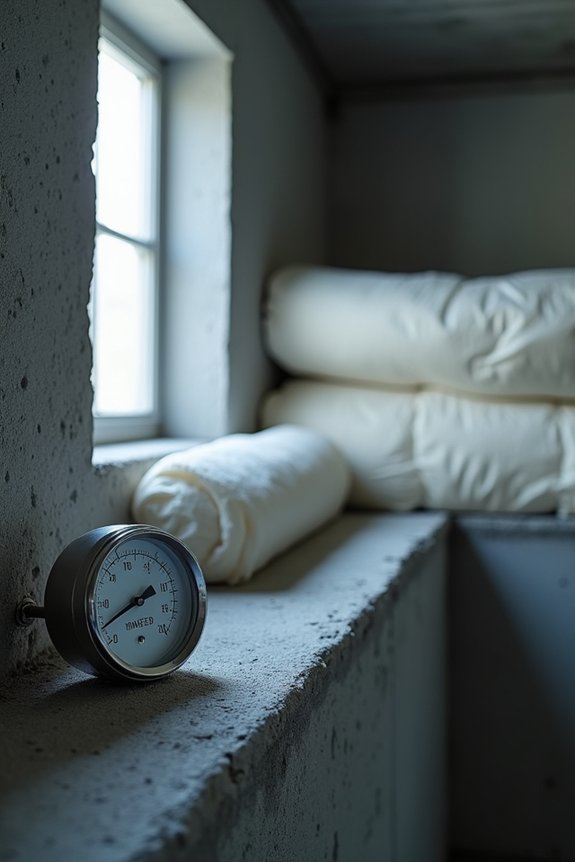
Cold basement walls are a moisture magnet, and I’ve seen this problem firsthand in older homes where uninsulated concrete sweats during humid seasons. When you insulate those walls, you’re raising their surface temperature, which stops water vapor from condensing on cold surfaces. This directly supports your humidity control efforts.
Here’s what happens when you add insulation:
- Warmer wall surfaces prevent condensation from forming, reducing your interior humidity levels
- Mold and mildew growth decreases because moisture won’t settle on warm walls
- You’ll maintain that ideal 30–50% humidity range more consistently
I recommend checking your insulation regularly. Damaged or degraded material undermines these benefits and lets condensation return. When you pair wall insulation with ventilation and proper drainage, you’re creating a system that stabilizes basement humidity over time.
Replace Old Windows and Repair Window Wells
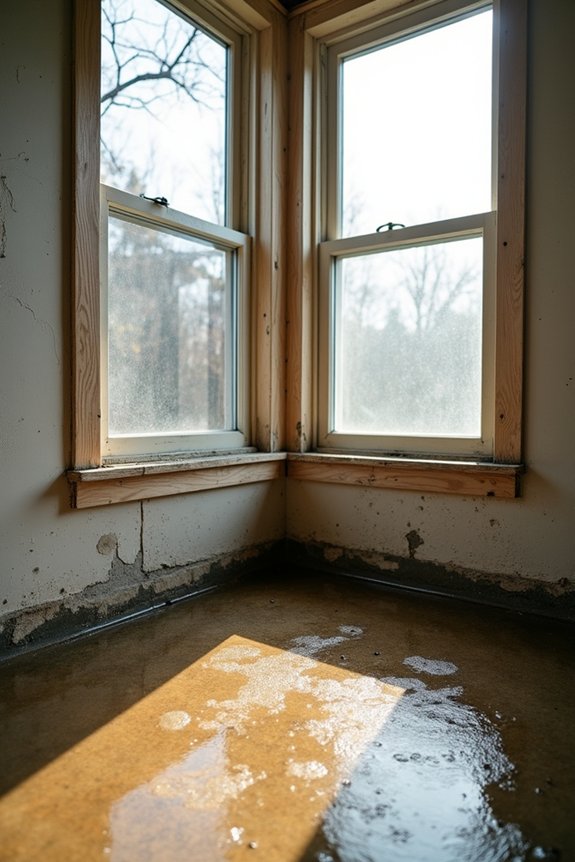
Your basement’s windows and window wells are often overlooked moisture sources, but I’ve seen them cause serious humidity problems in homes where they weren’t maintained properly. When I inspect basements, deteriorating windows and clogged wells consistently rank among the top culprits for excess moisture.
Window replacement with modern energy-efficient units improves moisture control. These newer windows minimize condensation and maintain consistent humidity levels better than aging ones. I recommend checking your window wells for proper drainage first—standing water there directly raises basement humidity.
I always suggest installing window well covers to keep rain out and cleaning wells seasonally. If you spot leaks or drafts around existing windows, seal them with caulk or weatherstripping immediately. These straightforward steps protect your basement’s environment and your home’s health.
Keep Your Basement in the Ideal Humidity Range Year-Round
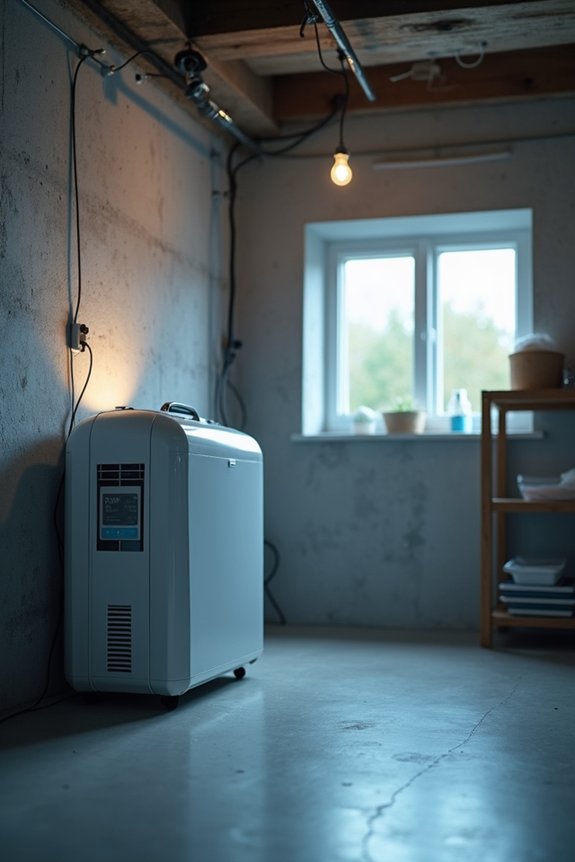
How do you know if your basement’s humidity is actually balanced? I’ve found that investing in a digital hygrometer makes a real difference. I place mine near the floor, away from vents, to get accurate readings. You’re aiming for that sweet spot of 30% to 50% year-round—this protects your space from both moisture problems and structural damage.
Here’s what I do to maintain basement humidity:
- Run a dehumidifier during humid months to prevent mold and mildew growth
- Seal any leaks and maintain proper ventilation throughout the space
- Check my hygrometer weekly to monitor moisture control trends
When humidity climbs above 50%, I notice dampness appearing. Below 30%, I see wood starting to crack. Finding that balance keeps my basement healthy and my family safe.