
Interior basement waterproofing with drain tile runs $5,000–$12,000, while exterior systems cost $10,000–$25,000 or more. You’ll typically pay $60–$120 per linear foot inside and $150+ outside. Most basements need 100–200 feet of tile. Your perimeter length matters more than square footage. Home age, soil type, and footing condition shape your final price. Adding sump pumps and backups pushes costs higher. Get five itemized quotes before deciding, because understanding what’s included separates smart choices from costly mistakes.
What Waterproofing Costs in 2026
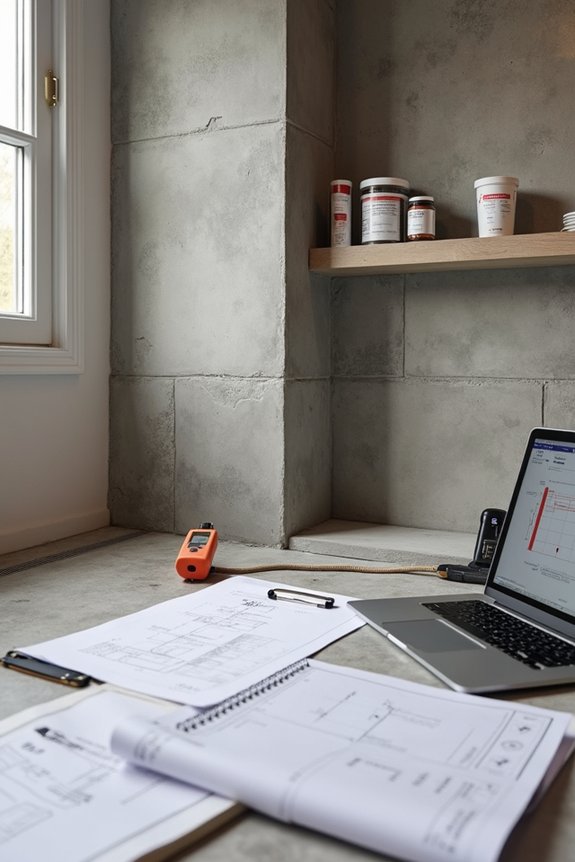
So what’s actually going to come out of your pocket when you’re ready to waterproof your basement? The basement waterproofing cost varies substantially depending on what you’re dealing with. Interior drain tile with backup typically runs $8,000–$18,000, though comprehensive work can reach $30,000. If you’re replacing a sump pump with backup components, expect $1,800–$4,500. Adding regrading and buried downspout extensions pushes costs up another $1,500–$6,000. Exterior solutions are pricier—$20,000 to $120,000+. Your final bill depends on whether you need footing-depth drain tile, pump complexity, and if finished basement restoration’s involved. Projects vary dramatically based on these factors.
Interior Waterproofing Drain Tile: Costs and Coverage
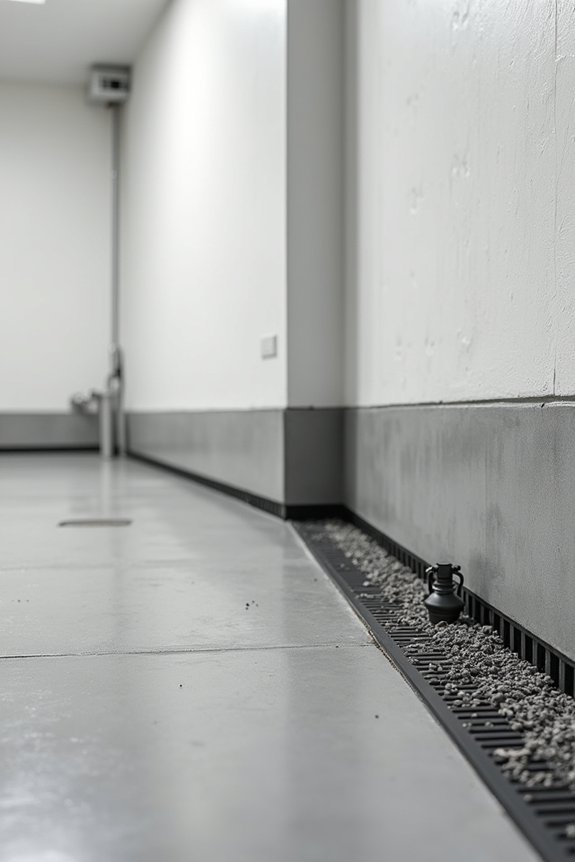
I’ve found that interior drain tile pricing really comes down to two key factors: how deep we need to dig below your slab and how many linear feet of system your basement actually needs. Most contractors charge per foot of installation, and your total cost shifts based on the depth requirements and whether you’re adding extras like vapor barriers or sump pump backups. Understanding these specifications upfront helps you get accurate quotes and know exactly what you’re paying for.
Installation Depth And Specifications
How deep does an interior drain tile system actually go, and what exactly are you paying for when you get a quote? Most systems install at your footing depth—typically 8 to 12 feet below grade—where water pressure is strongest. Your quote should break down linear footage of drain tile, sump components, and discharge piping separately rather than bundling everything together.
When I review quotes, I look for specifics: How many linear feet of tile? Is it below-slab or a top-of-footer channel? These details directly impact your cost. A sealed sump basin, primary pump, backup pump, and check valve add another $1,800 to $4,500. You’re not just buying materials—you’re investing in precise installation at the right depth where it actually works.
Linear Footage Pricing Breakdown
When you’re comparing interior drain tile quotes, you’ll notice contractors price the work by linear feet rather than your basement’s total square footage—and that distinction matters more than you’d think. This approach works in your favor because you’re only paying for the drain tile that runs along your foundation footing.
| Linear Footage | Cost Per Foot | Total Project Cost |
|---|---|---|
| 100 feet | $60–$90 | $6,000–$9,000 |
| 150 feet | $80–$100 | $12,000–$15,000 |
| 200 feet | $100–$120 | $20,000–$24,000 |
Most basements need between 100 and 200 linear feet of drain tile depending on foundation size. Adding sump pump components typically increases your total by $1,500 to $4,500. Understanding this pricing structure helps you budget accurately without overpaying for square footage you won’t waterproof.
Exterior Waterproofing Drain Tile: Costs and Coverage
Exterior drain tile systems represent one of the more substantial investments you’ll make in basement waterproofing, typically ranging from $20,000 to $120,000 or more depending on your basement’s size and the soil conditions around your foundation. You’ll pay more per linear foot with exterior systems because they require heavy excavation and significant disturbance to your landscape. In clay-rich regions like Michigan, this work takes longer and costs more. Your footer condition matters too—if you have an existing footer-based water tunnel, you might save money choosing interior drainage instead. Adding a sump pump and crack repairs pushes costs higher, often adding $1,500 to $4,500. Understanding these basement waterproofing costs helps you budget realistically for protecting your home.
Sump Pump Installation and Backup Systems
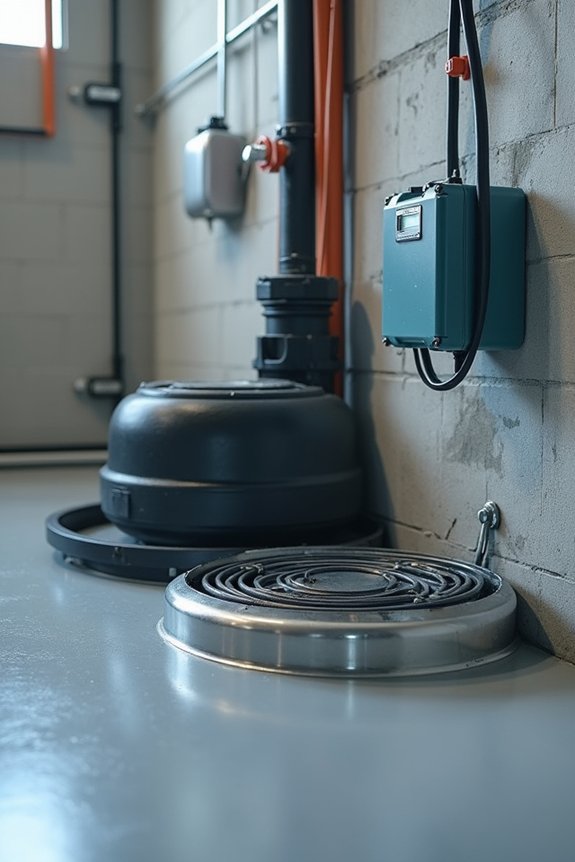
When I evaluated sump pump options for my own basement, I discovered that your primary pump’s horsepower and flow rate directly impact how quickly water gets removed, with most residential systems handling 3,000 to 5,000 gallons per hour. You’ll also want to seriously consider a battery backup system—I’ve seen Michigan storms knock out power for hours, and that’s exactly when you need your pump running most. The backup pump activates automatically when the primary fails or during outages, giving you that protection that standard single-pump setups simply can’t offer.
Primary Pump Specifications
What makes a sump pump system actually work when your basement’s flooded? The primary sump pump sits in a sealed basin and removes water before it damages your home. You’ll want to identify the specific brand and model—not vague marketing claims about “exclusive” pumps that are often rebranded standard units. Cast iron housings outperform plastic ones in durability. Check whether your pump comes with a written, transferable warranty covering the actual specifications. Proper discharge plumbing matters too: install a check valve and route the line to your exterior freeze line. This prevents water from flowing backward into your basement during winter. I’ve seen systems fail when contractors skip these details, leaving homeowners vulnerable during Michigan storms.
Backup Battery Systems
Your primary sump pump won’t help you if the power goes out during a storm, and that’s precisely why I’d recommend adding a backup battery system to your setup. I’ve seen Michigan basements flood during outages when homeowners relied solely on electric pumps. A backup battery system keeps your sump pump running when you need it most, typically adding $2,800 to $3,500 to your total project cost. You’ll want an AGM battery paired with a sealed sump basin for optimal performance. This investment has real value—insurers often reward backup systems with better rates, and potential buyers view them as a major selling point. It’s practical protection worth having.
Foundation Crack Injection: Costs and Coverage
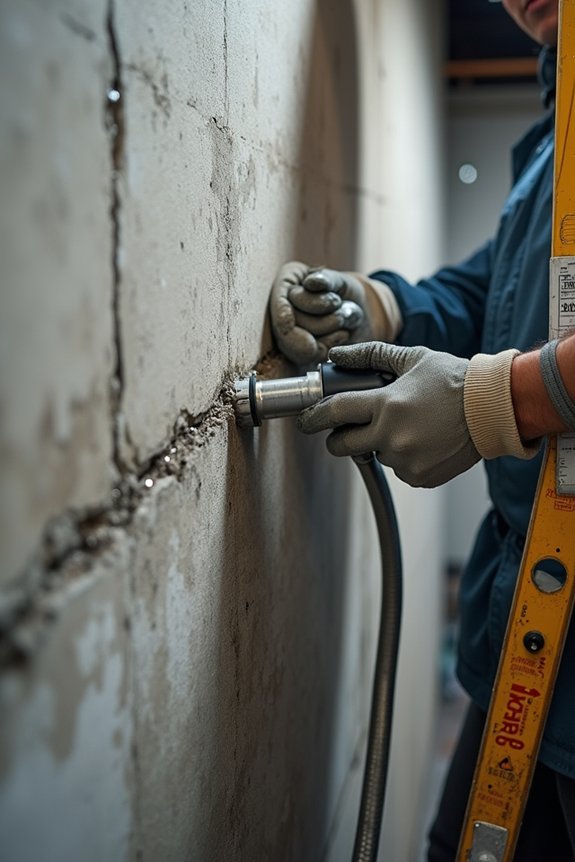
Foundation crack injection is one of the most practical solutions for stopping water from seeping into your basement, and it typically costs between $600 and $1,200 for isolated leaks. This service seals cracks to prevent moisture from reaching rebar and causing degradation.
Foundation crack injection seals cracks to prevent moisture damage, typically costing $600–$1,200 for isolated leaks.
What affects your crack injection costs:
- Crack length and visibility determine pricing adjustments
- Multiple cracks in the same area may reduce per-crack expenses
- Additional drainage or sump pump work strengthens long-term protection
Crack injection works relatively quickly, sometimes within hours. The process pairs well with drainage considerations to manage underlying hydrostatic pressure. When you invest in crack injection, you’re protecting your foundation’s integrity and preventing costly water damage down the road.
Why Waterproofing Costs Vary Between Quotes
Two contractors can quote you vastly different prices for the same basement, and I’ve seen this happen countless times. Waterproofing costs vary because contractors propose different solutions. One might suggest a simple top-of-footer plastic channel, while another recommends interior drain tiles below your slab. I’ve watched a basic sump pump quote jump substantially when sealed basins with backup systems get included.
| Factor | Impact on Price |
|---|---|
| Drain tile depth | Substantial |
| Vapor barrier inclusion | Medium |
| Pump type | High |
| Contractor overhead | Medium |
| Job perimeter scope | Substantial |
Franchise companies often charge more due to marketing costs versus family-owned operations. Material quality matters too. When I compare quotes, I’m really comparing different systems entirely—not just prices.
Basement Size and Foundation Perimeter Matter
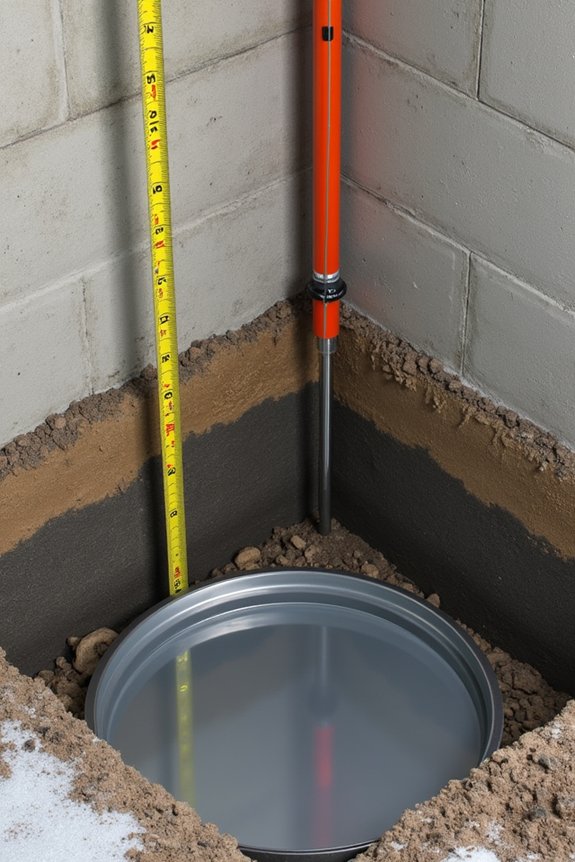
I’ve found that your basement’s waterproofing cost hinges on how much foundation perimeter you’re protecting, not just your square footage—so a 1,000-square-foot basement might have a 200-foot perimeter that determines your actual bill. When I assessed my neighbor’s ranch-style foundation, the contractor measured the linear footage along the footing to calculate drainage installation costs, which made the total far different from what square footage alone would’ve suggested. Understanding your home’s foundation layout, whether it’s a simple rectangular footprint or has jogs and angles, helps you anticipate whether you’ll need targeted drainage in specific problem spots or protection around the full perimeter.
Linear Footage Pricing Models
Why does your basement’s square footage matter less than you’d think when pricing waterproofing?
I’ve learned that contractors price drainage systems by linear footage of your foundation’s perimeter, not total basement size. Here’s what actually drives your costs:
- Perimeter length determines pricing – A 1500 sq ft ranch with 115 ft of perimeter costs roughly $8,510 for interior drainage at $74 per foot
- System type impacts expenses – Interior installations run $60–$120 per linear foot, while exterior systems exceed $150 per linear foot
- Foundation structure matters – Whether your footer’s present and whether you need interior tunneling affects final quotes
Fast track drainage adds $76–$92 per foot with a 15 ft minimum. Understanding your perimeter length helps you budget accurately. You’re not paying for square footage—you’re investing in protecting the actual foundation edges that need reinforcement.
Foundation Layout Assessment
Now that you know how linear footage pricing works, let’s look at what actually determines your foundation’s perimeter—because that measurement doesn’t stay the same from house to house.
Your basement’s shape and size directly impact your perimeter drainage costs. A rectangular foundation with 120 linear feet costs differently than an irregular one with 180 feet. I’ve assessed homes where addition work created complex corners, pushing costs substantially higher.
Home age matters too. Homes built in the late 1960s or later typically have footers, making perimeter drainage installation straightforward and more affordable. Older homes without proper footers require fast-track drainage solutions, increasing expenses substantially.
Before any contractor quotes you, request a foundation assessment. They’ll measure your perimeter, evaluate your footer condition, and identify cost factors specific to your situation.
Perimeter-Based Cost Calculation
Your basement’s total square footage barely matters for waterproofing costs—your foundation’s perimeter is what actually determines your bill.
I learned this firsthand when pricing my own project. Perimeter-based pricing focuses on the length around your foundation, not interior space. Here’s why this matters:
- A 1,500 sq ft ranch with a 115 ft perimeter costs roughly $8,510 for drain tile alone at standard rates
- You’ll pay $60–$120 per linear foot for interior systems, scaling directly with perimeter length
- Fast-track drainage runs $76–$92 per foot but requires minimums
Your foundation’s actual measurements drive everything. Measure your perimeter carefully, then multiply by the per-foot rate your contractor quotes. This straightforward calculation helps you budget accurately and compare estimates fairly.
How Home Age and Footing Type Affect Price
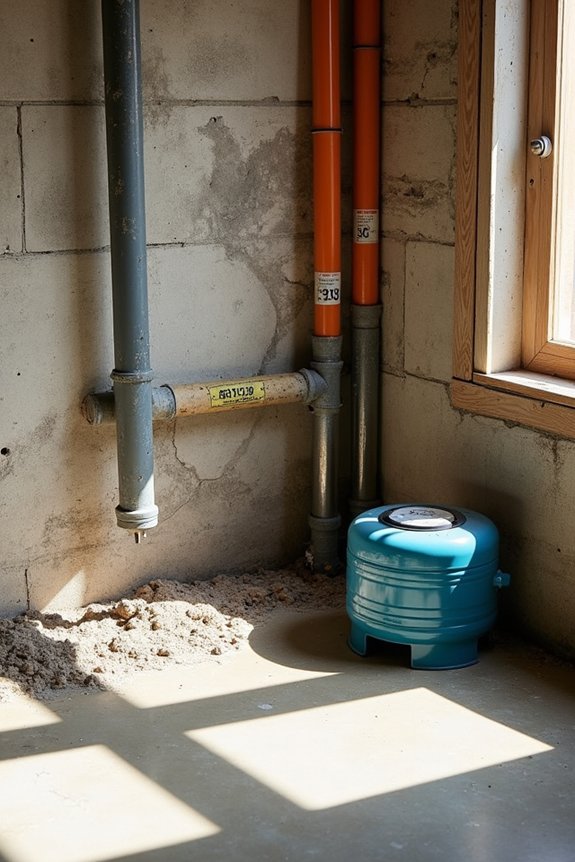
When you’re getting waterproofing quotes, the age of your home and what’s underneath your basement walls affect what you’ll pay. Homes built in the late 1960s or later typically cost less to waterproof because they have proper footers. Basement waterproofing costs around $67–$81 per linear foot for homes with footers, requiring at least 20 feet of work. The footer lets drainage systems use a slope-based approach, and a u-shaped water tunnel can actually use that footer as a fourth side. Older homes without footers or thin concrete require fast-track solutions that cost more. Understanding your home’s foundation type helps you anticipate realistic basement waterproofing cost estimates.
Soil Conditions and Local Clay Impact Your Costs
If you’re getting basement waterproofing quotes in Southeast Michigan, I’ll tell you straight—your soil conditions matter just as much as your foundation itself. The dense clay that dominates Macomb and Oakland counties creates real challenges because it traps water around your home and pushes hydrostatic pressure against your walls, which means contractors need heavier equipment and more labor to excavate properly. Add Michigan’s brutal freeze-thaw cycles into the mix, and you’re looking at materials and installation methods that cost more than what homeowners in sandy-soil states typically pay.
Michigan’s Dense Clay Problem
Why does basement waterproofing cost so much more in Michigan than in other states? Our region’s dense clay soil creates unique challenges that contractors elsewhere simply don’t face.
Here’s what makes Michigan different:
- Clay soil factors like shrink-swell behavior force deeper excavation and reinforced drainage systems costing 30-40% more labor than sandy soils
- Hydrostatic pressure builds intensely against foundations in counties like Macomb and Oakland, requiring heavy-duty waterproofing materials
- Freeze-thaw cycles demand robust long-term protection, adding weatherproofing expenses year-round
Our clay bowl effects trap water around perimeters, making drainage solutions considerably more complex. The “Michigan Clay Factor” isn’t just terminology—it’s real additional expense. Contractors here invest more in perimeter work because our soil demands it. Understanding these clay soil factors helps you appreciate why your estimate reflects Michigan’s specific conditions.
Hydrostatic Pressure and Excavation
Because Michigan’s dense clay creates a moisture trap around your foundation, hydrostatic pressure—that relentless push of groundwater against your basement walls—becomes a serious cost factor I’ve seen play out in dozens of projects. When I excavate around clay-heavy foundations, the digging takes longer and costs more. That dense earth resists my equipment, adding labor hours you’ll pay for.
Here’s what happens: water saturates the clay, building pressure against your walls. I’ve watched homeowners discover cracks spreading horizontally across concrete because hydrostatic pressure found weak spots. The tougher the clay, the more aggressive your drainage solution needs to be. You’re likely looking at exterior systems or interior drain tiles—sometimes both—to counteract that pressure effectively. Your specific soil conditions determine which approach protects your investment best.
Freeze-Thaw Cycle Protection Needs
Every spring in Michigan, I see the damage that freeze-thaw cycles inflict on basements that weren’t properly protected. Water seeps into cracks during winter, freezes, expands, and splits foundations wider. You need comprehensive protection to stay safe:
- Vapor barriers prevent moisture from rising through concrete floors and walls
- Crack repairs seal entry points before ice damage spreads them further
- Reliable sump pump system removes water before it freezes and causes damage
These investments aren’t optional here. I’ve watched homeowners pay thousands more in repairs because they skipped initial waterproofing. A quality sump pump keeps water levels down year-round, preventing freeze cycles from cracking your foundation. Local soil conditions mean you’re fighting harder against water pressure, so planning ahead saves money later.
Interior vs. Exterior: Which System Costs Less?
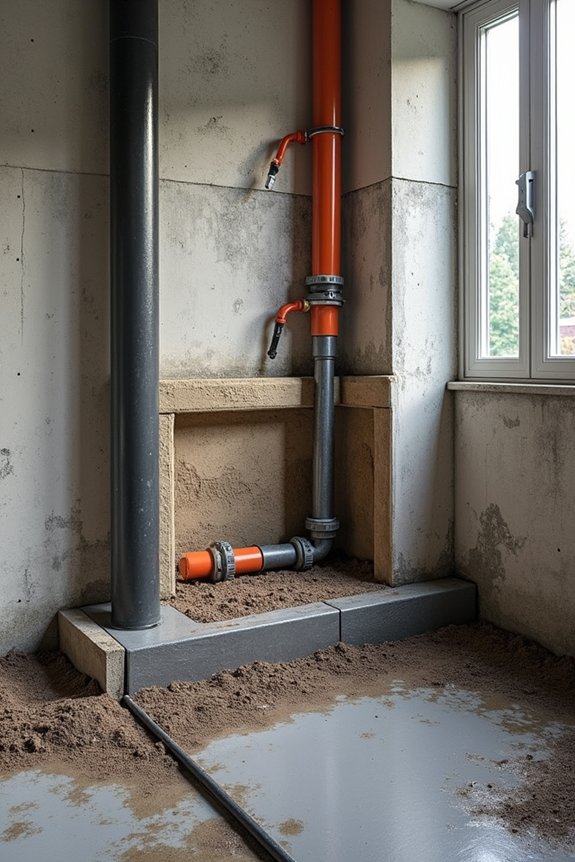
When you’re weighing basement waterproofing options, the cost difference between interior and exterior systems is significant—and it often tips the scales toward interior solutions for most homeowners. Interior drain tile systems typically run $5,000 to $12,000, while exterior waterproofing ranges from $10,000 to $25,000 or beyond. The per-linear-foot pricing tells the story: interior systems cost around $60–$120 per foot, whereas exterior work jumps to $150-plus per foot. In Minnesota and Southeast Michigan, adding a sump pump and backup system keeps interior projects between $8,000 and $18,000. Exterior drainage starts around $20,000 and climbs higher due to labor intensity and disruption. For finished basements, interior options provide cost savings while minimizing impact on your home’s daily life.
Hidden Costs: Permits, Vapor Barriers, Labor Multipliers, and Contingencies
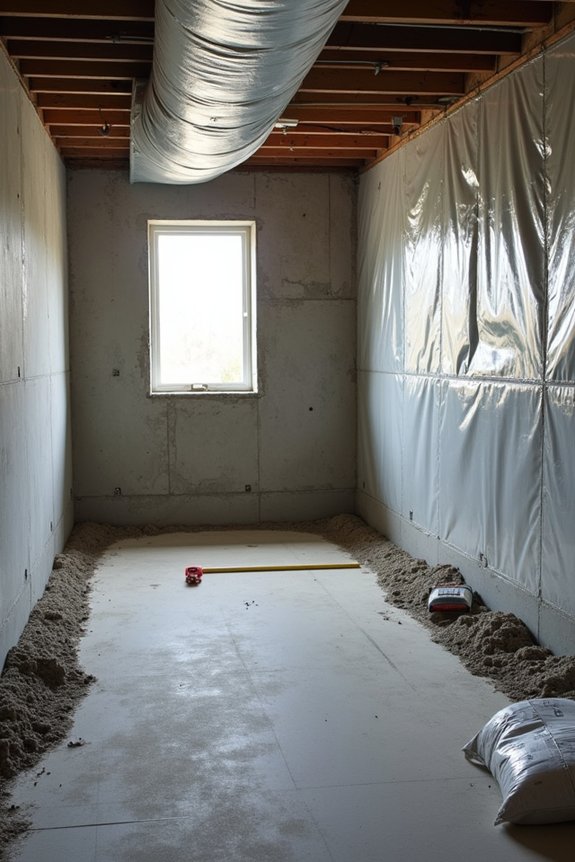
What pushes a $10,000 basement waterproofing estimate to $13,000 or more?
I’ve seen it happen repeatedly. Hidden costs quietly inflate your budget beyond the base drainage system price. Here’s what typically adds up:
- Permits and local fees – Your municipality requires approval, and costs vary significantly by location and project scope.
- Vapor barriers and wall membranes – These essential materials protect against moisture but increase both material and labor expenses.
- Labor multipliers and contingencies – Finish work commands higher rates, while unforeseen issues like cracked walls demand emergency sump pump upgrades.
In many markets, permits, vapor barriers, and contingencies collectively add 10–30% to your base price. I’ve watched homeowners get blindsided when cracked foundation walls emerged mid-project. Budget separately for these surprises, and you’ll avoid sticker shock later.
Installation Process and What Affects Your Final Cost
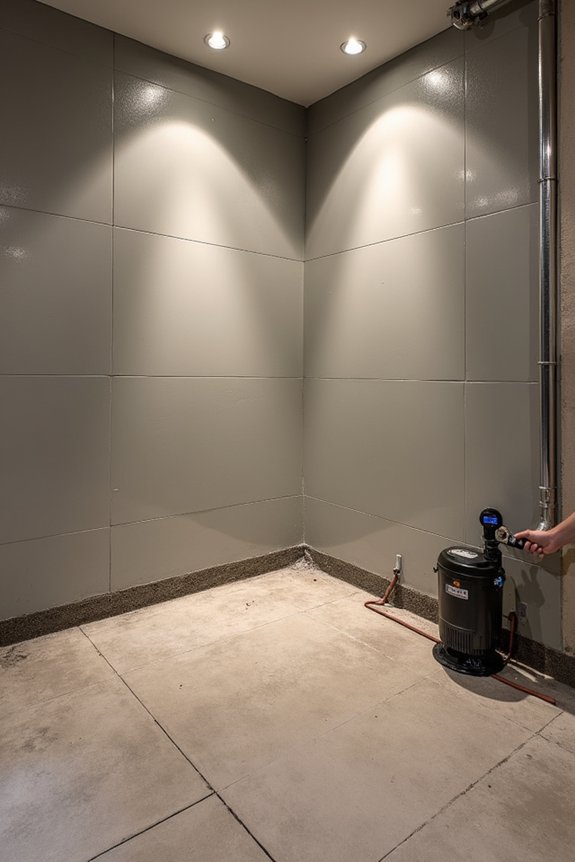
Once you’ve decided on waterproofing, the installation method you choose—interior drain tile, exterior drain tile, or fast-track drainage—will significantly affect your final bill. Interior systems with sump pumps typically run 8,000–18,000 USD, while exterior options climb to 20,000–120,000 USD depending on your foundation type and wall material. Fast-track drainage costs roughly 76–92 USD per foot with a 15-foot minimum, making it pricier than standard footer-based systems. Your basement waterproofing cost also factors in whether you’re waterproofing the entire perimeter or just problem areas. Sump pump additions range 1,500–4,500 USD, plus extra for battery backups. Before committing, get multiple quotes and clarify what each covers—financing options and warranty terms can meaningfully impact your total investment.
Don’t Hire Until You Know: Five Critical Questions
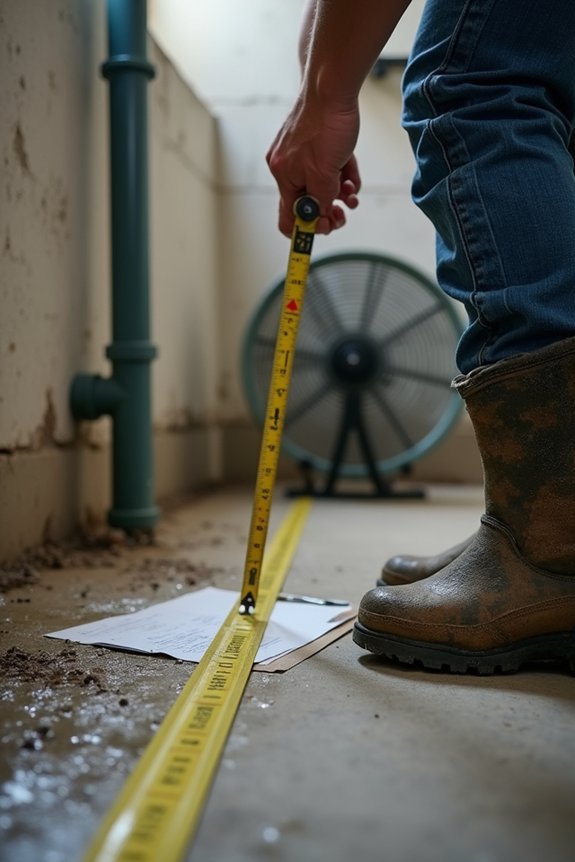
Before you sign anything or hand over a deposit, I’d strongly recommend you ask your waterproofing contractor five specific questions—and get their answers in writing.
These questions protect you from hidden costs and provide transparent pricing:
- What’s included in your quote, and what isn’t?
- How do you measure linear footage for pricing?
- Are your sump pumps backup-equipped?
- What permits and warranties do you provide?
- How is discharge plumbing configured?
I’ve seen homeowners face additional charges because drain tile placement or pump specifications weren’t clearly defined upfront. Request a free written quote with line-item detail delivered within 24 hours. This approach weeds out high-pressure sales tactics and gives you confidence in your investment decision.
Get an Itemized Quote for Your Specific Basement
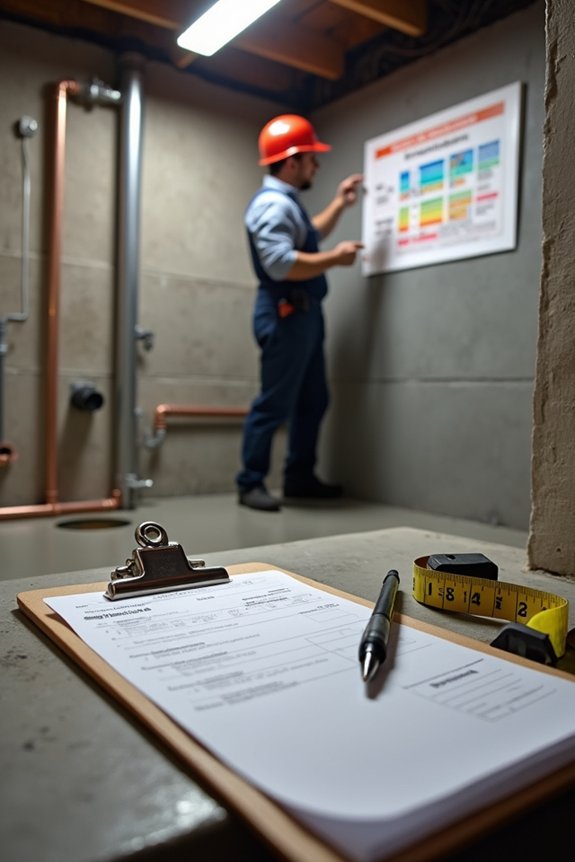
An itemized quote provides clear details about what you’re paying for, and it distinguishes between contractors who offer transparency and those who may charge unexpected fees later. When reviewing quotes for basement work, reputable contractors typically separate basement waterproofing costs into distinct categories: materials versus labor, interior versus exterior work, and permits listed separately. This breakdown matters because you’re making a significant investment in your home’s protection.
| Component | Material Cost | Labor Cost |
|---|---|---|
| Drain tile (per linear foot) | $8–$15 | $5–$10 |
| Sump basin with pumps | $400–$800 | $200–$400 |
| Vapor barrier installation | $0.50–$1.50/sq ft | $1–$2/sq ft |
Request on-site estimates within 24 hours and compare at least five quotes, referencing local benchmarks and warranty details for your area.