I’ll help you position your curtain rod brackets in three simple steps.
First, determine your bracket height based on your ceiling type—mount them 4–6 inches from the window edge on standard ceilings, or 8–10 inches above the frame for cathedral ceilings.
Next, mark your bracket locations with a level and find wall studs using a stud finder for the strongest support.
Finally, drill pilot holes, secure the brackets with screws, and test that your rod sits level across all brackets.
Step 1: Determine Bracket Height Based on Your Ceiling Type
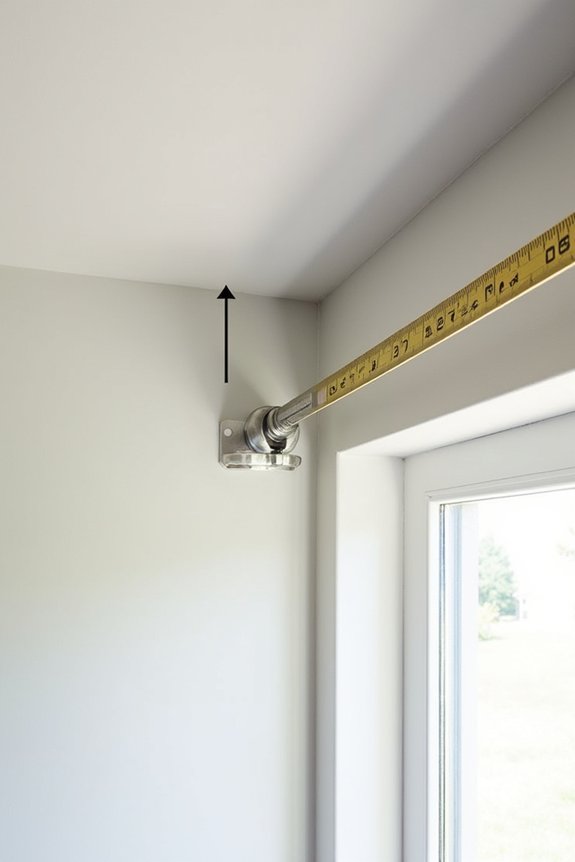
How high should your curtain rod actually go? Your ceiling type determines the best bracket height for your window treatment. For standard ceilings, position curtain rod brackets 4–6 inches from each window edge, which gives plenty of space for the rod and hanging curtains. If you have cathedral ceilings, mount brackets about 8–10 inches above the window frame for that tall, dramatic appearance. When crown molding is present, place brackets right below it to keep curtains unobstructed and visually balanced. On shorter ceilings, mounting the rod at ceiling height maximizes headroom. With very high ceilings, raise the rod higher toward the ceiling so curtains maintain proper proportion. Understanding your ceiling type guides your measurement and helps with successful rod placement.
Step 2: Mark Bracket Locations Level and Find Wall Studs
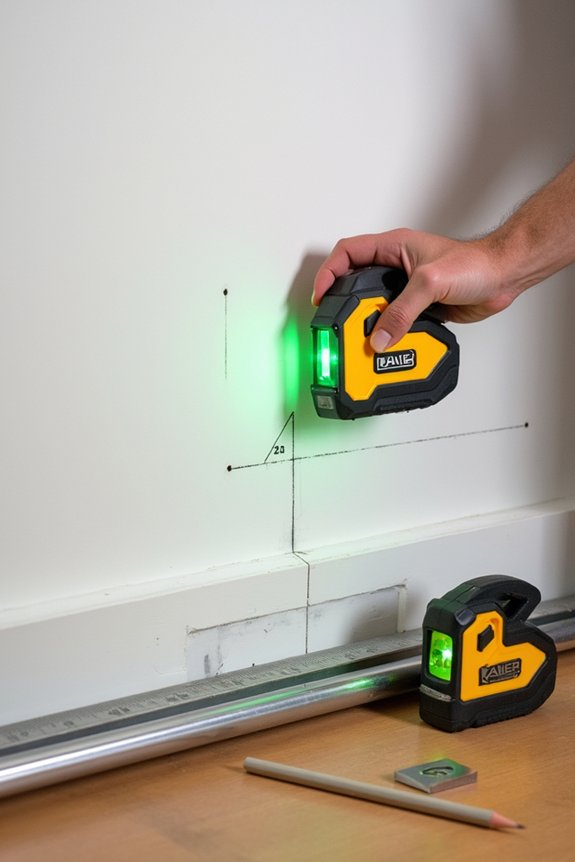
Where should you actually mark those bracket holes? I mark my bracket locations about 4–6 inches from each window edge for balanced support. Then I grab my level to verify those marks are horizontally even—this step matters.
Next, I use a stud finder to locate wall studs. Aligning brackets with studs gives you the strongest foundation for your curtain rod. When studs aren’t available, I plan for drywall anchors rated for the rod’s weight instead.
Before I drill, I verify the bracket positions won’t block curtain movement. I check that the measurements allow full opening. This prevents frustrating surprises later. Getting this step right means your curtains’ll hang well and securely for years.
Step 3: Drill Pilot Holes, Secure Brackets, and Test Alignment
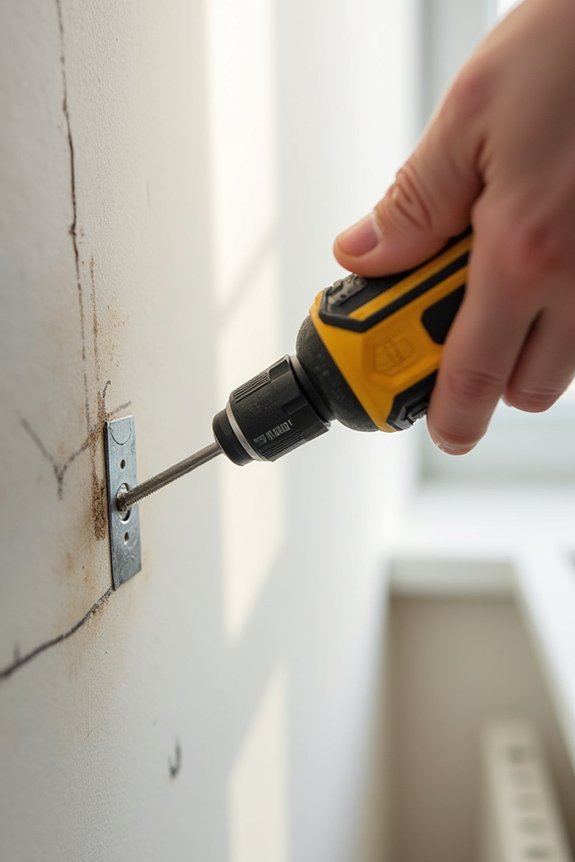
Now that you’ve marked your bracket locations and verified they’re level, it’s time to drill. I start with a small pilot bit to create starter holes at each mark. If I hit wall studs, I can skip anchors and go straight to screws for maximum support. When I encounter drywall, I drill larger holes and tap in wall anchors until they’re flush with the surface.
Next, I secure the brackets with screws using my drill, being careful not to over-tighten. Over-tightening can strip anchors or crack drywall.
Finally, I test alignment by placing the rod on all brackets and checking that it’s level and evenly spaced. This verification step prevents frustration later when I hang the curtains. Taking time here helps everything hang properly.