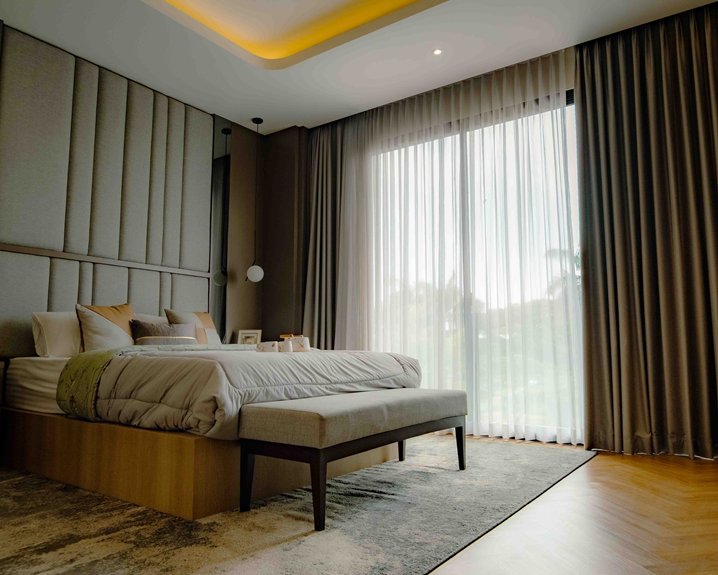
Curtain length affects your entire room’s style and function. Measure from your rod’s bottom to the floor, accounting for hardware like grommets that shorten visible length. Sill-length works great in kitchens; floor-length adds sophistication in bedrooms. Hem finishes matter too—float hangs half an inch above, kiss touches down, and puddle pools luxuriously. Your choice depends on ceiling height, room purpose, and traffic patterns. Rod placement four to six inches below the ceiling maximizes visual impact. Once you understand these fundamentals, you’ll find exactly which length works best for your space.
Why Curtain Length Matters: Style, Function, and Visual Impact
Ever noticed how the right curtain length affects a room? I’ve learned that curtain length shapes both style and function in ways I didn’t expect. When I hung floor-length curtains, my ceilings suddenly felt taller, creating visual balance I’d been missing. The choice between float hems, kiss hems, and puddle hems completely changed my space’s mood—floor-length options signal formality and sophistication, while float hems feel modern and tailored. Rod placement matters too; measuring from your rod to the floor guides everything. Beyond aesthetics, curtain length directly affects light control and privacy. Sill-length styles work best in busy households, while floor-length options enhance these practical benefits with proper lining. Your curtain length decision shouldn’t feel overwhelming—it’s simply matching your lifestyle with your vision.
Floor-Length vs. Short: Choosing Between Sill, Apron, and Floor
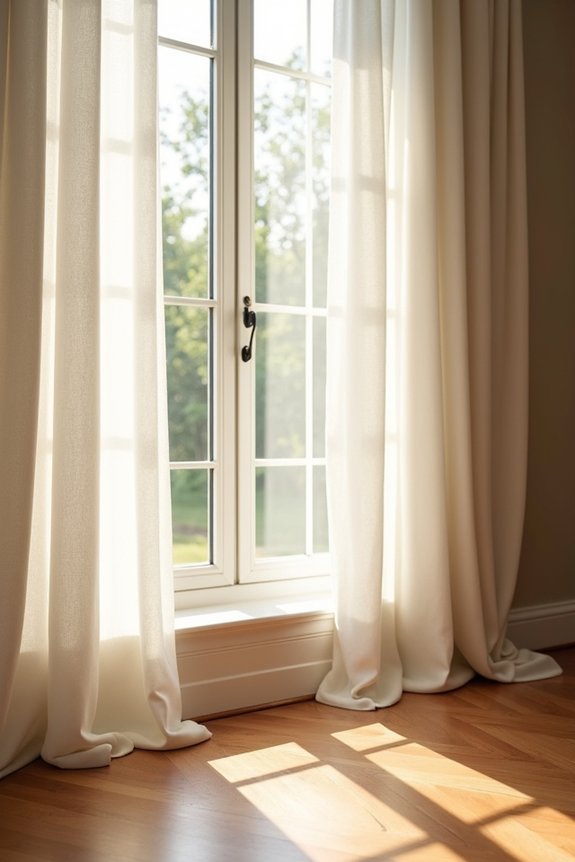
Now that you understand how curtain length shapes your room’s feel, it’s time to pick the specific style that works for your space. Choosing between sill-length, apron-length, and floor-length curtains depends on your room’s practical needs and the aesthetic you’re after.
| Curtain Length | Best For | Visual Effect |
|---|---|---|
| Sill-length | Kitchens, bathrooms, moisture areas | Clean, casual look |
| Apron-length | Radiator clearance, deep furniture | Balanced, friendly feel |
| Floor-length | Living rooms, bedrooms, formal spaces | Elegant, lengthened appearance |
| Float above floor | High ceilings, modern style | Polished, intentional design |
| Puddle | Formal settings, grand rooms | Luxurious, dramatic statement |
Measure twice before purchasing. Sill-length ends at your window sill, while apron-length extends 4 to 6 inches below. Floor-length options—float, kiss, or puddle—create different formalities. Consider baseboards and radiator clearance when deciding your window treatment’s final length.
The Hem Finishes Explained: Float, Kiss, Break, and Puddle
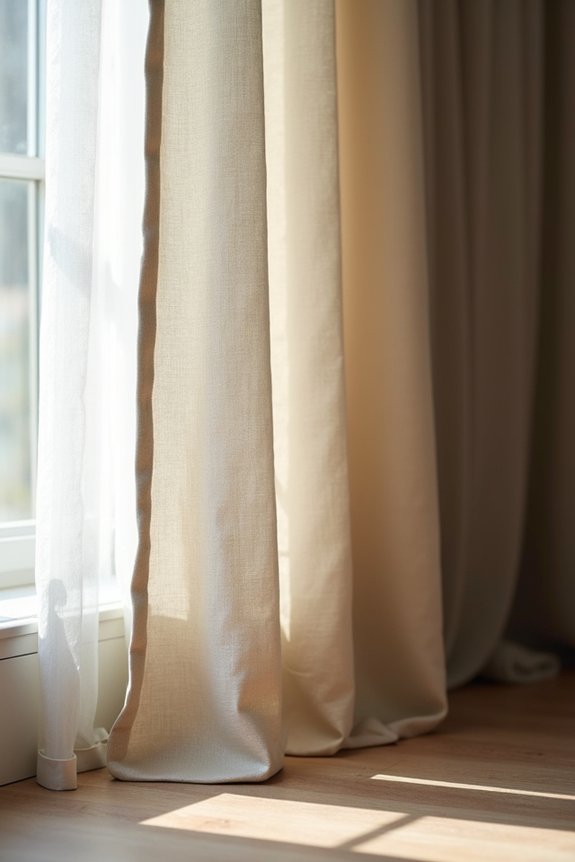
Once you’ve settled on your curtain length—sill, apron, or floor—you’ll face one more decision: how your fabric actually meets the floor. These hem finishes significantly change how your room feels. Float length hangs a half-inch above the floor, creating a modern, clean look that’s easiest to maintain. Kiss length lightly touches down, requiring precise measuring but delivering that tailored, high-end appearance. Break length adds one to two inches of pooling fabric, which hides floor irregularities well. Puddle length is the most dramatic, with three to six inches cascading onto your floor for luxury and presence. Each finish influences ceiling height perception and maintenance needs. Your choice depends on your floor condition, style preference, and how much upkeep you’re willing to manage.
Room-by-Room Guide: Which Length Works Best Where
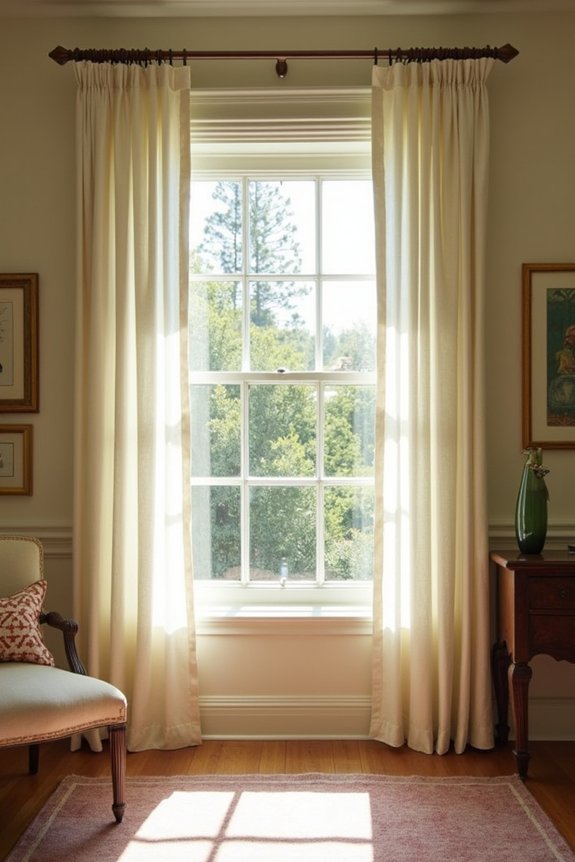
Where you hang your curtains matters just as much as how long they are. Living rooms and bedrooms benefit from floor-length curtains that kiss-the-floor or create a subtle floor puddle, which gives these spaces a balanced, tall appearance. When I measure from rod to endpoint in these rooms, I aim for that polished look.
Kitchens and bathrooms call for sill-length options instead. I choose these shorter lengths because they protect against moisture and keep things practical. For small windows or high-traffic areas with pets, I prefer break-length curtains that reduce snagging while maintaining decent light control.
The key is matching your curtain length to your room’s purpose and traffic patterns.
Measure From Rod to Floor: Account for Hardware First
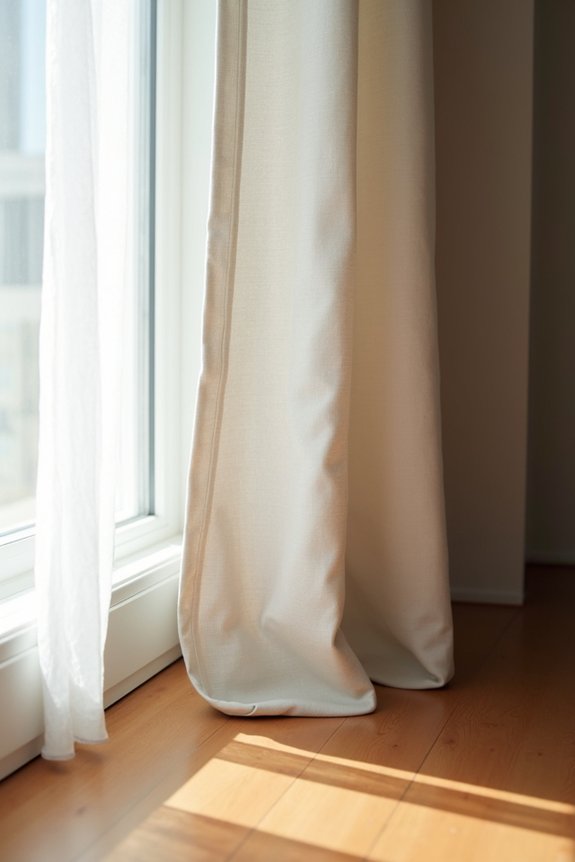
Getting the length right starts with understanding your hardware, because the way you hang your curtains changes where they actually begin. I’ve learned that rings, grommets, and pockets all affect your curtain drop differently. When you measure from top of rod to floor, you’re not accounting for how hardware impacts the actual hanging point. Grommets add one to 1.5 inches of fabric above the rod, which effectively shortens your visible length. Rod pockets and back tabs gather fabric around the rod, reducing how far down your curtains hang. I always hang the rod first, then measure from the bottom of my hardware straight down to the floor. This measurement approach gets you floor-length curtains that fit properly without guessing about your window treatment length.
Ceiling Height and Standard Panel Sizes: Do 96 Inches Fit Your Space?

Now that you’ve measured from your rod to the floor, let’s figure out if standard 96-inch panels will work for your space or if you’ll need to adjust them. For an 8-foot ceiling, 96-inch curtains provide a more polished appearance than 84-inch panels, but they only work if your wall and hardware fit the length—otherwise hemming by 1–2 inches or adding a small puddle on the floor are your best options. Understanding your ceiling height and knowing how to work with standard panel sizes will help you make the right choice without wasting time or money.
Standard 96-Inch Panel Guidelines
Are 96-inch curtains right for your space? I’ve found that 96-inch panels work well for standard 8-foot ceilings when you prioritize high-and-wide rod placement. This approach maximizes your curtain height and creates the look you’re after.
| Scenario | Solution | Result | Consideration |
|---|---|---|---|
| Panels exceed wall length | Hem 1–2 inches | Proper fit | Takes minimal effort |
| Want floor-length coverage | Use standard rod height | Professional appearance | No puddle length needed |
| Prefer relaxed aesthetic | Allow small puddle | Soft, elegant feel | Requires extra fabric |
| Non-standard obstacles present | Consider sill length | Practical alternative | Works around radiators |
With proper rod placement and hemming when needed, your 96-inch curtains deliver the floor-length window treatment you want. I recommend measuring your wall first, then deciding whether standard panel length works or if hemming suits your vision better.
Ceiling Height Measurement Strategies
When you’re deciding whether 96-inch curtains will work in your space, measuring your ceiling height is where everything starts. I’ve found that hanging your rod 4–6 inches below the ceiling or crown molding creates an elevated appearance. This rod placement strategy matters because it affects your fabric length choices.
Here’s what I do: I measure from the rod down to where I want the curtain to end—whether that’s a floor-kiss or puddle length. Above-window mounting changes everything too. When I install rods higher than the window frame, I need longer panels to maintain my desired puddle effect.
For very tall ceilings, I hold panels up with hardware and mark where I want the hem. This measurement strategy prevents costly mistakes and keeps your wall height, crown molding, and fabric length working together properly.
Hemming Long Panels Effectively
96-inch curtains work well in rooms with 8-foot ceilings, and these panels create a more polished look than their shorter 84-inch counterparts. Here’s what you should know about hemming long panels effectively: measure from your rod’s hanging point straight down to the floor, because that measured hem determines your final curtain length better than package labels alone.
If you need a floor kiss or slight puddle effect, hem by 1–2 inches. For renters, iron-on hem tape offers a no-sew solution that doesn’t require landlord approval. Standard 48-inch panels often need two stacked together for professional fullness. Getting your hem right helps 96-inch panels function as polished window treatments that work with your entire room’s design.
How to Shorten Curtains Without Sewing
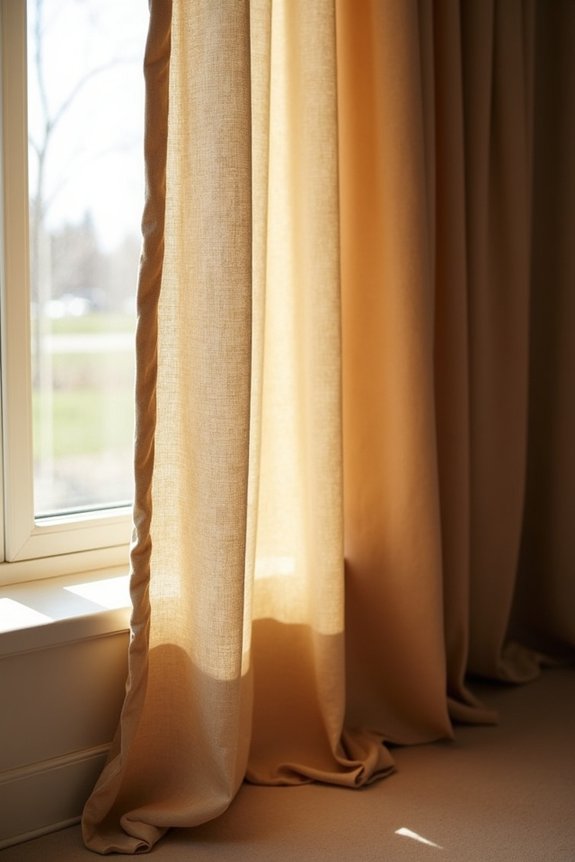
If you’ve got curtains that’re too long and you’d rather skip the sewing needle, iron-on fusible tape is an effective option for getting the job done quickly. You’ll measure from your rod down to where you want the hem to hit—whether that’s kissing the floor or floating an inch above it—then fold your fabric at that exact spot and slip the tape along the crease before heating it with an iron to seal it permanently. Once you press that folded edge and hang your panels back up, you’ll have a clean, nearly invisible hem that’ll hold up through regular washing and wear.
Iron-On Fusible Tape Method
Want to hem your curtains without touching a needle? Iron-on fusible tape is a practical option. This no-sew method works well for lightweight fabrics, creating a precise hem that’s virtually invisible.
Here’s how to do it: First, measure and mark your desired curtain length carefully. Then fold the fabric to form the hem at that measurement. Next, position the iron-on fusible tape along the fold line. Using steady heat and pressure, seal the tape completely—this creates a durable bond without sewing.
The finished height looks clean and professional on lighter materials. However, this method works less effectively on heavy or textured fabric weight. Always test your curtain length after hemming to verify it matches your preferred float, kiss, or break-length target.
Measuring And Folding Technique
Measuring and folding your curtains correctly is where the real precision happens, and taking your time here is worthwhile. Getting your hem length right impacts how your curtains drape.
Here’s my approach to measuring curtains with iron-on bonding tape:
- Measure from your top-of-rod measurement down to your desired endpoint
- Subtract 0.5 inch for that perfect floor-kiss finish
- Mark your fold technique with a light crease
- Account for room height to maintain balanced proportions
Once I’ve measured, I fold the fabric carefully to create a crisp crease. Then I place the iron-on bonding tape along that fold line. Whether you’re aiming for a floor puddle or standard curtain length, this fold technique produces a beautiful hem hang every time.
Rod Placement Strategy: Hang High and Wide for Maximum Impact
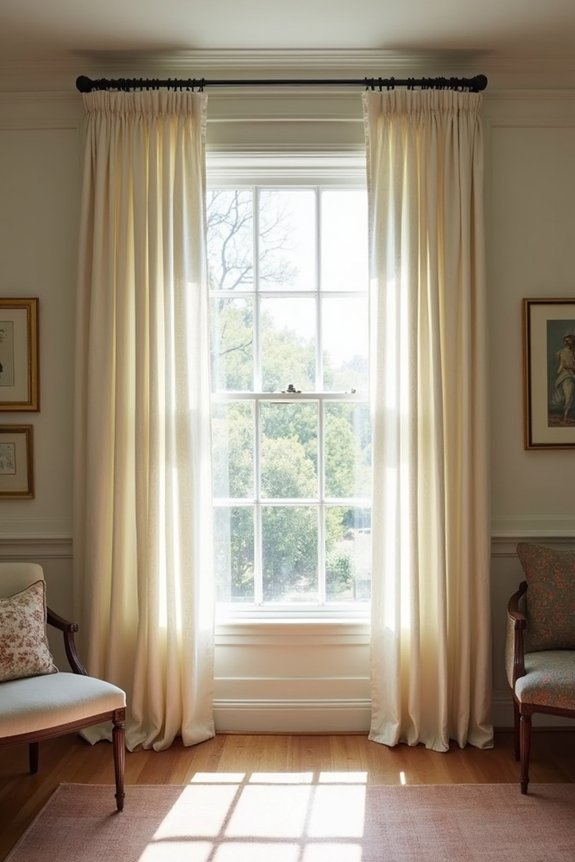
Ever notice how some windows seem to stretch toward the ceiling while others feel cramped and small? That’s the result of smart rod placement. When I hang curtains high and wide, I’m changing how the entire room appears. I position my rod 4 to 6 inches below the ceiling, extending 6 to 12 inches beyond each side. For very tall ceilings, I raise it 8 to 10 inches above the window frame instead.
This strategy works because it increases your window treatment’s impact. Your panel length adjusts accordingly—longer panels maintain floor-length proportions when rod height increases. I always mark my mounting brackets and center-point before installation, allowing for consistent alignment. The wider rod extension lets fabric fully clear the glass when open, visually broadening your entire window framing and ceiling height perception.
| Rod Height | Panel Length |
|---|---|
| 4-6″ below ceiling | Floor-length |
| 8-10″ above frame | Extra long |
| Standard window | Standard floor |
| Tall ceilings | Extended length |
| Low ceilings | Shorter panels |