I’ve found that getting rid of basement mold takes five key moves.
First, spray affected areas with a vinegar-borax solution, let it sit, then scrub with a stiff brush while wearing gloves and a mask.
Next, dry everything thoroughly using fans and a dehumidifier.
Then hunt down moisture sources—check for leaks around plumbing and foundation cracks.
Fourth, seal those entry points with concrete patching compound and plastic sheeting.
Finally, maintain humidity between 30-50% and inspect regularly for signs of return. Each step builds on the last for lasting results.
Step 1: Remove Basement Mold Using Safe Cleaning Methods
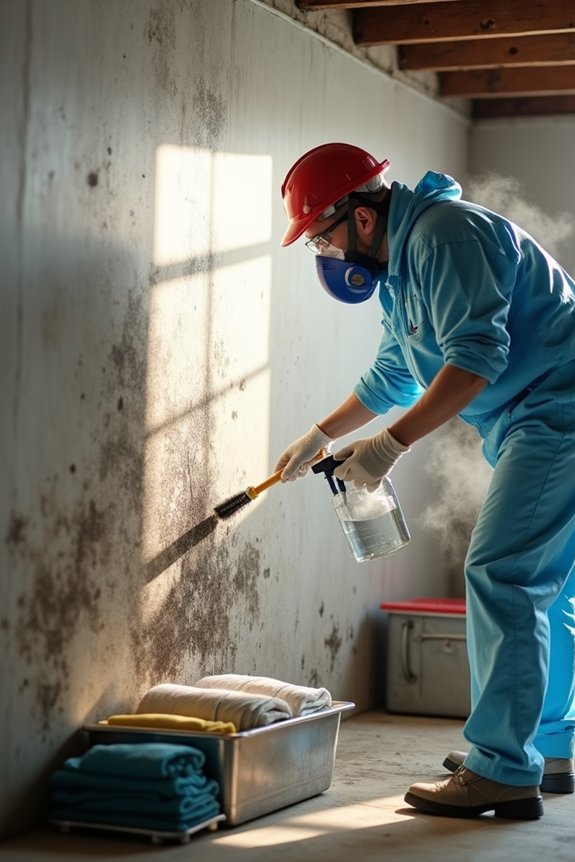
The safest way to tackle basement mold is to start with gentler cleaners before you even think about reaching for bleach. I learned this the hard way when bleach fumes gave me a terrible headache while I was cleaning my basement. Now I mix a cleaning solution using one-fourth cup vinegar, two cups water, and two cups borax. I dissolve the borax completely before applying it. You’ll want to wear rubber gloves and a respirator mask for protection. Spray your cleaning solution directly on the mold, let it sit for several minutes, then scrub with a stiff-bristled brush. Repeat this mold removal process as needed until the affected areas look clean. Finally, rinse thoroughly with clean water and dry everything completely.
Step 2: Dry Wet Surfaces and Increase Air Flow
Once you’ve scrubbed away the mold and rinsed everything clean, you’ll need to address the moisture remaining in your basement. Drying surfaces quickly prevents mold from returning, so act promptly.
| Drying Method | Time Needed | Best For |
|---|---|---|
| Towels | 30 minutes | Small areas |
| Fans | 2-4 hours | Large rooms |
| Dehumidifier | 24-48 hours | Long-term moisture |
| Open vents | Ongoing | Natural airflow |
| Combination | Fastest | Complete drying |
Open your basement vents and position fans to increase airflow throughout the space. Run your dehumidifier continuously to control moisture levels. Address damp spots immediately—they’ll invite mold back quickly. Fix any leaks causing moisture, then maintain steady dryness using your dehumidifier long-term.
Step 3: Find and Fix Water Leaks and Moisture Entry Points
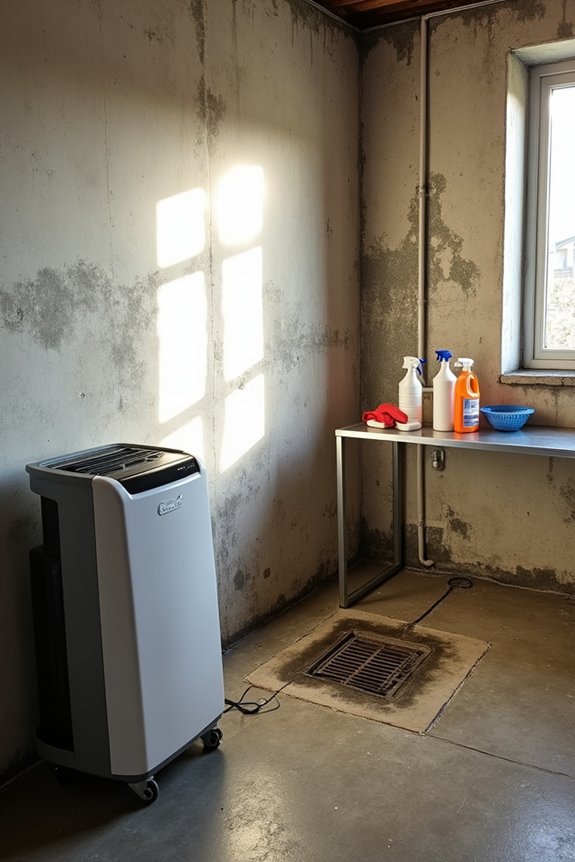
Why does mold keep coming back even after you’ve cleaned it? I’ve found that basement leaks are usually the culprit. You can scrub away mold all day, but if moisture keeps seeping in, you’re fighting a losing battle.
I inspect my basement’s plumbing, walls, and foundation carefully for hidden leaks that sustain damp conditions. I look for water stains, soft spots, and discoloration. Then I seal foundation cracks and improve drainage outside to stop groundwater intrusion.
For moisture entry points, I’ve sealed gaps around pipes and windows. These small openings let water sneak in during heavy rains. Once I addressed my water damage remediation needs, mold stopped returning.
Finding and fixing leaks stops mold at its source, giving you lasting results.
Step 4: Patch Cracks and Block Moisture Entry
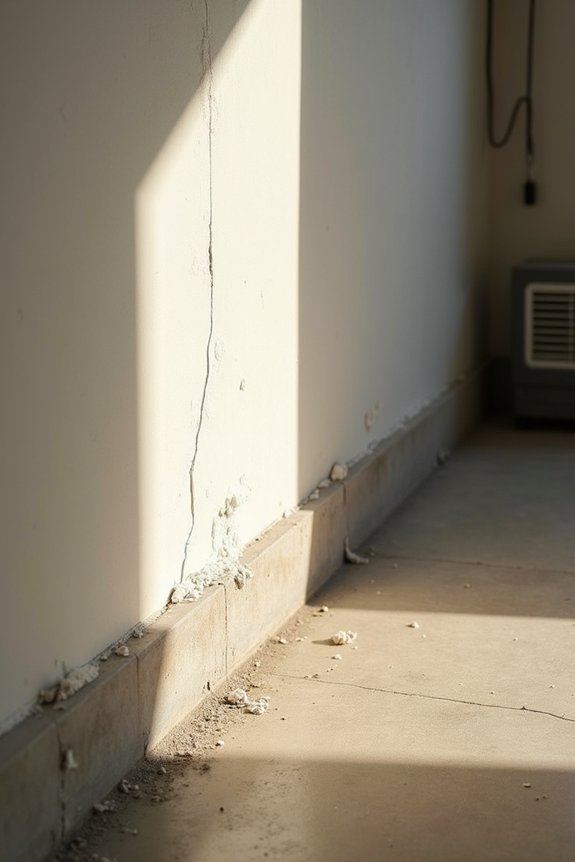
After you’ve fixed the active leaks, you’ll want to seal up the pathways that let moisture sneak back in. Patching cracks is important for effective moisture control and mold remediation. Small wall cracks need concrete patching compound applied with a putty knife, pressed firmly into the gap. For partial basements, I lay thick plastic sheeting directly over soil areas to block moisture migration from below. Large cracks between concrete blocks signal foundation issues requiring professional repair. After patching, I always recheck the areas within a few days to confirm they’re completely dry before resealing. This step prevents moisture from feeding mold growth and protects your basement long-term. Taking time here saves you from bigger problems later.
Step 5: Monitor Humidity Levels and Watch for Mold Recurrence
Since mold thrives in damp environments, keeping your basement dry doesn’t end when you’ve finished cleaning—it’s really just the beginning. You’ll want to maintain humidity control as part of your long-term strategy.
What I do to stay on top of mold recurrence:
- Install a dehumidifier and keep basement humidity between 30% to 50%
- Use hygrometers to monitor moisture levels weekly
- Document all remediation steps and dates in a notebook
- Inspect regularly for musty odors and water staining
- Adjust moisture control measures based on seasonal changes
Consistent monitoring prevents mold from returning. Check your dehumidifier settings monthly, especially during humid seasons. When you catch early signs of moisture intrusion quickly, you protect your basement investment and keep your family safe from health risks.