I’ll help you restore your office chair to like-new condition in just a couple hours.
First, gather your supplies—a vacuum, soft brush, microfiber cloths, and mild soap.
Remove dust and debris from every surface, paying attention to crevices and wheels.
Next, treat stains based on your chair’s material: use upholstery cleaner for fabric, mild soap for mesh, and a damp cloth for leather.
Finally, air-dry completely and apply a protective coating.
There’s much more to discover about tackling those stubborn stains effectively.
Gather Supplies to Clean Your Office Chair
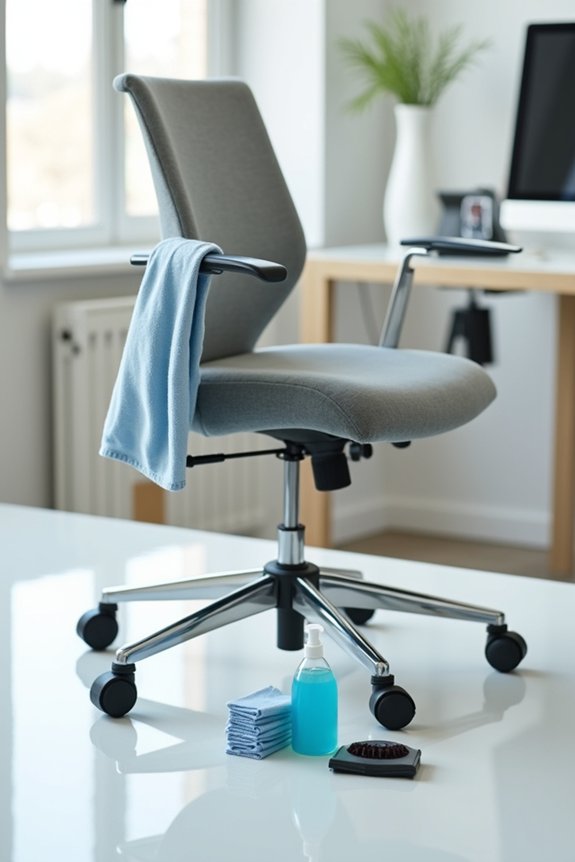
Before you tackle that grimy office chair, you’ll want to round up your cleaning supplies so everything’s within arm’s reach. I gather a vacuum cleaner with a brush attachment, dishwashing soap, and a spray bottle filled with warm water. Two to three microfiber cloths work well for wiping surfaces without leaving lint behind.
Next, I check my chair’s underside tag for cleaning codes—W, S, S/W, or X—which tell me which cleaners are safe to use. For fabric chairs, I grab an upholstery cleaner. For mesh chairs, I use mild soap solution. A soft brush helps me reach crevices, and compressed air tackles tight spots.
Having everything ready beforehand saves time and keeps me focused on the job at hand.
Remove Dust and Debris From Every Surface
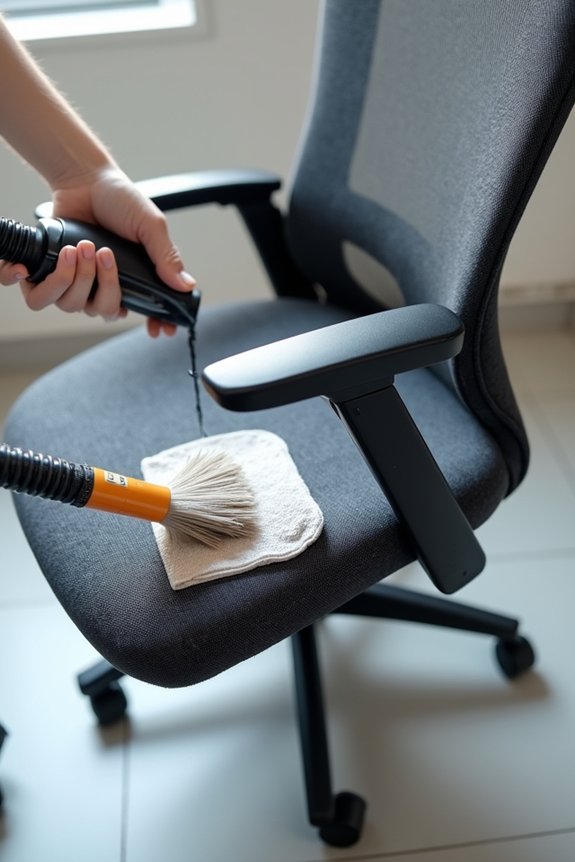
How much dust is really hiding in your office chair right now? I’ve discovered that dust and debris accumulate everywhere—in fabric crevices, mesh backing, and underneath cushions. Before applying any cleaning solution, I remove loose particles from all surfaces.
Here’s my approach:
- Use a soft-bristle brush with gentle, lifting strokes on the seat, back, and arms
- Vacuum upholstery and mesh with a hose attachment to eliminate lint and dust thoroughly
- Check chair legs and the base for hidden debris buildup
- Apply compressed air or a duster to reach tight crevices where dust settles
- Inspect wheel mechanisms and undercarriage for accumulated grime
Starting with this dry cleaning step prevents mud and protects your chair’s surfaces. I’ve found that removing debris first makes the entire cleaning process more effective and prevents dragging dirt across your upholstery.
Treat Stains Based on Your Chair’s Material Type
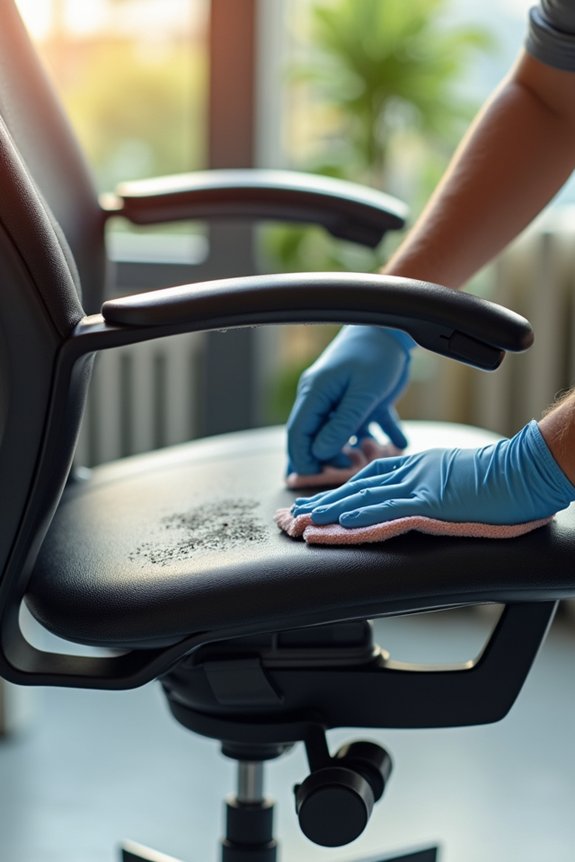
Once you’ve removed the dust, stain treatment becomes your next priority—and it’s where the material of your chair really matters. I’ve learned that testing any cleaner on an inconspicuous area first prevents damage later.
For fabric chairs, I use warm water with mild detergent or a dedicated upholstery cleaner, blotting gently rather than scrubbing. Leather needs a damp cloth with mild cleaner, followed by nourishing cream to prevent drying. Pleather requires warm water and dish soap—avoiding alcohol entirely. With mesh chairs, I apply mild soap solution carefully, avoiding soaking that damages the material.
After treatment, I always air-dry completely. Taking time to match your cleaning method to your chair’s material protects your investment and keeps everything looking fresh longer.
Tackle Stubborn Stains With Machines or Professional Help
What happens when your regular cleaning routine just isn’t enough? That’s when I turn to stronger solutions for my stubborn stains on fabric chairs.
Here’s what works when basic methods fail:
- Use a portable upholstery cleaner like the Bissell SpotClean Pro for deeper stains
- Spot-treat with rubbing alcohol or non-water-based solvent on hidden areas first
- Test any upholstery cleaner on an inconspicuous spot before applying it widely
- Call professional upholstery cleaning services for persistent stains you can’t remove
- Always allow complete air-drying before sitting down again
Machine-assisted cleaning delivers results I couldn’t achieve with warm water and mild detergent alone. When dealing with tough marks, professional help protects your fabric chairs from permanent damage. The key is acting quickly and knowing when to escalate your approach.
Dry and Protect Your Clean Chair
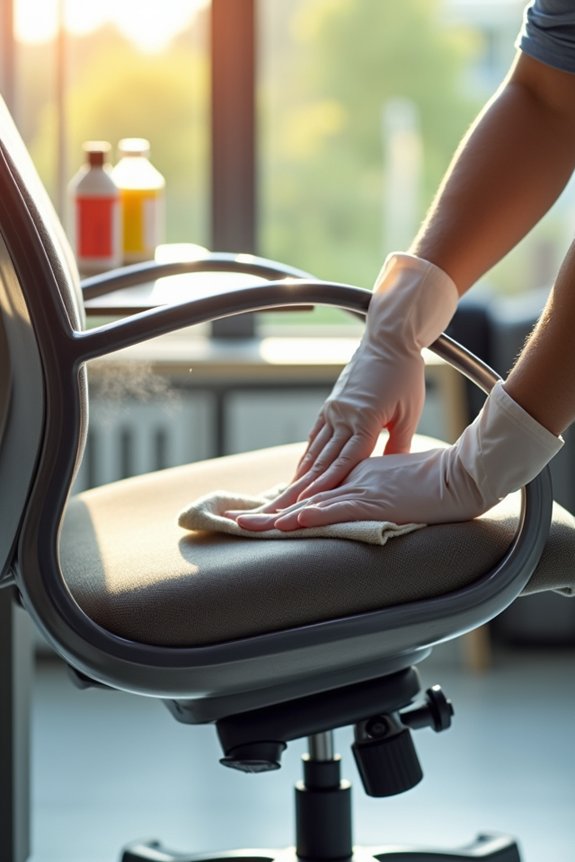
The drying phase is just as important as the cleaning itself, and I’ve learned this the hard way after letting a fabric chair sit damp for too long. I now use a cool hair dryer on my mesh chair to speed moisture removal, which takes about five minutes. For microfiber upholstery, I wipe away soap residue with a damp cloth, then dry thoroughly with a clean towel. I’ve found that air-drying works well too, though it takes longer. Once your chair is completely dry, apply a fabric protectant or leather conditioner. This protective coating shields your upholstery and prevents future stains. Waiting until your chair is bone-dry before using it protects against mildew and odors.