
I’ve found that office gnats disappear when you tackle their breeding grounds. First, let your plant soil dry completely between waterings—I water only when the top inch feels dry.
Second, clean drains weekly and remove food scraps daily.
Third, place yellow sticky traps near plants to catch adults.
Fourth, seal drains at night and empty plant saucers daily.
Finally, check your traps weekly to track progress.
Stick with these steps, and you’ll notice results within days—though there’s plenty more detail available about each method.
Step 1: Dry Out Plant Soil and Stop Watering So Often
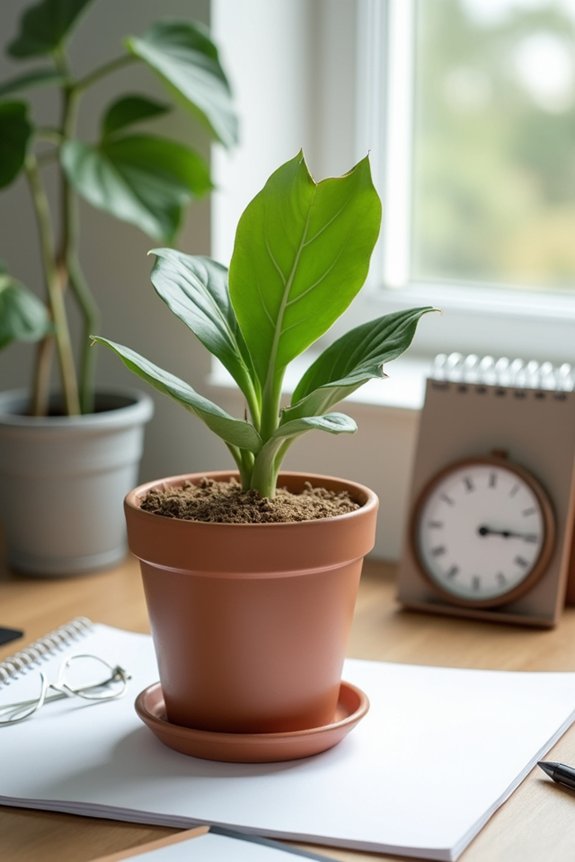
Why do gnats seem to multiply overnight in your office? The culprit is usually overwatering. I’ve learned that fungus gnats thrive in damp potting soil, and they’ll keep coming back if I don’t address the moisture problem first.
Here’s what I do: I let the soil dry out completely between waterings. I only water when the top inch of soil feels dry to my touch. This simple change works because fungus gnats need moisture to breed and survive.
I also allow my pots to drain fully for several hours after watering. I wipe the bottoms dry so water doesn’t pool underneath. By breaking the cycle of constant moisture, I’m stopping the gnats before they even start.
Step 2: Clean Up Food, Trash, and Drain Buildup Where Gnats Breed
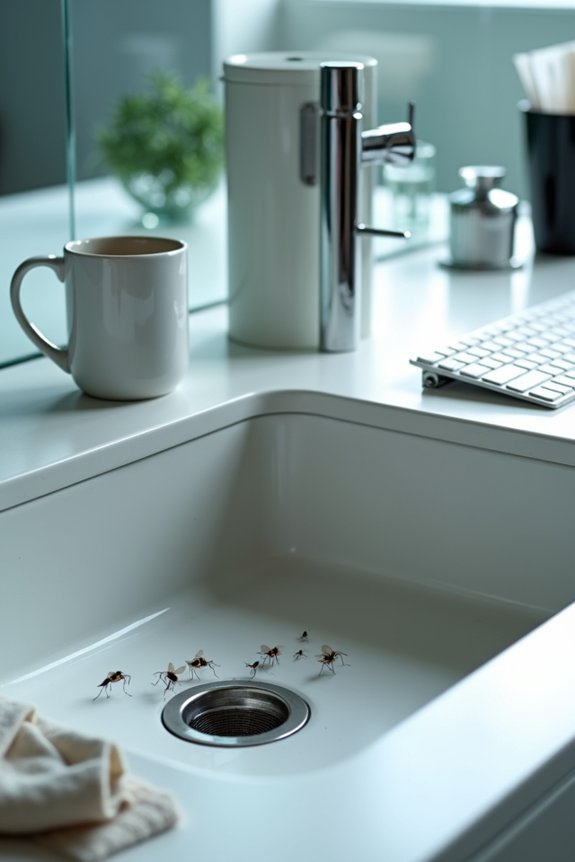
Once I’ve tackled the moisture in my plant soil, I’ve learned that gnats still find plenty of other places to breed—especially in my kitchen. I now clean my drains weekly with hot water and a brush to remove buildup where larvae thrive. I also take out trash daily so food scraps don’t accumulate and attract more gnats. In my office, I wipe down all counters, sinks, and surfaces to eliminate fruit fragments and sticky residues. I’ve stopped leaving dishes in the sink and fixed that leaky faucet that was creating standing water. By addressing drains, trash cleanup, and overwatering habits together, I’ve reduced gnat populations significantly. These steps work because I’m removing the conditions gnats need to survive and reproduce.
Step 3: Set Up Sticky Traps and Light Traps to Catch Adults Fast

While I’m working to eliminate breeding grounds, I’ve found that trapping adult gnats speeds up my results—and I can see the difference almost immediately. I place yellow sticky traps near my plant bases and infested areas to intercept gnats as they fly from soil. I’ve also started using blue light traps, which attract adults effectively and help me monitor how many gnats I’m actually dealing with.
Here’s what I’ve learned: these traps don’t solve everything alone. They catch visible adults, but new generations keep emerging from the soil. That’s why I pair my traps with soil drying and drainage improvements. I replace my traps every few weeks because they fill up quickly. Together, this two-part approach—eliminating breeding spots and catching adults—gives me real control over my gnat problem.
Step 4: Seal Drains and Remove Standing Water Gnats Use to Hide
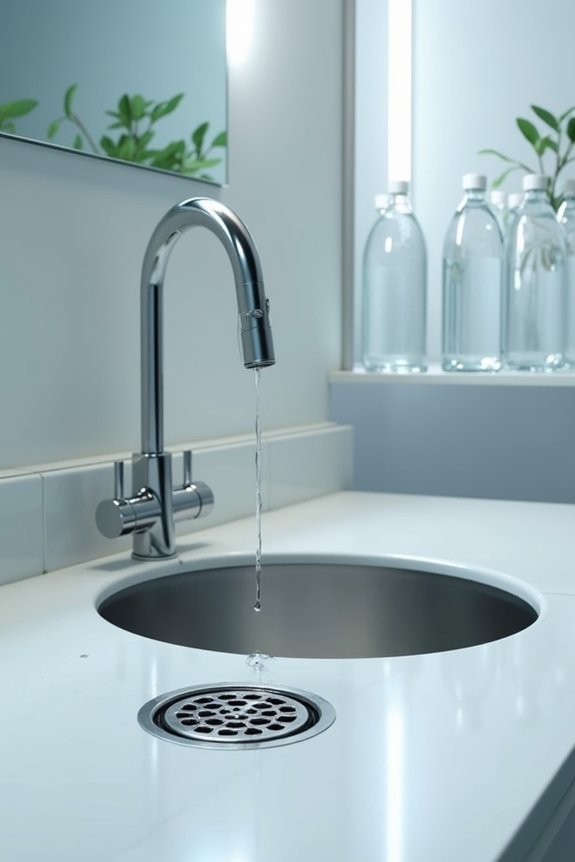
Because gnats breed in moist environments, I’ve discovered that eliminating water sources around my office makes a real difference in stopping their life cycle. I started by sealing my drains with tight-fitting plugs at night, which blocks gnats from entering through plumbing. Then I tackled standing water—I emptied plant saucers daily and wiped down sink edges where moisture collects. I also fixed a leaky faucet that’d been creating persistent puddles. Removing these breeding grounds alongside drain maintenance cut my gnat problem significantly. You’ll notice results within days when you eliminate the moisture they depend on. It’s one of the most effective steps because you’re attacking their source directly, not just catching adults.
Step 5: Check Your Progress Weekly and Adjust Tactics as Needed

How do you know if your gnat-fighting efforts are actually working? I check my sticky traps weekly to count trapped adults. When I see fewer gnats stuck each week, I know my strategy’s working. I also inspect plant soil for fresh larvae and damp spots where they breed.
If gnats persist after two weeks, I adjust tactics. I might combine approaches—using mosquito bits for larvae while treating soil with hydrogen peroxide. I rotate between methods because gnats can adapt. I let the top 1–2 inches of soil dry between waterings, then monitor progress again.
Documenting what works matters. When I track which combinations reduce gnat numbers fastest, I build confidence in my system. You’ll find the right approach through patient observation and smart adjustments.