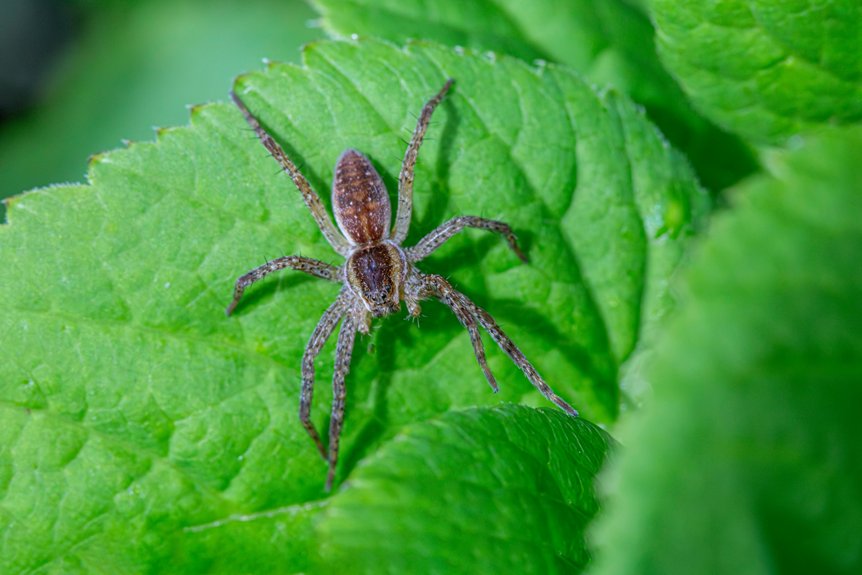
I’ve successfully eliminated basement spiders by targeting three things they need: moisture, hiding spots, and food. First, I ran a dehumidifier to keep humidity below 50%, which reduces the insects spiders eat. Then I decluttered—moving boxes twelve inches from walls and vacuuming corners to eliminate webs and egg sacs. Finally, I sealed foundation cracks and gaps around doors with caulk. These three steps work together, and there are additional strategies involved when you explore the specific details.
What Attracts Spiders to Your Basement
Why do spiders seem to love basements so much? I’ve learned that basements create the perfect spider habitat. They’re dark and quiet, which spiders need for building webs and laying eggs. The moisture down there attracts smaller insects like springtails and gnats, giving spiders a reliable food source. I’ve noticed that forgotten cardboard boxes and cluttered corners provide ideal hiding spots where spiders feel safe. Basements also draw larger prey such as moths and mosquitoes, making hunting easier for spiders. Limited airflow and ongoing dampness keep the air humid, preventing spiders from drying out. These conditions make basements ideal for spider survival and reproduction. Understanding what attracts spiders helps you tackle the problem effectively and reclaim your basement space.
Control Moisture and Humidity First
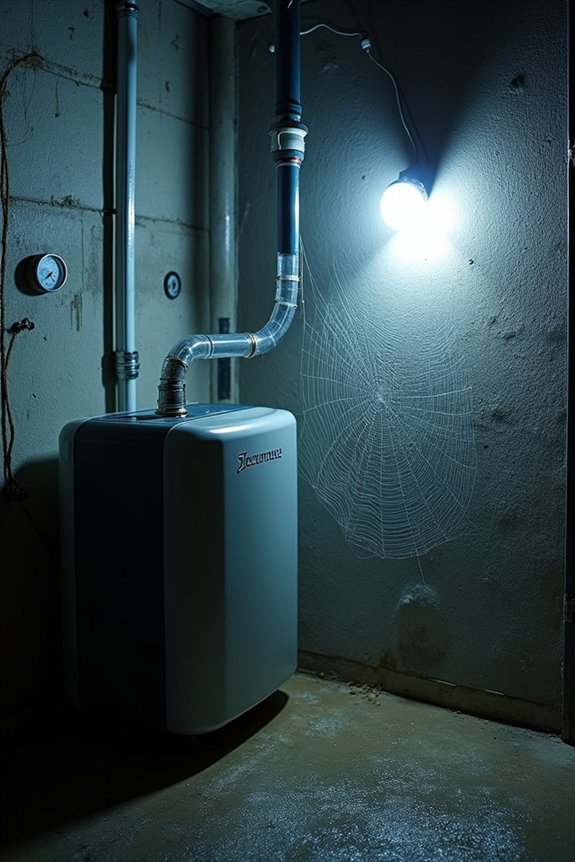
Now that you understand what draws spiders into your basement, it’s time to eliminate the conditions that make it so inviting—and that starts with moisture control. Running a dehumidifier keeps humidity below 50%, creating an environment where spiders and their insect prey simply don’t thrive. Route your dehumidifier’s drain line to a floor drain or outside so you’re not manually emptying it constantly. Next, fix any leaks from gutters, downspouts, and vents, directing water at least 5 feet from your foundation. Inspect damp walls and condensation-prone areas regularly. When you combine humidity management with web removal and perimeter treatment, you’ll see lasting spider reduction in your basement.
Declutter and Eliminate Spider Hiding Spots
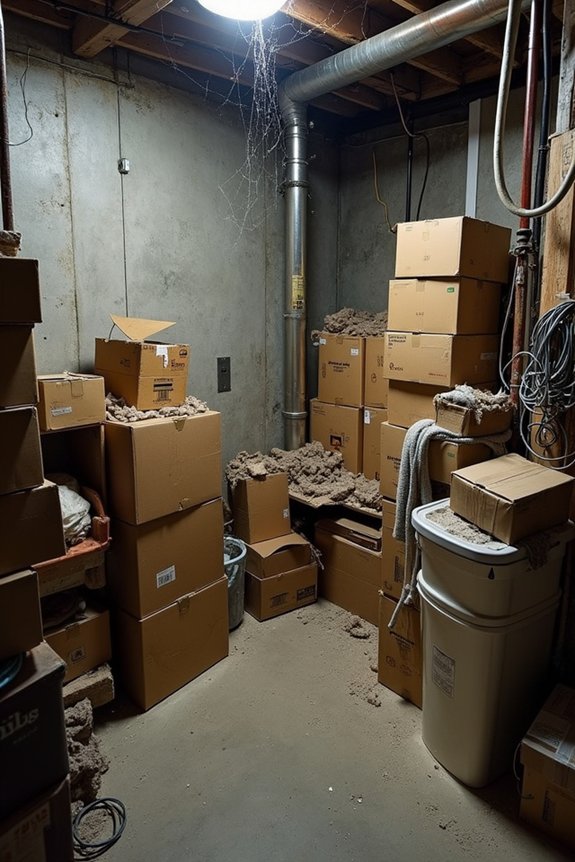
I’ve found that cardboard boxes and cluttered storage create perfect hideouts for spiders, so clearing them out is one of the most effective steps you can take. When I moved my stored items at least 12 inches away from basement walls and off the floor onto shelves, I noticed fewer webs within weeks. This simple reorganization cuts off the spiders’ access routes and removes the dark, protected spaces where they like to build their homes and lay eggs.
Remove Cardboard And Clutter
One of the quickest ways to invite spiders into your basement is to leave cardboard boxes and clutter lying around. I’ve learned this the hard way. Spiders love hiding in these spaces, and they’ll use them to rest and lay eggs. When I decluttered my basement, I noticed how many webs disappeared almost immediately.
Here’s what I did to reclaim my space:
- Replaced all cardboard boxes with plastic, sealable bins to prevent moisture and mold
- Removed stacked items near walls and under stairs where spiders nest
- Vacuumed corners and joist bays to eliminate existing webs and egg sacs
Decluttering disrupts established spider territories, forcing them to relocate. You’ll also remove their web-building anchors. This simple step creates an unwelcoming environment that works better than any chemical solution I’ve tried.
Organize Storage Away From Walls
Moving your stored items away from basement walls helps with spider control. When I pushed my boxes toward the center of shelves, I noticed fewer webs forming in those corners. Spiders in your basement love hiding behind items stacked against walls, so I create at least 6 inches of space between storage and wall surfaces.
| Storage Method | Spider Risk | Effectiveness |
|---|---|---|
| Items against walls | High | Low |
| Shelved 6″ from walls | Low | High |
| Elevated plastic bins | Low | High |
| Floor storage | High | Low |
I’ve found that organizing storage this way disrupts their hiding spots. By keeping everything lifted and separated from walls, I’m making my basement less inviting for spiders while gaining easier access to my belongings.
Seal Cracks, Gaps, and Entry Points
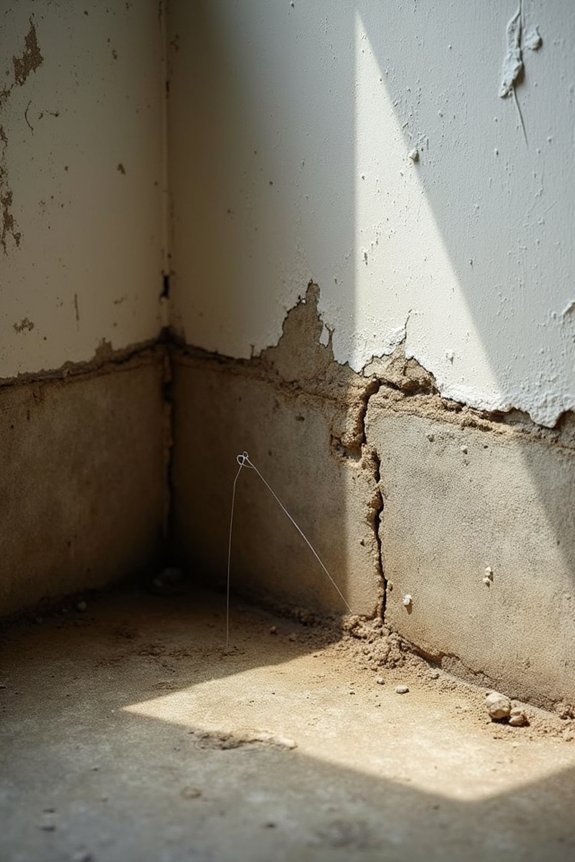
Your home’s foundation and exterior walls are like a sieve if they’re full of cracks and gaps—spiders slip right through them. Sealing these entry points reduces spider entry into your basement.
Start by inspecting your foundation carefully. Look for any visible cracks around the foundation line where spiders commonly enter. Here’s what I recommend:
- Seal cracks around your foundation with concrete caulk or weatherstripping
- Close gaps around doorframes and windows using foam sealant or caulk
- Inspect exterior siding for imperfections and seal any openings you find
After sealing these vulnerable spots, you’ll notice fewer spiders appearing indoors. Consider hiring professionals for thorough sealing work—they’ll provide long-lasting protection. This approach makes your basement less welcoming to these unwanted visitors.
Cut Off the Spider Buffet: Reduce Prey Insects
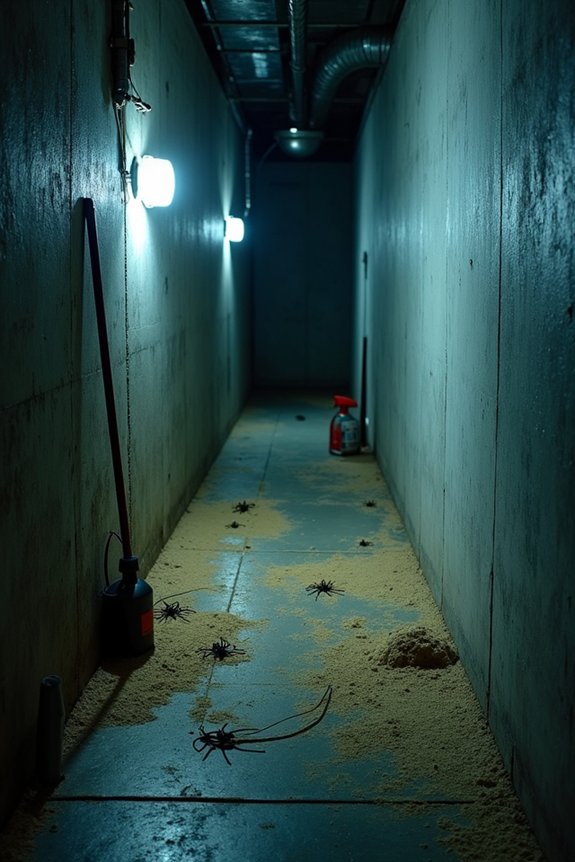
I’ve found that spiders won’t stick around if there’s nothing for them to eat, so I focus on eliminating the insects they depend on by reducing moisture, removing mold and fungus, and getting rid of standing water or damp areas where their prey thrives. When I noticed gnats and springtails clustering near a corner of my basement that stayed wet, I ran a dehumidifier to bring the humidity down to below 50%, and within weeks, those insects disappeared along with the spiders that hunted them. By tackling these three areas—moisture, food sources, and the conditions that support mold—you’re directly starving out the spiders’ buffet before they ever settle in.
Eliminate Moisture And Humidity
Why do spiders keep coming back to your basement? They’re hunting the insects that thrive in damp environments. Controlling basement humidity is key to eliminating their food source.
Here’s what I do to dry out my space:
- Install a dehumidifier and keep basement humidity at or below 50%, which starves out moisture-loving springtails and fungus gnats that spiders feed on.
- Route drain lines properly to a floor drain, preventing damp hotspots where insects breed.
- Fix moisture sources by sealing foundation cracks, extending downspouts at least 5 feet away, and regularly drying crawl spaces and areas around utility hookups.
When I addressed these moisture issues, I noticed fewer insects appearing. Without their food supply, spiders naturally move elsewhere.
Remove Insect Food Sources
Once I realized spiders weren’t the real problem—their food supply was—everything clicked into place. When I removed cardboard boxes and clutter from my basement corners, I noticed fewer insects lingering there. Spiders need moths, mosquitoes, and silverfish to survive, so eliminating these insects starves them out.
I started by vacuuming regularly to disrupt insect habitats and web-building sites. I sealed cracks around pipes and foundation gaps where insects enter. I also fixed a small leak near my water heater, which reduced the damp conditions that attract moisture-loving bugs.
Control Mold And Fungus
mold and fungus in my basement weren’t just unsightly—they were actually feeding the spider population indirectly. When I tackled moisture issues, I cut off the insects spiders depend on for survival.
- Use a dehumidifier to maintain humidity at or below 50%, which prevents mold growth and the springtails and fungus gnats that thrive in dampness.
- Fix leaks and improve drainage by directing downspouts at least 5 feet from your foundation to eliminate damp, mold-prone areas.
- Increase airflow with better ventilation so stagnant air doesn’t promote fungal growth and insect activity.
I also removed moldy materials like damp cardboard regularly. By controlling mold and fungus, you’re shutting down the spider buffet. It’s one of the most effective strategies I’ve used.
DIY Repellent Sprays (Vinegar, Citrus, Mint)
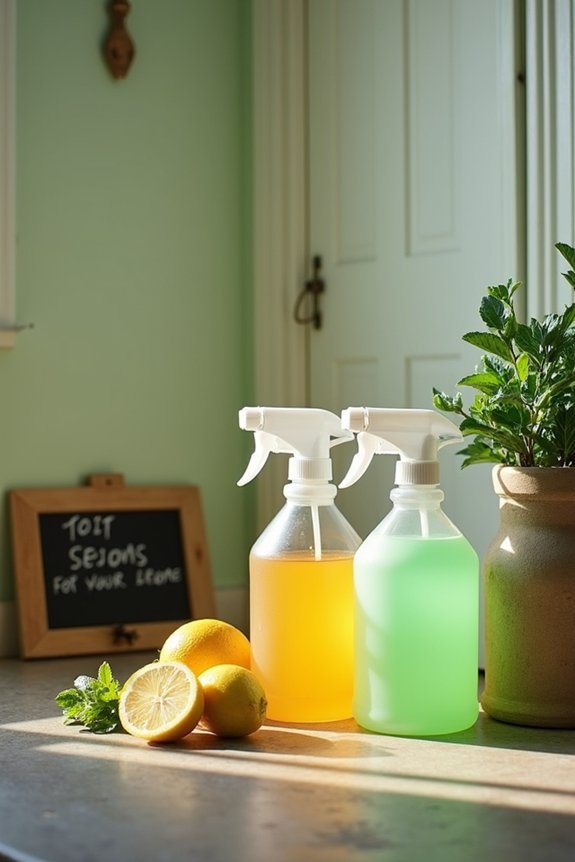
Natural sprays can be your first line of defense against basement spiders, and they’re easy to make at home. I’ve had success mixing equal parts vinegar and water in a spray bottle, then applying it around corners and entry points. You can also place citrus fruits in bowls on kitchen counters or scatter peels near basement openings—spiders dislike the smell. Peppermint essential oil diluted in water works similarly; I spray it in corners and consider growing mint near entries for ongoing protection. For lasting results, you’ll need to reapply these sprays regularly and maintain consistent cleaning. Pairing these natural solutions with decluttering efforts removes hiding spots, making your basement less inviting to spiders. Together, these approaches create a comprehensive defense.
Apply Diatomaceous Earth and Essential Oils

Have you considered using diatomaceous earth as a powerful addition to your spider-fighting toolkit? I’ve found that combining DE with essential oils creates an effective one-two punch against basement spiders.
Diatomaceous earth combined with essential oils creates an effective one-two punch against basement spiders.
Here’s what I recommend:
- Mix 1 tablespoon of food-grade DE with water and spray along corners, baseboards, and entry points where spiders hide
- Apply diluted peppermint essential oil around basement entrances and dark spaces to repel activity
- Reapply both treatments after cleaning or rain to maintain their effectiveness
When I use DE, I’m careful to avoid inhaling the powder and always choose food-grade varieties. I’ve noticed that pairing these treatments with decluttering and moisture control works best. These methods aren’t quick solutions, but they’ve reduced spider presence in my basement over time.
Secure Basement Doors, Vents, and Screens

While diatomaceous earth and essential oils help reduce spider populations, they won’t stop spiders from entering your basement in the first place. You’ll want to seal your entry points where spiders sneak inside. Inspect all gaps around basement doors, windows, and vents, then seal them with silicone caulk or weatherstripping. Install door sweeps to block the space underneath doors. Check that all window and vent screens are intact—torn screens near utility rooms let spiders slip through easily. Consider upgrading to fine-mesh screens on basement vents to stop small insects that attract spiders. Replace damaged screens promptly. Combine these sealing efforts with yellow exterior bulbs or reduced lighting, which discourages insects from gathering near basement entrances. This two-part approach works better than relying on treatments alone.
Manage Outdoor Lighting and Landscaping
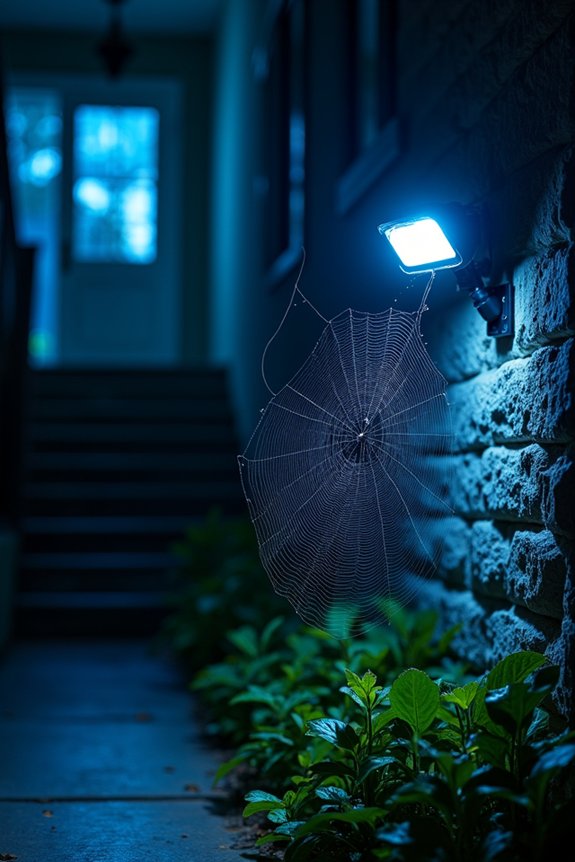
Why do spiders seem to gather near your basement entrance when the sun goes down? Outdoor lighting attracts insects, and spiders follow their food source right to your home’s foundation. Managing your outdoor environment reduces spider activity around your basement.
Here’s what I recommend:
- Switch to yellow insect-repelling bulbs or turn off unnecessary lights at night
- Trim landscaping and remove leaf piles within several feet of your foundation
- Direct downspouts at least 5 feet away from your home to reduce moisture
When to Call a Professional Pest Control Service
Sometimes your basement spider problem gets bigger than what you can handle alone, and that’s when calling a professional pest control service makes real sense. If spiders keep coming back after you’ve reduced moisture, sealed cracks, and removed clutter, it’s time to get expert help.
Professional pest control specialists identify problem areas you might miss and create customized eradication plans for your basement’s specific conditions. They’ll apply targeted treatments that work with your home’s layout rather than against it.
Local providers like Lawn Buddies offer perimeter pest control that builds a protective barrier around your foundation, stopping spiders before they enter. Most services recommend tri-annual visits for ongoing prevention, though moisture-prone basements may need more frequent treatment. You can start with a free inspection and online scheduling to begin protecting your space.
What Perimeter Treatment Does (and Costs)
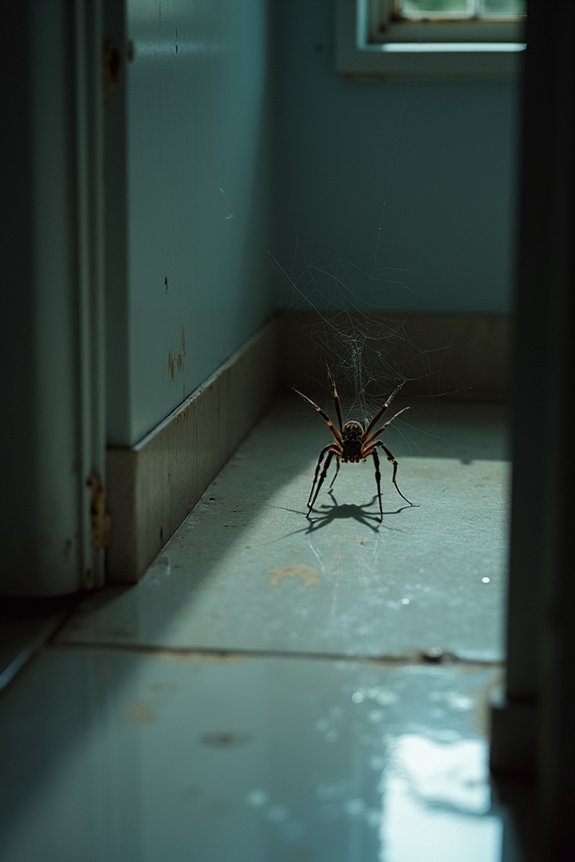
I’ve found that perimeter treatment offers a practical middle ground between doing nothing and calling for full interior extermination—it creates a chemical barrier around your foundation, sprayed about three feet up and six feet out, that stops spiders before they enter your home. The treatment stays effective for up to three months, and since it’s applied only outside, you don’t need to be there or worry about chemicals inside your living spaces. At around $69 to start, it’s an affordable option, especially when you schedule treatments regularly to keep spider populations down over time.
How The Barrier Works
Ever wondered how a simple spray around your foundation can actually stop spiders from getting inside? Perimeter pest control creates a protective chemical barrier that spiders won’t cross. Here’s how it works:
- Application coverage – Technicians spray three feet up your foundation wall and six feet outward into the soil, creating a complete perimeter shield.
- Chemical residue – The active ingredients remain potent for up to three months, continuously repelling spiders and other pests seeking entry points.
- Prevention focus – Rather than treating your home’s interior, this barrier stops spiders before they reach your doors and windows, lowering populations around your basement naturally.
This approach provides consistent protection for your home’s perimeter without disrupting your family’s daily routine.
Treatment Duration And Pricing
How long does a perimeter treatment actually protect your basement, and what’ll you spend? A single perimeter treatment typically lasts up to three months, giving you solid protection during peak spider season. Starting with one treatment costs around $69, which is reasonable compared to dealing with a full basement infestation.
What makes this practical is that you can bundle perimeter treatment into your regular lawn care visits. This way, you’re not scheduling separate appointments. Technicians spray about three feet up and six feet out from your foundation, creating a protective zone that catches spiders before they enter your home.
Since you’re avoiding indoor chemicals, you’re protecting your family while staying cost-effective. Many homeowners find that scheduling quarterly treatments keeps basements spider-free year-round.
Prevention Over Full Extermination
Rather than waiting until spiders have already moved into your basement, you can stop them at the source with perimeter pest control. This approach tackles the problem before it starts, focusing your efforts where they matter most.
Here’s what makes perimeter treatment work for you:
- Creates a protective barrier three feet up and six feet out from your foundation
- Keeps the treatment outside your home, so you’re not dealing with indoor chemicals
- Lasts up to three months per application, giving you consistent protection
You’re investing in prevention rather than scrambling for full extermination later. Starting around $69, perimeter pest control fits most budgets. I recommend bundling it with your lawn care schedule for convenient, ongoing spider prevention that keeps your basement spider-free year-round.
Are Basement Spiders Dangerous?
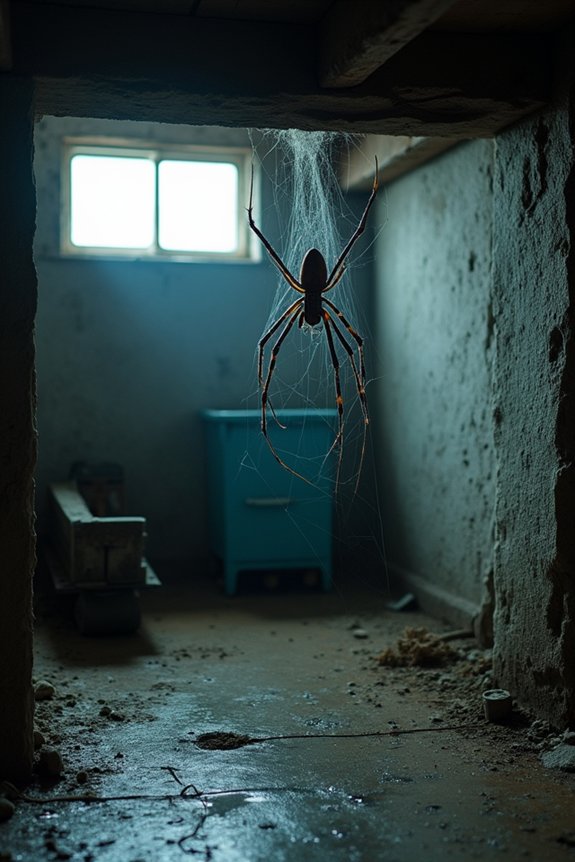
Most basement spiders won’t hurt you, though knowing that doesn’t always make you feel better when you spot one in the corner. Most basement spiders are harmless and actually help by eating insects. However, a few species like black widows can be venomous, so it’s worth knowing what you’re dealing with. Common basement spiders include cellar spiders, house spiders, yellow sac spiders, and wolf spiders—and they’re typically not aggressive toward humans. The real concern comes if you see multiple venomous species or experience recurrent bites. That’s when you’ll want to call a professional pest control company. A single spider presence doesn’t mean you’ve got a serious problem. Most often, basement spiders are just passing through, looking for food and moisture. You’re usually safe managing them yourself with basic prevention.
Quarterly Maintenance Checklist
Once you’ve confirmed that your basement spiders aren’t a serious threat, you’ll want to set up a system that keeps them from coming back—and that’s where regular maintenance comes in. I’ve found that staying consistent with spider control helps keep your space comfortable.
Regular maintenance and consistency are key to keeping spiders from returning to your basement.
Here’s what I do every quarter to maintain my basement:
- Schedule pest control visits to create a protective barrier around your foundation that lasts up to three months
- Vacuum webs from ceilings, corners, and joist bays to disrupt spider territories and prevent re-webbing
- Trim landscaping, remove leaf piles, and clear debris several feet from your home to eliminate hiding spots
I also keep my basement humidity at or below 50% using a dehumidifier. This combination prevents spiders from establishing themselves again.