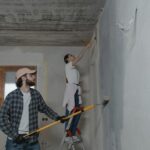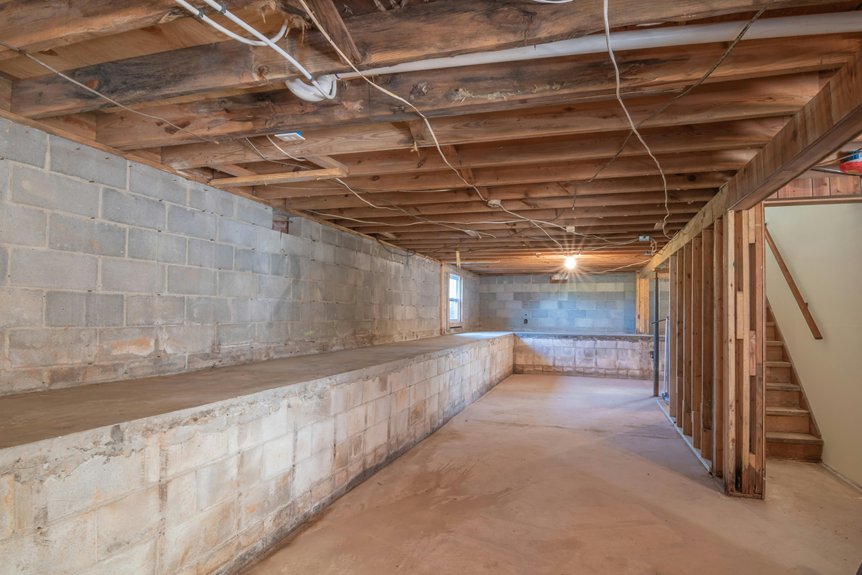
Soundproofing your basement ceiling starts with checking your joists can handle the weight, then sealing cracks with acoustic caulk.
Wrap noisy pipes and ducts next.
Install resilient clips spaced 16 inches apart along joists, attach hat channels, and layer mass-loaded vinyl underneath.
Add two layers of drywall with Green Glue between them—use two quarts per sheet.
Fill cavities with dense insulation, then finish with permanent drywall or removable panels.
Finally, seal any remaining gaps around windows and outlets.
Each step builds on the last for effective noise reduction.
Step 1: Evaluate Ceiling Load Capacity and Identify Noise Pathways
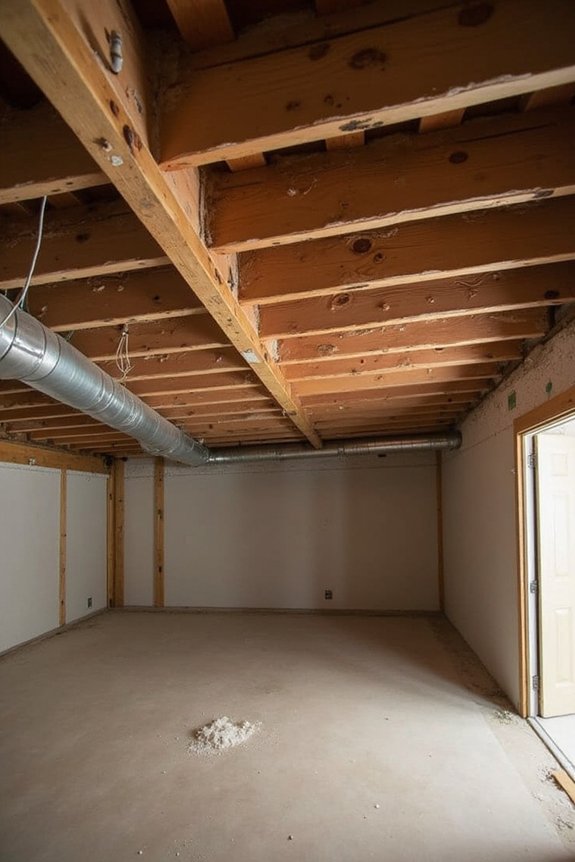
Before you pick up a single sheet of drywall, you’ll want to figure out two critical things: whether your ceiling can actually handle the weight you’re about to add, and where exactly the noise is coming from. Start by checking your joist spacing and assessing your ceiling load capacity—multiple drywall layers and MLV add real weight. Next, identify your noise pathways by walking through your basement and listening carefully. Notice where airborne sound enters through gaps and cracks in existing structures. Check for impact noise traveling through joists and mechanical sounds from ducts or pipes. Map these routes on paper. This foundation guides everything that follows: where you’ll seal, which decoupling options you’ll choose, and how you’ll place damping materials strategically.
Step 2: Seal Gaps, Cracks, and Electrical Penetrations
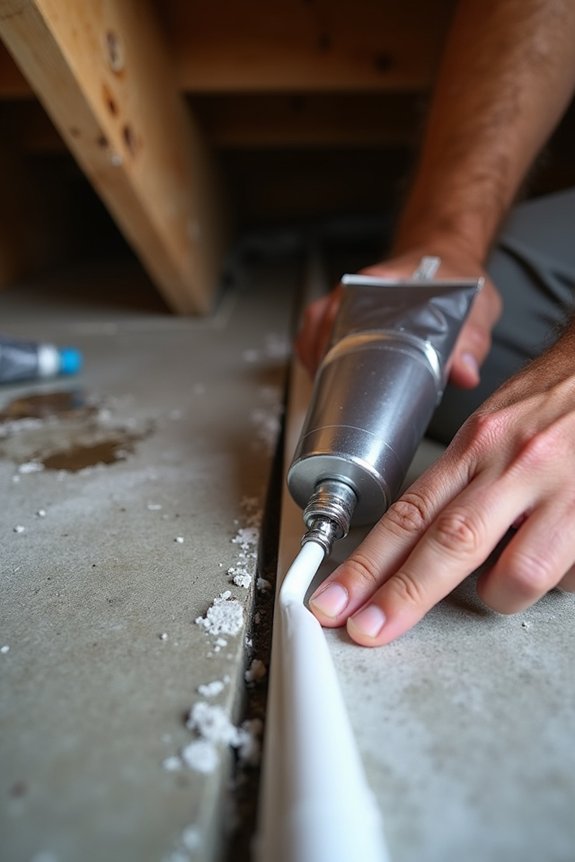
Now that you’ve mapped your noise pathways, it’s time to plug them—literally. Here’s how sealing gaps and cracks improves your soundproofing basement ceiling project.
| Target Area | Material | Coverage |
|---|---|---|
| Subfloor cracks | Acoustic caulk | 100+ sq ft per tube |
| Window frames | Acoustic caulk | Perimeter sealing |
| Door openings | Acoustic caulk | Around frame edges |
Start by applying acoustic caulk around electrical penetrations where wires pass through. Focusing on subfloor cracks between rooms above prevents sound from slipping through upper levels. Use a caulk gun for control. Gap sealing costs under one hundred dollars for most basements, eliminating expensive labor. This step enhances your overall soundproofing when combined with decoupling and mass measures. You’re building momentum toward a quieter space.
Step 3: Insulate Pipes and HVAC Ducts
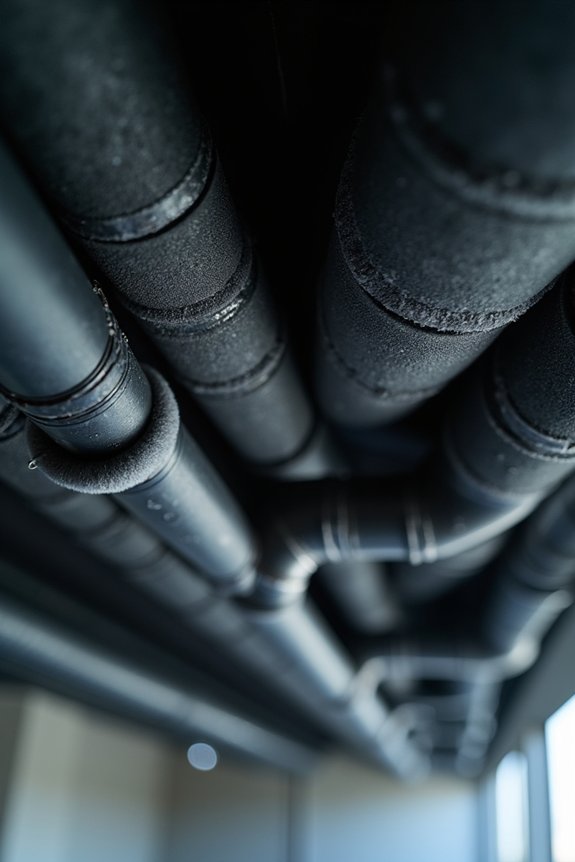
I’ve found that pipes and HVAC ducts running through basement ceilings are often the biggest noise culprits, transmitting vibrations straight into your living spaces above. You’ll want to wrap these with acoustic foam or fiberglass sleeves—I use 1-inch thick wrap, which handles most residential systems—and then pair it with inline silencers installed directly into your ductwork for dual noise reduction. This combination stops the banging and humming at the source, so you’re not fighting sound that’s already traveled through your walls.
Identify Hidden Noise Pathways
Ever wonder where that banging sound’s really coming from when your furnace kicks on? Hidden noise pathways within your basement ceiling are often the culprits behind those mysterious clangs and vibrations. You’ll want to trace your mechanical wrap solutions through wall cavities and behind masonry to pinpoint problem areas.
Start by identifying these common noise sources:
- HVAC ducts vibrating against framing lumber
- Water pipes rattling inside wall spaces
- Furnace vibrations traveling through foundation connections
- Ductwork resonance amplifying through ceiling cavities
- Plumbing bangs from pressure changes
Using decoupling techniques alongside mechanical wrap interrupts vibration control pathways. By addressing these hidden routes first, you’ll prevent sound energy from traveling upward into living spaces above. This comprehensive approach targets noise at its source before it becomes a problem.
Wrap Pipes And Ducts
Where’s that metallic rattle coming from when your heating system runs? That’s likely your pipes and ductwork transmitting vibrations through your basement ceiling. Wrapping these with soundproofing materials makes a real difference. You’ll want to cover every exposed section—bends, transitions, and joints included—since sound leaks right through gaps. Foam pipe wraps or acoustic blankets secured with tape provide complete coverage. For maximum effectiveness, pair the wraps with inline silencers fitted directly into ducts. This combination tackles both airborne and structure-borne noise. When you add insulation inside joist cavities alongside the wraps, the improvement becomes noticeable. It’s straightforward work that quiets your basement when systems run.
Install Acoustic Silencers Effectively
Now that you’ve wrapped your pipes and ducts, it’s time to add inline silencers—the acoustic mufflers that’ll reduce the noise traveling through your HVAC system. Pairing silencers with your duct wraps creates effective vibration isolation and maximizes soundproofing ceiling performance.
Place silencers strategically at transition points where ducts pass through walls or ceilings. This stops HVAC noise before it leaks into living spaces.
Key installation steps:
- Position silencers at duct branches and bends
- Combine with mass-loaded vinyl for enhanced attenuation
- Coordinate with hard-witting insulation layers
- Match silencer diameter to your ductwork precisely
- Align placement with overall ceiling treatments
When you layer acoustic silencers with duct wraps and structural damping, you’ll notice reduced noise levels. Your basement ceiling will be a quieter space.
Step 4: Install Resilient Sound Isolation Clips
I’ve found that resilient sound isolation clips work well for basement ceilings because they break the direct connection between your drywall and the joists, which stops vibrations from traveling straight through the structure. When I installed them on my own basement project, I spaced them about 24 inches apart along each joist and then attached hat channels to the clips—this combination creates an air gap that reduces both impact noise from footsteps above and airborne sound. Getting the installation sequence right matters too: clips go on the joists first, hat channels come next, and then your drywall mounts to the channels, not directly to the framing.
Decoupling Vibration Transfer Effectively
Since vibrations travel directly through solid materials, you’ll want to break that connection before installing your drywall, and that’s exactly what resilient sound isolation clips do. These clips create an intentional air gap between your decoupled drywall and the joists above, effectively stopping vibration transfer at the source.
When you pair clips with hat channels, you’re suspending your entire drywall assembly. This suspension dramatically reduces structural vibration transfer throughout your basement ceiling.
Here’s what makes this approach work:
- Clips space evenly at each joist intersection for consistent decoupling
- Air gaps prevent direct sound pathways through structural connections
- Hat channels distribute weight while maintaining isolation
- Combined with damping compounds, clips enhance overall sound reduction
- Proper timing ensures maximum performance before final drywall layers
This layered approach results in a noticeably quieter basement.
Clips Reduce Structural Sound
How do you stop vibrations before they even reach your drywall? I install resilient sound isolation clips along my joist lines. These clips create an air gap that decouples drywall from the structure itself, interrupting structural sound paths before noise travels upward.
I space clips every 16 inches along each joist, mounting them firmly. Then I attach hat channels to the clips, forming a decoupled assembly that lets vibrations dissipate harmlessly.
| Component | Function | Benefit |
|---|---|---|
| Resilient Clips | Decouple drywall | Stops direct vibration transfer |
| Air Gap | Dampens sound | Reduces impact noise significantly |
| Hat Channels | Support structure | Creates continuous isolation layer |
When combined with mass and damping materials, this three-part approach works together effectively. Your basement ceiling becomes a functional sound barrier.
Installation And Spacing Guidelines
Now that you understand how clips work to stop vibrations, it’s time to install them correctly. Proper placement affects your decoupled ceiling’s performance.
Install Resilient Sound Isolation Clips at every joist intersection where you’ll attach hat channels. Here’s what I recommend:
- Space clips 16 or 24 inches on-center, matching your joist spacing exactly
- Secure each clip with appropriate screws driven straight into joists
- Avoid penetrating through to opposite drywall layers—this breaks isolation
- Double-check clip alignment before mounting hat channels
- Verify clips sit level and firmly before proceeding
Once clips are secure, you’ll attach hat channels across them, then mount your drywall. This assembly reduces both airborne and impact noise. Taking time here pays real dividends later.
Step 5: Layer Mass-Loaded Vinyl as Your Soundproofing Barrier
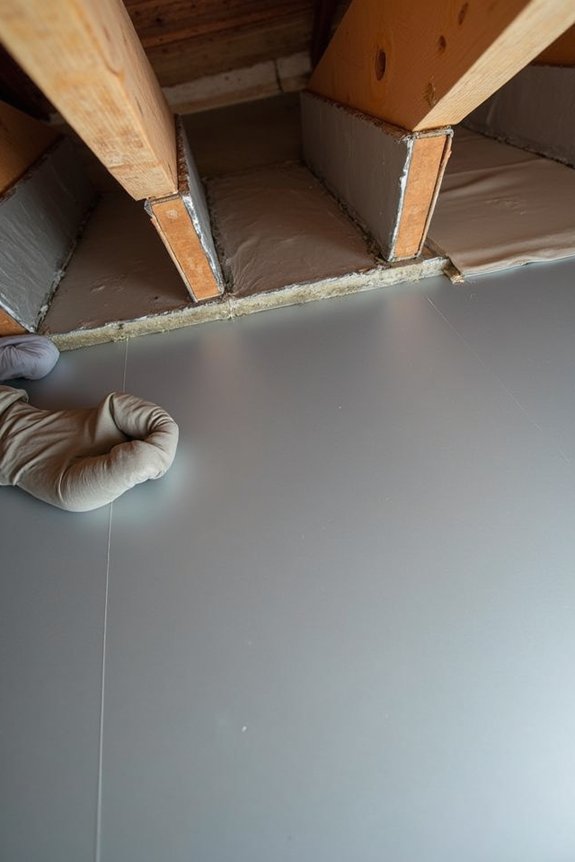
You’re ready to add one of the most effective sound-blocking materials to your basement ceiling: mass-loaded vinyl (MLV). AudioSeal® and similar products create a high-density barrier that stops airborne noise. Here’s what I do: I install MLV over RSIC clips or resilient channels to create a decoupled ceiling with an air gap—this separation is essential for blocking sound transmission. I then layer drywall over the MLV, applying damping compounds like Green Glue between each drywall layer. This converts vibrations into heat, reducing noise markedly. Before installing, I check my joist weight capacity to guarantee the structure can handle multiple drywall layers. I seal all seams and overlap edges carefully so sound can’t slip through gaps. This combination provides significant noise reduction results.
Step 6: Apply Green Glue Between Drywall Layers
With your MLV barrier and decoupling system in place, it’s time to add the damping compound that’ll really cut down on vibrations traveling through your ceiling. Green Glue is a viscoelastic material that converts vibrations into heat, which strengthens your damped assembly appreciably. I apply it between drywall layers to maximize soundproofing effectiveness.
Here’s what I do during installation:
- Spread Green Glue evenly across the first drywall layer in a crisscross pattern
- Use two quarts per 4×8 sheet for proper coverage
- Install the second drywall layer immediately after application
- Seal all subfloor joints and seams before layering begins
- Combine Green Glue with your decoupling system for superior isolation
This two-layer damped assembly tackles both airborne and impact noise, making your basement quieter.
Step 7: Mount Multiple Drywall Layers With Proper Spacing
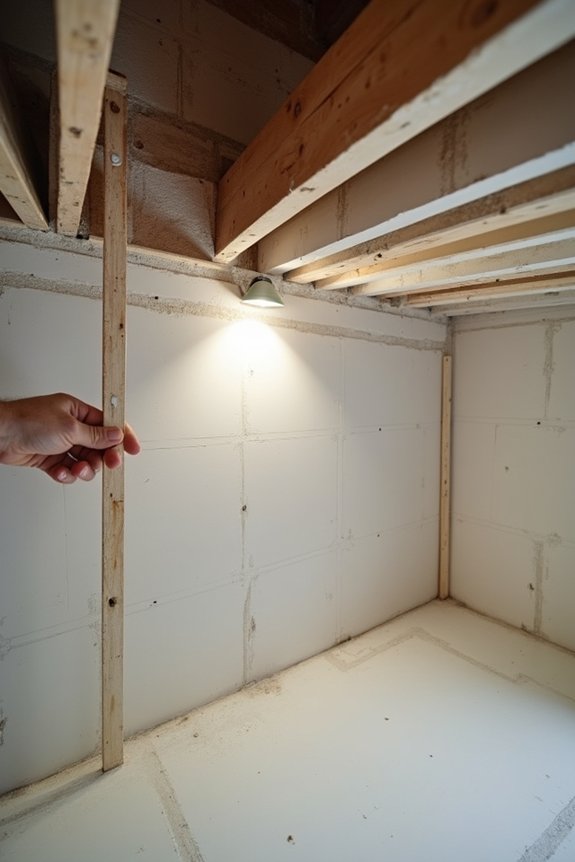
Once your decoupling system and Green Glue damping layer are in place, you’re ready to build up the mass that’ll stop sound in its tracks. I mount the first layer of 5/8-inch drywall directly over your resilient channels, securing it with screws spaced every 12 inches. Then I add Green Glue between this layer and a second drywall sheet, offsetting the seams so they don’t align. This staggered approach breaks the sound transmission path considerably. The decoupled ceiling now has real mass working with your damping layer. I repeat this process for two complete layers, creating a substantial barrier. Your sound reduction improves significantly when you combine mass, decoupling, and damping properly.
Step 8: Add Soundproofing Insulation to Block Airborne Noise
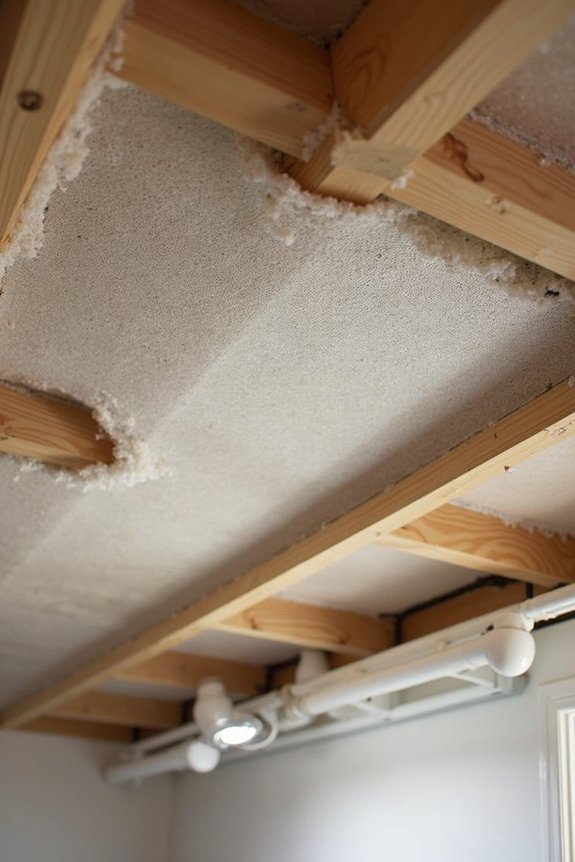
Now that your drywall’s secured, I’m going to show you how to fill those ceiling cavities with dense insulation that’ll trap airborne noise before it reaches your basement. You’ll want to use fiberglass or mineral wool batts—I prefer the denser varieties because they absorb sound waves better than standard pink insulation, and they’re worth the extra cost. Before you lay anything down, seal all those cracks and gaps between joists with acoustical caulk so sound can’t sneak through the gaps and undo all your work.
Dense Material Selection
How’d you like to stop sound before it even hits your new drywall? Choosing the right dense insulation matters for your basement ceiling project. You’ll want materials that actually absorb noise, not just fill space.
Here’s what I recommend considering:
- Dense insulation like mineral wool fills joist cavities and traps airborne sound effectively
- Fiberglass batts work well when installed snugly between joists without gaps
- Mass loaded vinyl adds weight to your assembly, blocking vibrations from traveling through
- Green Glue between drywall layers dissipates energy as heat, boosting performance
- Acoustic caulk seals every seam so sound can’t slip through edges
I’ve tested these combinations myself. When I layered mineral wool with mass loaded vinyl, the noise reduction was noticeable immediately. Dense materials work together, creating barriers that actually stop sound transmission before it becomes a problem upstairs.
Airborne Noise Absorption
Step 8 is where you’ll actually trap the sound that travels through the air from upstairs—and it’s one of the most effective parts of your whole project. Layering materials is important for success. You’ll install Mass Loaded Vinyl (MLV) first, then add dense insulation like mineral wool between your ceiling joists. The MLV blocks sound waves while insulation absorbs them. Next, attach resilient channels to your joists before hanging drywall layers. This creates an air gap that breaks the sound path. Finally, seal every gap with acoustical caulk around outlets and fixtures.
| Material | Purpose | Installation |
|---|---|---|
| MLV | Block airborne sound | Before insulation |
| Mineral wool | Absorb sound | Between joists |
| Resilient channels | Decouple vibration | Under drywall |
| Acoustical caulk | Seal air leaks | All gaps |
Step 9: Choose Between Permanent or Removable Acoustic Finishes
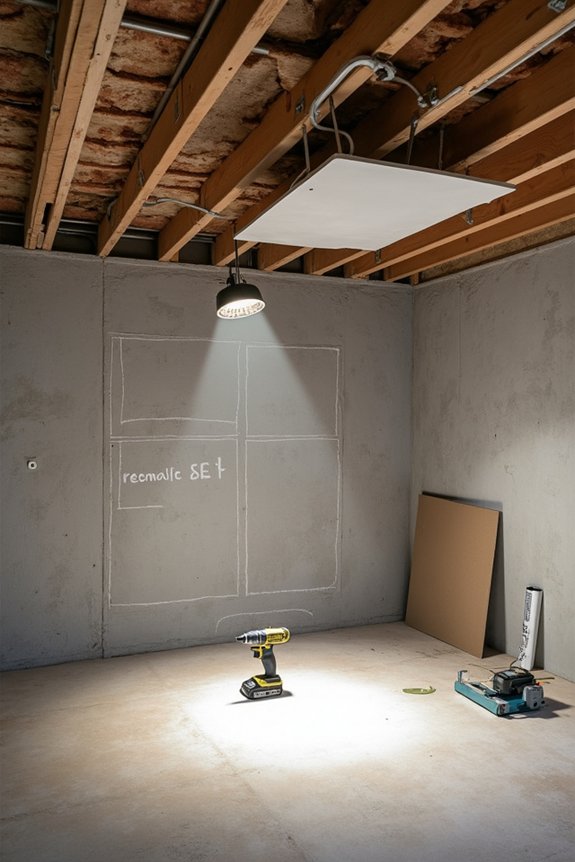
When you’re ready to finish your basement ceiling, you’ll face a meaningful choice between two different approaches: permanent installations or removable systems.
Permanent finishes work best if you’re committed long-term. You’ll layer drywall with Green Glue damping between sheets, creating a decoupled assembly that reduces sound significantly. This requires more work upfront but delivers superior results.
Removable options offer flexibility when uncertainty exists:
- Surface-mounted Acoustic Panels install without demolition
- Modular decoupled tiles allow future reconfiguration
- Resilient Channels reduce vibration transmission effectively
- No permanent structural changes needed
- Easier to upgrade or relocate later
Both approaches benefit from sealing gaps with acoustical caulk. I’d recommend removable systems for renters or those wanting flexibility, while permanent drywall setups suit homeowners prioritizing maximum sound reduction.
Step 10: Diagnose and Seal Remaining Noise Leaks
You’ve built your soundproofing system, but if you’re still hearing unwanted noise filtering through, there’s likely a leak somewhere. I listen carefully around windows, doors, and electrical outlets for audible air leaks. Using acoustical caulk, I seal these gaps systematically.
| Leak Location | Problem Type | Solution |
|---|---|---|
| Windows/Doors | Air leakage | Acoustical caulk |
| Electrical boxes | Penetrations | Putty pads |
| Duct penetrations | Airborne paths | Duct wraps |
I tackle one room at a time, prioritizing where drywall meets framing. After sealing each area, I test to verify sound reduction before moving forward. Persistent basement ceiling leaks at subfloor cracks and penetrations require pipe wraps and careful attention. Documenting my sealing results helps me track progress and plan staged improvements.