To turn on your gas fireplace, first identify your control type—wall switch, remote, or thermostat. Next, check that your gas valve handle points parallel to the pipe. Then, use your ignition method: for electronic ignition, turn the gas valve on and press the ignition button; for manual pilot lights, turn the knob to Pilot and hold the igniter button for thirty seconds. Adjust your flame height for steady, consistent burning. Finally, turn the gas knob to Off when you’re done. There’s much more to learn about safe operation and troubleshooting.
Step 1: Know Your Fireplace Controls Before Starting
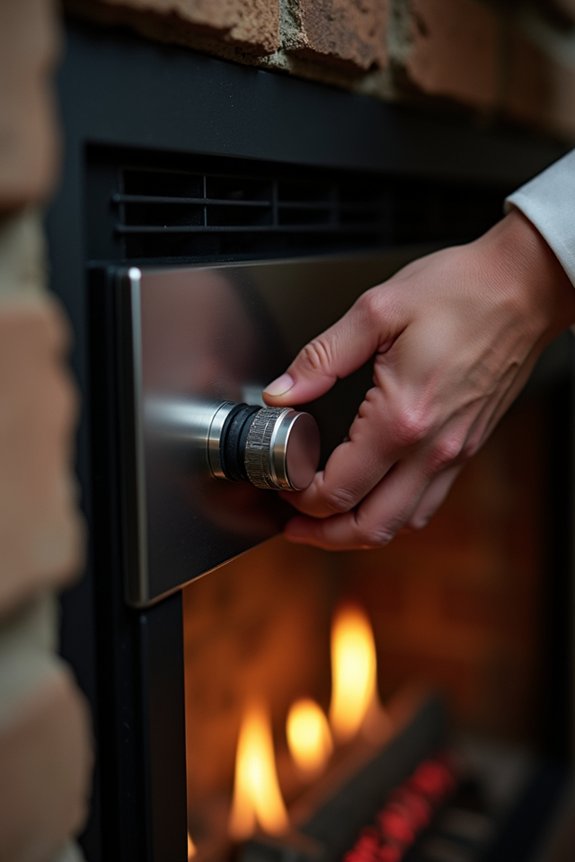
Before you light up your gas fireplace, spend a few minutes figuring out exactly how yours works. I learned this the hard way when I grabbed the wrong switch and nothing happened. Your fireplace uses one of three control methods: a wall switch, a remote, or a thermostat. Next, identify your ignition type. Some models have manual pilot lights you’ll light first, then switch to On for the main burners. Others feature electronic ignition that auto-ignites when you turn them on. Check your manual or look for labels near the controls. Knowing whether you’re working with a manual pilot or electronic system prevents confusion and keeps you safe. Take time now to locate your On/Off switch and understand your specific setup.
Step 2: Confirm Your Gas Supply Is On
Now that you’ve identified your fireplace’s controls, it’s time to make sure gas is actually flowing to your unit. I always check the gas valve first—it’s usually underneath or on the side of the fireplace. You’ll want to verify it’s in the open position. Then, I confirm the gas supply is active by testing other appliances nearby. If my kitchen stove or water heater works fine, I know gas is reaching that area.
What you should do:
- Listen for hissing sounds or smell for unusual odors near the gas line
- Check that the gas valve handle points parallel to the pipe (open position)
- Test another gas appliance to confirm active supply
If you smell gas, shut off the main valve immediately and call a professional. This straightforward check keeps you safe and ready to light your fireplace with confidence.
Step 3: Light Your Fireplace With the Right Ignition Method
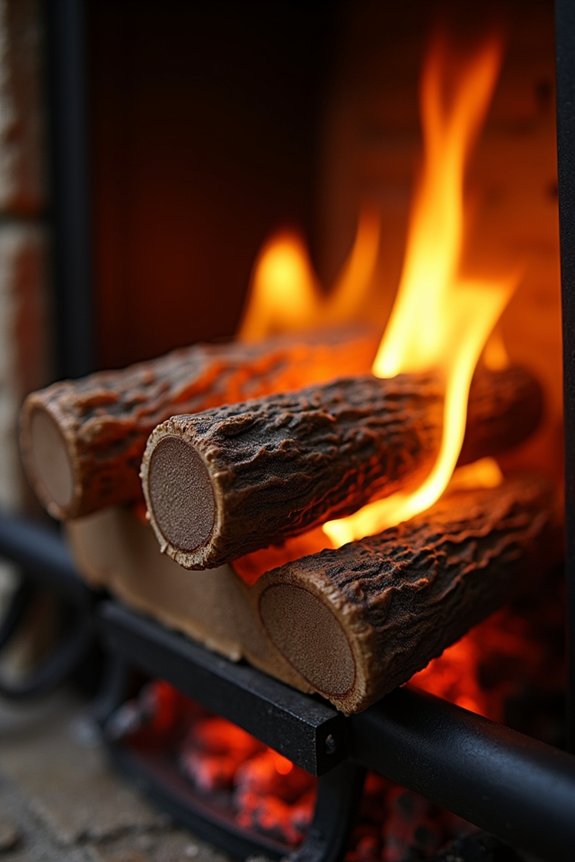
How you’ll light your fireplace depends entirely on what ignition system you’ve got, and I’ve found that identifying this upfront saves a lot of frustration.
Identifying your fireplace’s ignition system upfront saves considerable frustration down the road.
If you have an electronic ignition system like Proflame, simply turn your gas valve to On, then use your remote or push-button to activate ignition. Your pilot light ignites automatically within seconds. That’s it—no manual work needed.
For manual pilot light systems, you’ll turn the gas knob to Pilot, hold the igniter button for about 30 seconds until the pilot catches, then return the knob to On. This method requires a bit more hands-on involvement, but once you’ve done it once, it becomes straightforward.
Not sure which you have? Check your remote or owner’s manual first.
Step 4: Adjust Flame Height and Enjoy the Warmth
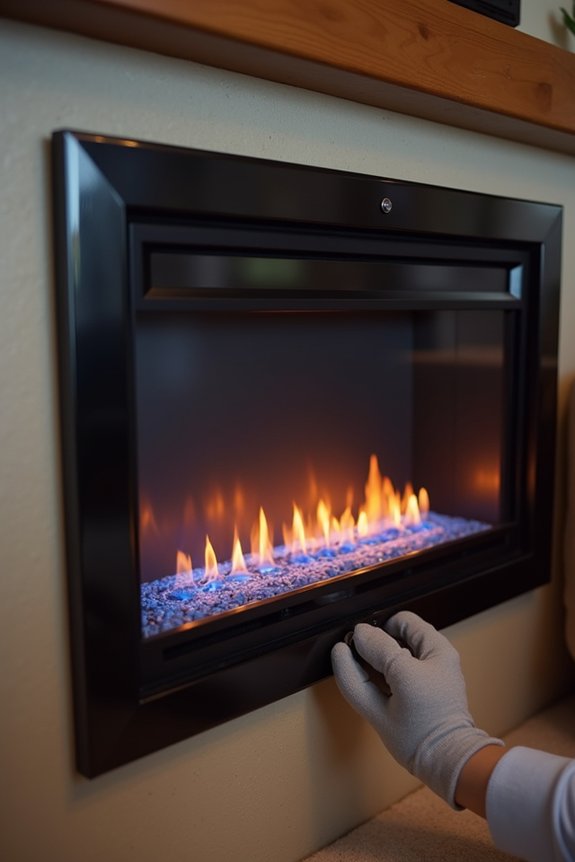
Once your pilot light’s caught and your fireplace is running, you’ll want to adjust the flame height to match your room and how warm you’d like it to feel.
Here’s how to dial it in:
- Use your flame height control or remote control to cycle through low, medium, and high settings until you find what works best
- Watch for a steady, consistent burn without flickering or excessive yellow tint, which signals the system’s running properly
- If you notice sputtering, reduce the gas flow slightly and wait a few minutes for everything to stabilize
Fine-tuning takes just moments, and you’ll soon settle into the warmth your space needs.
Step 5: Turn Off Your Fireplace Safely
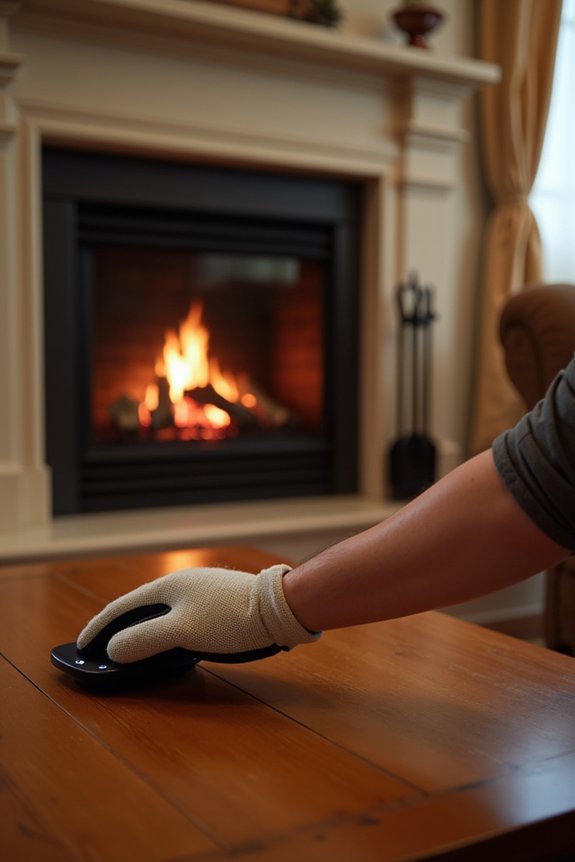
Turning off your gas fireplace properly is just as important as lighting it, and I’ve learned that taking a few extra minutes to do it right prevents problems down the road. First, I locate the gas control knob and turn it to the Off position to stop gas flow immediately. If my unit has a pilot light, I’ll switch off the pilot using either the off switch or handle. For my electronic ignition model with a remote, I verify the system is fully powered down by checking that no indicator lights remain active. I always let everything cool completely before touching anything. Finally, I keep the area clear of combustibles and verify that venting requirements are still met. This routine keeps my fireplace safe and ready for next time.