
Office chairs cost more because they’re engineered with aircraft-grade aluminum frames and high-density foam that actually support your spine’s natural curve. You’re paying for research-backed lumbar support, synchronized tilt mechanisms, and rigorous testing that cheaper chairs skip.
A premium chair lasts 10–15 years while budget models wear out in months, so you’re really buying one durable chair instead of replacing three disposable ones. The real savings come from reduced back pain, fewer sick days, and better focus at work. There’s much more to understand about which features actually justify the price.
Premium Materials: Why Quality Fabrics and Frames Cost More
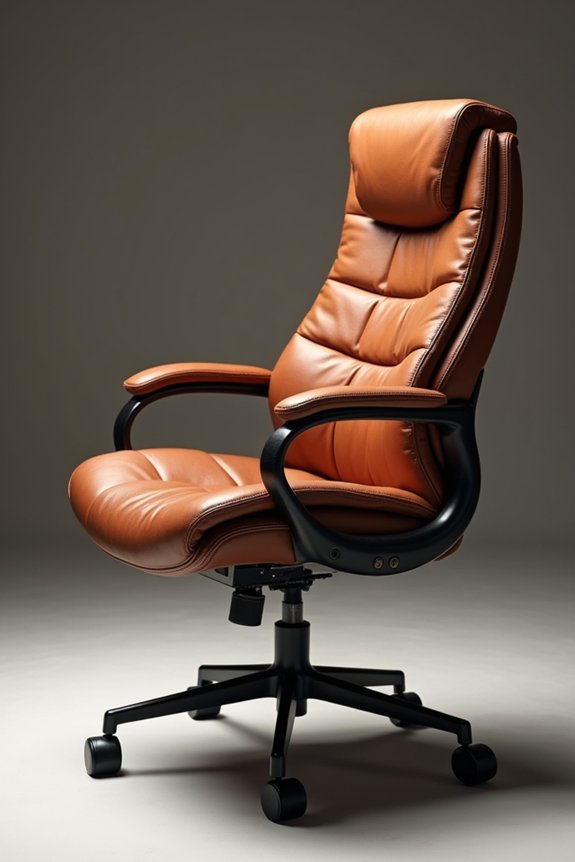
Ever wonder why a premium office chair costs three or four times more than a basic model? It’s all about the materials underneath. Premium materials like aircraft-grade aluminum frames and high-density foam significantly impact how your chair performs. Top-grain upholstery resists stains better than cheaper fabrics, keeping your chair looking fresh for years. I’ve noticed that durability matters when you’re sitting eight hours daily. Quality construction means your chair won’t sag or creak after six months. Premium chairs often come with longer warranties—typically 5 to 15 years—because manufacturers trust their materials. When you invest in superior fabrics and frames, you’re actually spending less per year of use. That’s practical budgeting that pays off.
How Ergonomic Engineering Reduces Your Back Pain and Injury

Why does your back hurt after a full workday, but a colleague sitting next to you seems perfectly fine? The difference often comes down to your chair’s ergonomic design. I discovered this when I switched to an adjustable chair with real lumbar support. Instead of generic padding, my new chair cradles my lower spine’s natural curve, reducing strain during eight-hour days.
What caught my attention was the synchronized tilt and dynamic lumbar tracking. When I lean back, the chair moves with me rather than fighting against my posture. The adjustable seat depth and height fit my frame precisely, eliminating pressure points.
These engineering features aren’t luxuries—they’re investments in long-term comfort. Higher-density foams maintain support without flattening. After three months, my back pain disappeared entirely, and I’m finally comfortable enough to focus on work instead of discomfort.
The Research Behind Every Design Feature That Supports You
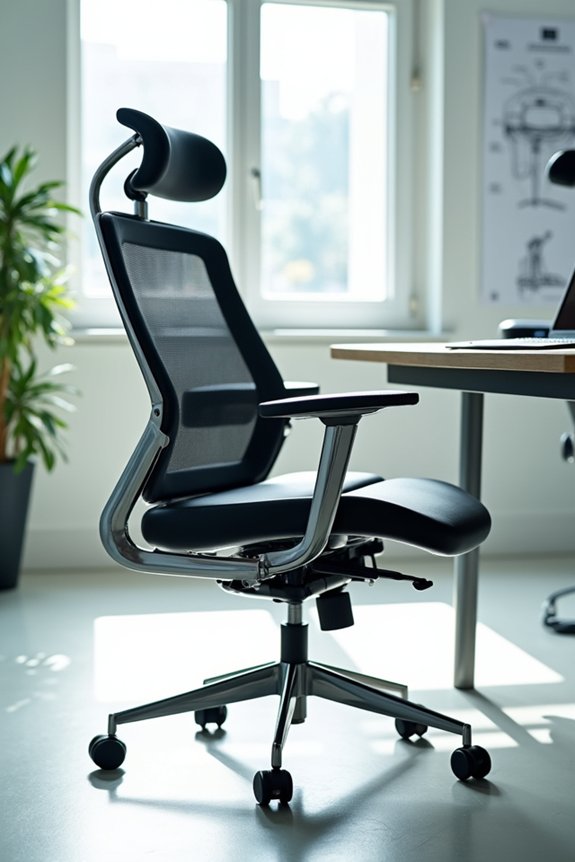
When you’re shopping for an office chair, you’re really paying for years of biomechanics research that shapes every single feature, from how the seat curves to support your spine’s natural alignment to how the armrests adjust to match your arm length. Manufacturers test these design elements rigorously—they measure lumbar support at different angles, certify materials like high-density foam and aircraft-grade frames against durability standards, and study how synchronized tilt mechanisms move with your body weight to prevent strain. Understanding this research foundation helps explain why a quality chair costs more, because you’re investing in engineering that’s proven to reduce back pain and keep your muscles from working overtime during those long workdays.
Biomechanics And Anatomy Research
Think about what happens to your spine the moment you sit down—your vertebrae shift, your discs compress, and your muscles either support you properly or they strain trying to compensate. Premium office chairs aren’t just comfortable; they’re engineered solutions grounded in biomechanics research. Manufacturers invest in studying how your spine maintains proper lordosis and pelvic tilt during sitting. They map muscle activation patterns to design lumbar support that actually works. Dynamic adjustments—seat height, depth, and synchronized tilt mechanisms—let you customize spinal alignment throughout your day. Clinicians validate features like weight-activated recline that optimize load distribution across your discs. When you invest in a quality chair, you’re buying years of research that improves how your body experiences sitting, reducing strain and protecting your long-term health.
Testing And Certification Standards
All that biomechanics research I just described—the lumbar curves, the synchronized tilts, the weight distribution—it’s worthless if the chair falls apart after six months. That’s why manufacturers put every chair through rigorous testing and certification before it reaches you.
Here’s what happens behind the scenes:
- Load testing pushes chairs to their limits with extreme weight
- Cycle wear testing repeats sitting motions thousands of times
- Long-term fatigue assessments simulate years of daily use
- Compliance checks verify safety standards are met
These aren’t quick checks. They’re thorough evaluations that take months. The documentation proves durability and justifies both the price tag and warranty. When you buy a certified chair, you’re buying confidence that it’ll support you reliably for years.
Why Hand Assembly and Quality Control Add to the Price
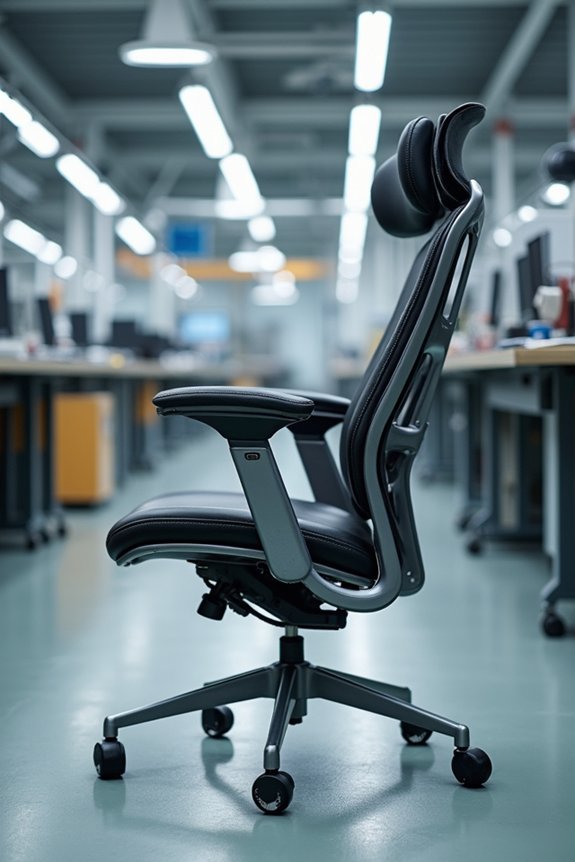
When you’re looking at a premium office chair that costs $1,500 or more, you’re paying for skilled workers who spend hours assembling intricate mechanisms like synchronized tilt systems and weight-sensitive recline functions that can’t be rushed. I’ve watched manufacturers put each chair through multiple inspection stages—dimensional checks, wear tests on the frame, and foam density verification—because one faulty joint or misaligned lumbar support means the chair fails within months instead of lasting a decade. These precision components, from aircraft-grade aluminum frames to reinforced joints, require meticulous assembly and tuning, so you’re investing in the labor and expertise that converts raw materials into a chair that’ll actually support your back through 40-hour work weeks.
Skilled Labor Requirements
Why do skilled workers matter so much in chair manufacturing? I’ve learned that quality office chairs depend entirely on craftspeople who understand precision work. Here’s what makes their expertise necessary:
- Hand assembly of synchronized mechanisms requires technicians trained to calibrate tilt and recline systems to exact tolerances
- Customization options demand skilled labor who match fabrics, finishes, and ergonomic adjustments across every component
- Quality control checks performed by experienced technicians verify comfort, durability, and safety standards
- Workforce training and retention represent ongoing labor costs that directly impact your chair’s final price
When I invest in a high-end chair, I’m paying for hands that’ve spent years mastering their craft. These workers don’t just assemble parts—they guarantee every synchronized movement works perfectly. That’s why labor costs form such a significant portion of premium chair pricing.
Precision Assembly Processes
Those skilled workers I mentioned aren’t just putting pieces together—they’re performing intricate assembly work that directly determines whether your chair’ll last five years or fifteen. I’ve seen the difference precision assembly makes firsthand. When technicians calibrate synchronized tilt mechanisms and weight-sensitive recline systems, they’re aligning each component with exact specifications. This meticulous hand-fitment takes time and expertise.
Quality control happens throughout production, not just at the end. Workers perform load testing to verify chairs support their rated weight—sometimes over 400 pounds—which means reinforced hardware needs precise installation. They check tension, fitment, and functionality repeatedly. This rigorous testing catches defects early, preventing costly returns and warranty claims. You’re paying for this comprehensive process because it protects your investment and guarantees reliability you can count on.
Rigorous Quality Standards
every premium office chair goes through multiple quality checkpoints before it ever reaches your desk.
I’ve learned that manufacturers invest heavily in rigorous quality control. Consider these steps:
- Raw material verification confirms high-density foams and aircraft-grade aluminum meet standards
- Hand assembly catches misalignments in synchronized tilt mechanisms and weight-activated recline
- Function testing validates every component works smoothly
- Final inspections verify abrasion-resistant upholstery durability
These processes aren’t shortcuts. They’re why extended warranties stretch 10–15 years. When you invest in a premium chair, you’re paying for documented reliability and peace of mind. That’s joining a community that values quality craftsmanship.
Durability: How a $800 Chair Beats Three $300 Chairs
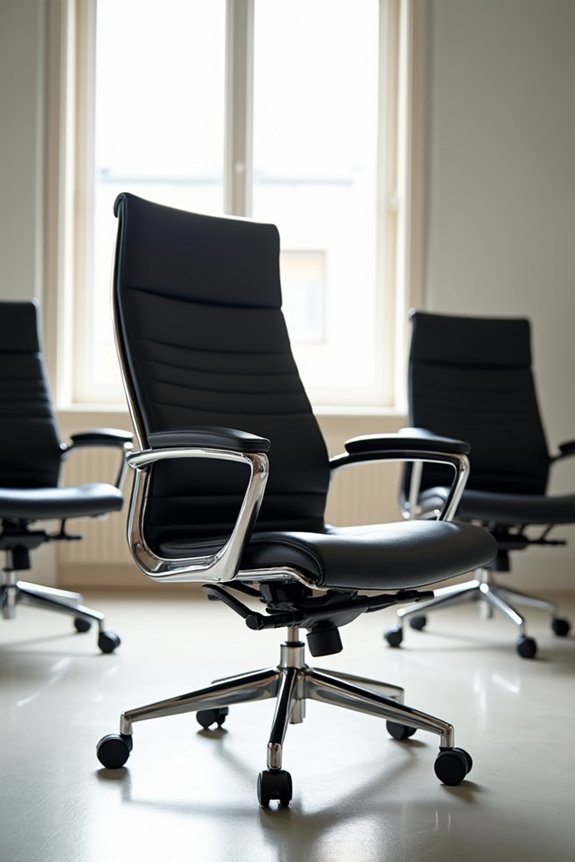
An $800 chair with aircraft-grade aluminum frames and high-density foam will outlast three cheaper $300 chairs stacked together. When I calculated the total cost of ownership, I realized premium durability matters. That $800 chair comes with a 10-year warranty, while budget models offer just two years. The advanced mechanisms—synchro-tilt, tension control, precision adjustments—maintain performance for years without degrading. Meanwhile, cheaper chairs develop fraying mesh and flattened padding within months. Top-grain leather and durable upholstery resist wear that mid-range fabrics can’t handle. You’re not just buying longevity; you’re investing in materials and mechanisms engineered to last. One quality chair beats replacing three disposable ones.
The Productivity and Health ROI That Justifies the Investment
your body doesn’t just complain—it costs you money. When I finally invested in an ergonomic chair with adjustable lumbar support, I felt the difference immediately. My back pain vanished, and I wasn’t losing focus by afternoon. That’s the ergonomic chairs ROI we’re talking about.
Consider these productivity gains and health benefits:
- Productivity gains of around 22% in some workplace settings
- Prevention of musculoskeletal disorders through proper seat depth and tilt coordination
- Fewer health-related absences and workers’ compensation claims
- Long-term cost savings that compound over a 5–15 year warranty durability period
Your expensive chair isn’t just furniture—it’s an investment in yourself. You’re reducing pain, boosting focus, and protecting your future health simultaneously.
Brand Reputation in Office Chairs: Paying for Proven Longevity
Why do we trust certain brand names when we’re dropping serious money on office chairs? I’ve learned that premium materials and ergonomic design from trusted brands like Herman Miller provide real value over time. When you invest in durability, you’re investing in longevity—these chairs often last 10-12 years with proper care. That extended warranty? It covers wear and tear, reducing replacement costs substantially. I experienced this firsthand: my budget chair needed repairs after three years, while my friend’s premium investment required minimal maintenance. Brand reputation reflects real R&D investments in biomechanics research and safety testing. You’re paying for proven performance and consistent quality, not just a name. That peace of mind matters when you’re sitting eight hours daily.
Warranties and Support: What Extended Coverage Actually Covers
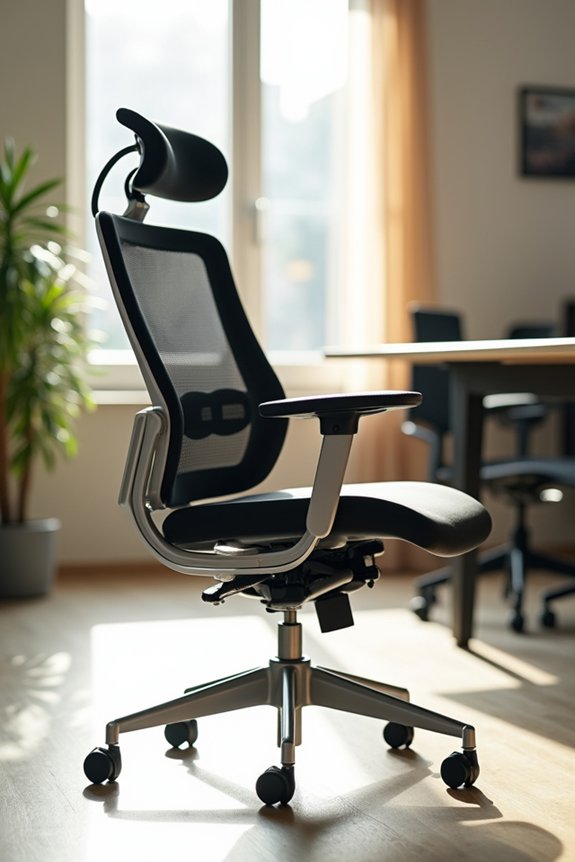
Beyond the brand name and materials themselves, what protects your investment is understanding what the warranty actually covers—and what it doesn’t.
Your real protection lies not in the brand, but in understanding exactly what your warranty covers and excludes.
When you’re spending serious money on an office chair, extended coverage becomes your safety net. Here’s what you’re actually getting:
- Defects in materials and workmanship—the chair’s frame or mechanisms failing unexpectedly
- Maintenance support that some brands bundle into their warranty packages
- Exclusions like wear-and-tear damage from daily heavy use or upholstery tears
- Specific claim processes you’ll need to follow when issues arise
Longer warranties often signal confidence backed by quality materials like aerospace-grade frames. Before you buy, read the exact coverage terms for your region. Understanding these details helps you feel secure in your purchase and know exactly what protection you’re actually paying for.
Choosing the Right Office Chair: Premium Features Worth Your Budget
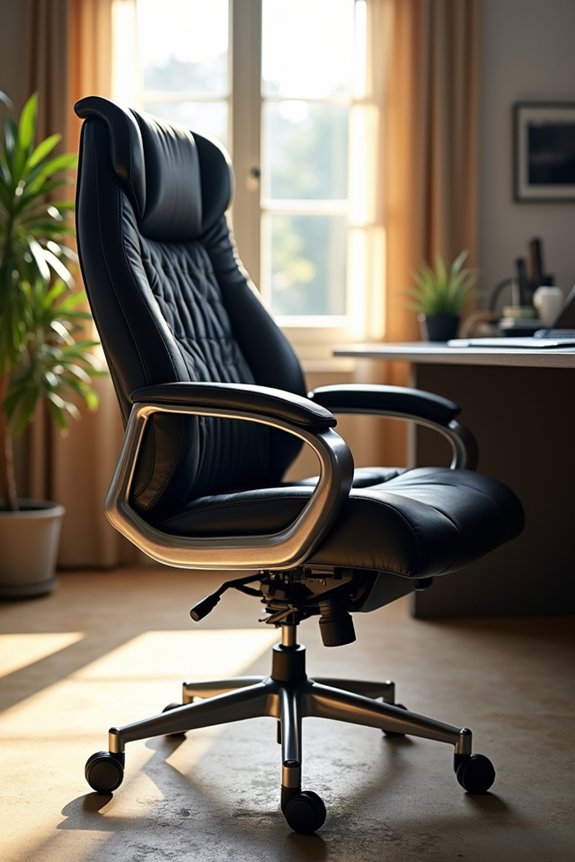
What separates a $300 chair from a $1,500 one isn’t just the price tag—it’s the engineering built into every component. Premium features like adjustable lumbar support and multi-directional armrests matter when you’re sitting eight hours daily. A chair with proper ergonomic design reduces back pain.
When evaluating options, prioritize adjustable elements you’ll use constantly. Look for synchronized tilt mechanisms and seat depth control—these prevent slouching. High-density foam and aircraft-grade aluminum provide durability that lasts years, not months. A solid warranty covering 10–15 years protects your investment.
You’re not just buying comfort; you’re investing in your health and productivity. Choose features matching your body and work style.